The Spark of Revolution: Introduction
In the annals of the Indian freedom struggle, few events carry as much weight as the 1908 arrest of Bal Gangadhar Tilak, better known as the 'Father of Indian Unrest'. June 1908 marked a turning point where the British Empire attempted to silence the voice of Swaraj, only to amplify it across the globe. This post delves into the legal, political, and social ramifications of that historic trial which occurred 118 years ago.
The Historical Context: A Nation in Turmoil
The early 1900s were a period of intense political activity. The 1905 Partition of Bengal had ignited a fire of nationalism. The Indian National Congress was divided between the Moderates (Maval) and the Extremists (Jahal), with Tilak leading the latter. The British were increasingly wary of Tilak's influence through his newspapers, Kesari (Marathi) and The Mahratta (English).
The Muzaffarpur Incident
On April 30, 1908, two young revolutionaries, Khudiram Bose and Prafulla Chaki, threw a bomb at a carriage in Muzaffarpur, intending to kill the unpopular Judge Kingsford. Instead, two British women were killed. While the government responded with brutal repression, Tilak wrote a series of articles in Kesari analyzing the root causes of such violence.
The Articles that Shook the Empire
The British government targeted two specific articles published in May and June 1908: "The Country's Misfortune" (Deshache Durdaiva) and "These Remedies Are Not Lasting". Tilak argued that the bomb was not the cause, but a symptom of the repressive British bureaucracy. He warned that unless the government granted Swaraj, such acts of desperation would continue.
| Article Date | Title | Core Argument |
|---|---|---|
| May 12, 1908 | The Country's Misfortune | Critiqued the British administration for pushing youth toward extremism. |
| June 9, 1908 | These Remedies Are Not Lasting | Argued that repression cannot kill the spirit of liberty. |
The Arrest and The Trial
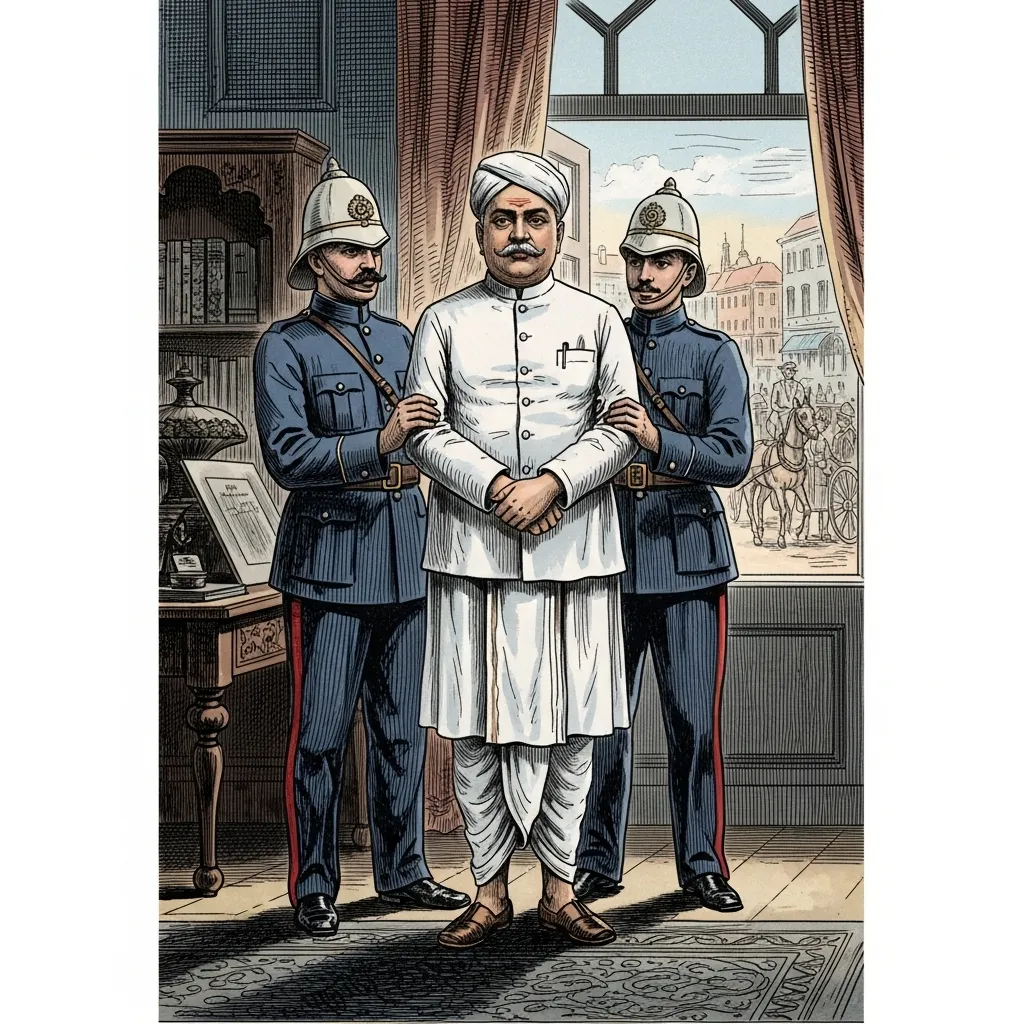
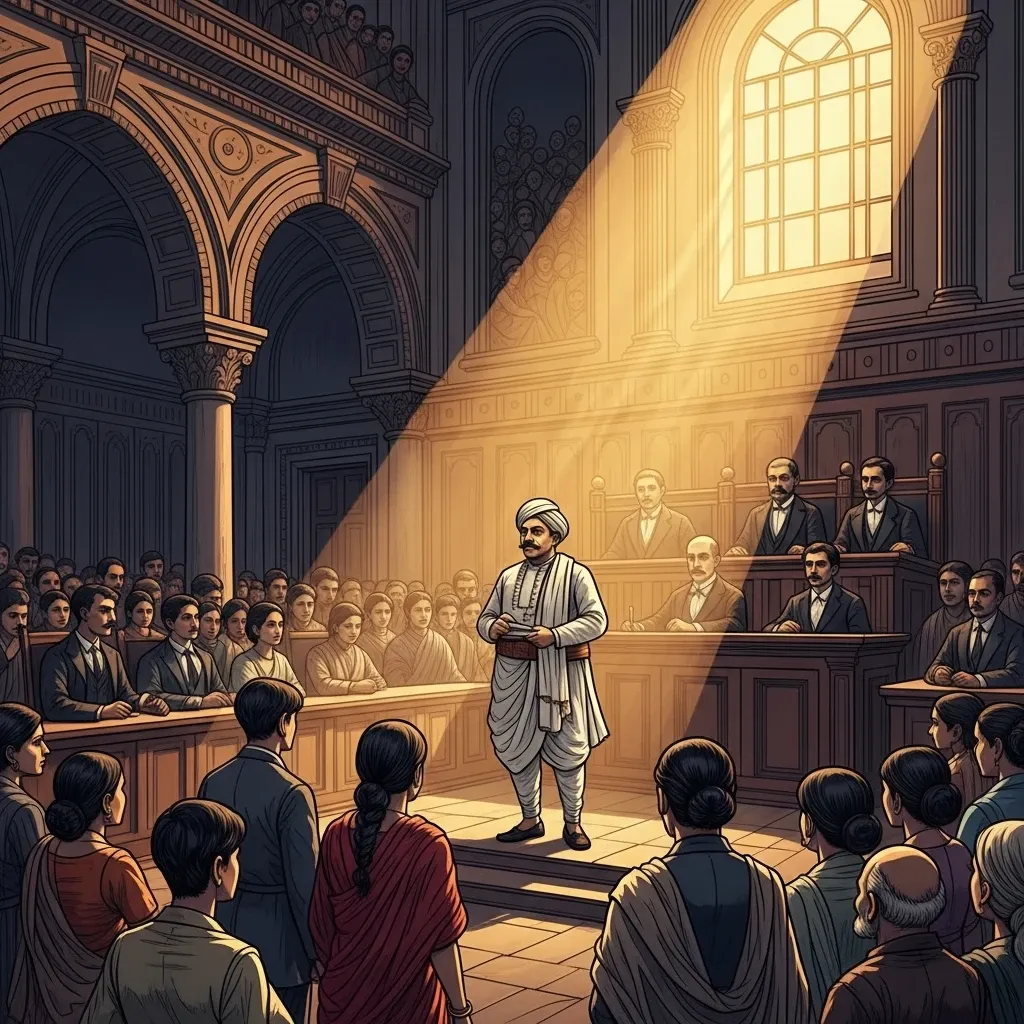
On the evening of June 24, 1908, Tilak was arrested in Bombay. The charge was Sedition under Section 124A and 153A of the Indian Penal Code. The trial began at the Bombay High Court before Justice Dinshaw D. Davar.
A Rigged Jury?
The jury consisted of seven Europeans and two Indians. Despite Tilak's brilliant self-defense, which lasted for 21 hours over several days, the verdict was predictable. The seven Europeans voted 'Guilty', while the two Indians voted 'Not Guilty'.
"In spite of the verdict of the Jury, I maintain that I am innocent. There are higher Powers that rule the destiny of things and it may be the will of Providence that the cause which I represent may prosper more by my suffering than by my remaining free." — Tilak's Final Statement
The Sentence and Mandalay Jail
Tilak was sentenced to six years of transportation and a fine of 1,000 rupees. He was sent to the dreaded Mandalay Jail in Burma. During his time there, despite failing health and isolation, he authored the monumental work Gita Rahasya, an interpretation of the Bhagavad Gita emphasizing 'Karma Yoga' or the path of action.
Frequently Asked Questions
[accordion title="Why was Tilak called 'Lokmanya'?"]The title 'Lokmanya' means 'Accepted by the people'. It was bestowed upon him for his unwavering commitment to the common man's struggle.[/accordion]Conclusion: The Eternal Flame
The 1908 arrest was intended to break the spirit of the Indian independence movement. Instead, it provided the movement with its most potent symbol of sacrifice. As we look back 118 years later, the lessons of Tilak's courage and intellectual depth remain vital for every student of history.