
Laxmanrao Kirloskar
👤 Prominent Person
Laxmanrao Kirloskar started his journey with a small bicycle repair shop in Belgaum before revolutionizing Indian agriculture with the iron plow.
In 1910, with the help of the Raja of Aundh, Laxmanrao established a factory on a barren piece of land which later became 'Kirloskarvadi'. This was not just a factory but a model industrial township. It was one of the first places in India to have a decentralized industrial setup, providing housing, education, and healthcare to its workers. This social approach to industrialization was far ahead of its time and set a benchmark for corporate social responsibility in India.
Laxmanrao Kirloskar
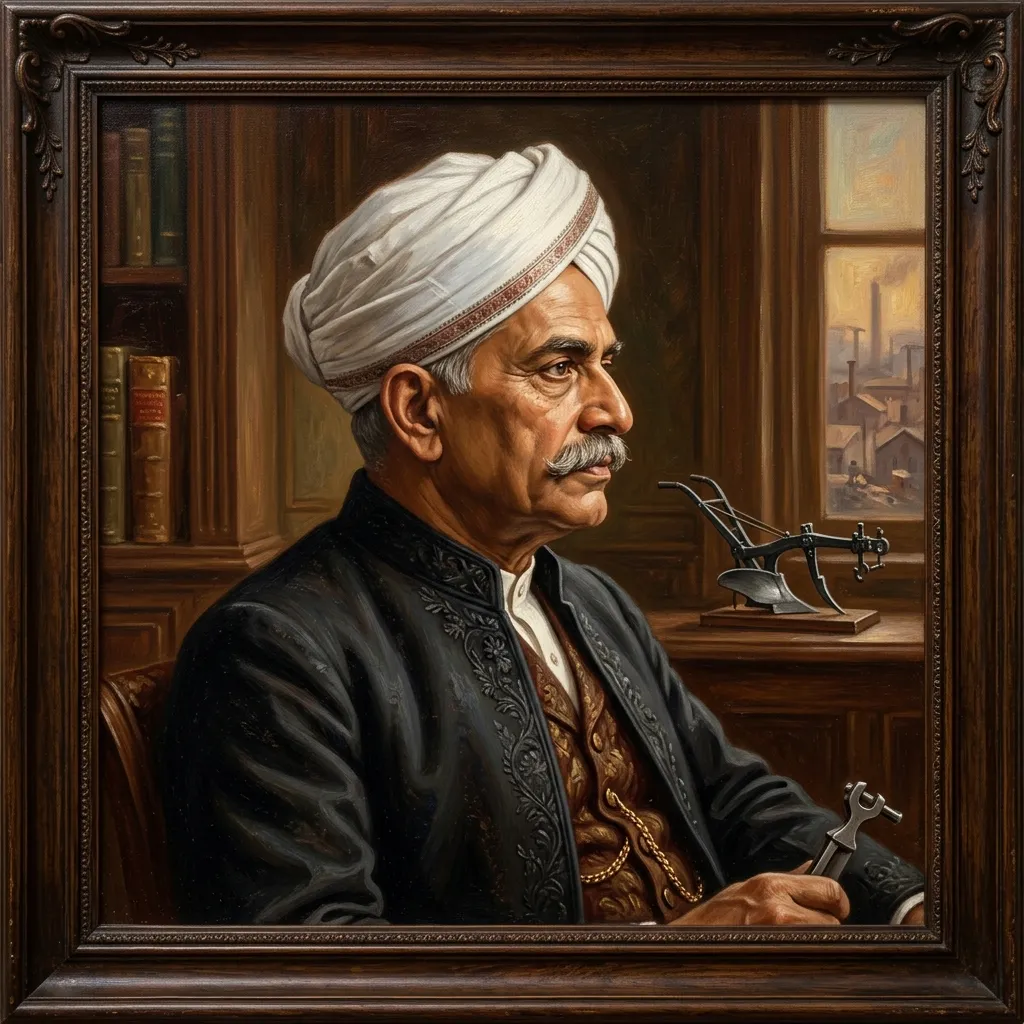
| नाव / Name | Laxmanrao Kashinath Kirloskar |
| Born |
20/06/1869 Gunderi, Belgaum District, Bombay Presidency |
| Died |
09/06/1956 Kirloskarvadi, Maharashtra |
| Age (at death) | 86 years old |
| Wikipedia Link | 🌐 External Profile (Wikipedia) → |