The future of any nation rests firmly in the hands of its youth. Their energy, their aspirations, their innovative ideas, and their actions lay the very foundation for a country's progress and development. August 12th is celebrated globally as 'International Youth Day,' a significant occasion that not only honors young people but also highlights their immense potential, their valuable contributions, and the challenges they face. Initiated by the United Nations in 1999, the day aims to position youth at the heart of global development, providing them with appropriate opportunities and platforms.
India stands as one of the youngest nations in the world, with approximately 65% of its population under the age of 35. This represents a colossal 'youth power.' This isn't merely a statistic; it's an invaluable wellspring of energy that, if channeled correctly, can transform India into a global superpower in the 21st century. Today, on International Youth Day, we will delve into the significance of this youth power, their responsibilities, and how they can be empowered to build a bright future for the nation. So, dear young friends, who are the 'pillars and guides of tomorrow's India,' let's embark on this journey together.
International Youth Day: A Global Call to Action
International Youth Day serves as a global platform to acknowledge the contributions of young people and to address the issues they confront worldwide. Following recommendations from the 'World Conference of Ministers Responsible for Youth' held in Lisbon, the UN General Assembly declared August 12th as International Youth Day in 1999. Since then, the United Nations observes this day annually with a specific theme, aiming to focus global attention on particular youth-related issues. The general theme often revolves around empowering youth for sustainable development and peace.
The primary objective of this day is to integrate young people into mainstream society, involve them in decision-making processes, and provide a suitable platform for their ideas, opinions, and initiatives. Youth are not just the architects of the future; they are active agents of the present. Their role is crucial in finding solutions to many global challenges such as climate change, social justice, peace and security, poverty eradication, education, and health. Their fresh perspectives, technological prowess, and inherent drive for change represent a significant force for societal good.
Governments, educational institutions, non-governmental organizations, and citizen groups worldwide organize various events on this day to encourage youth. Seminars, workshops, cultural programs, exhibitions, and awareness campaigns are conducted to brainstorm youth issues and discuss necessary measures for their empowerment. International Youth Day is more than just a celebration; it's a vital day that reminds us of the strength of youth and their responsibilities towards building a better world.
India's Youth: A Demographic Powerhouse
A defining characteristic of India's population is its large proportion of young people. India boasts the largest youth population globally, with over 65% of its populace under the age of 35, a significant portion of whom fall into the working-age category. This phenomenon is known as the 'Demographic Dividend,' signifying a period when the working-age population outnumbers the dependent population (children and the elderly), thereby accelerating economic growth. It's a critical window of opportunity for rapid national economic advancement.
However, this dividend is not automatic. It necessitates providing this young population with appropriate education, skills, and opportunities. If this youth power is not guided correctly, this dividend could transform into a formidable 'challenge,' potentially leading to issues such as unemployment, disillusionment, and social unrest. Therefore, merely educating India's youth is insufficient; it is our collective duty to equip them with 21st-century skills, encourage entrepreneurship, and nurture them into responsible citizens.
Today's Indian youth are not merely seeking jobs; they aspire to be 'job creators.' Government initiatives like 'Startup India' and 'Atmanirbhar Bharat' (Self-Reliant India) have fostered an environment conducive to entrepreneurship. Indian youth are making significant strides in diverse fields such as technology, science, arts, sports, and social work. Young people in rural areas are also becoming part of the digital revolution, leveraging new technologies to carve their paths to progress. This dynamic youth force possesses the inherent capability to elevate India to a strong and influential position on the global stage.
"Youth are not just the future of a nation; they are the active agents shaping its present. Their energy and ideas are the true engines of national progress."
Cultivating Future-Ready Skills
The world today is evolving at an unprecedented pace. Mere academic knowledge is no longer sufficient; acquiring a diverse set of skills is crucial for adapting to changing circumstances and achieving success. Students should not stop at merely obtaining a degree; they must strive to become 'Future-Ready.' Focusing on some key skills is paramount for this journey:
- Critical Thinking: In today's deluge of information, distinguishing between truth and falsehood is vital. Critical thinking means not blindly accepting information but analyzing it, verifying evidence, and forming independent opinions. This skill empowers you to make informed decisions.
- Problem Solving: Life and society present numerous challenges. The ability to creatively find solutions to these problems, rather than being daunted by them, is a crucial skill. Practicing problem-solving, whether for small daily issues or larger societal ones, helps develop this aptitude.
- Digital Literacy: We live in a technological age. Learning how to use smartphones, the internet, and social media safely and effectively is essential. Cybersecurity, identifying online fraud, and recognizing fake news are integral parts of digital literacy.
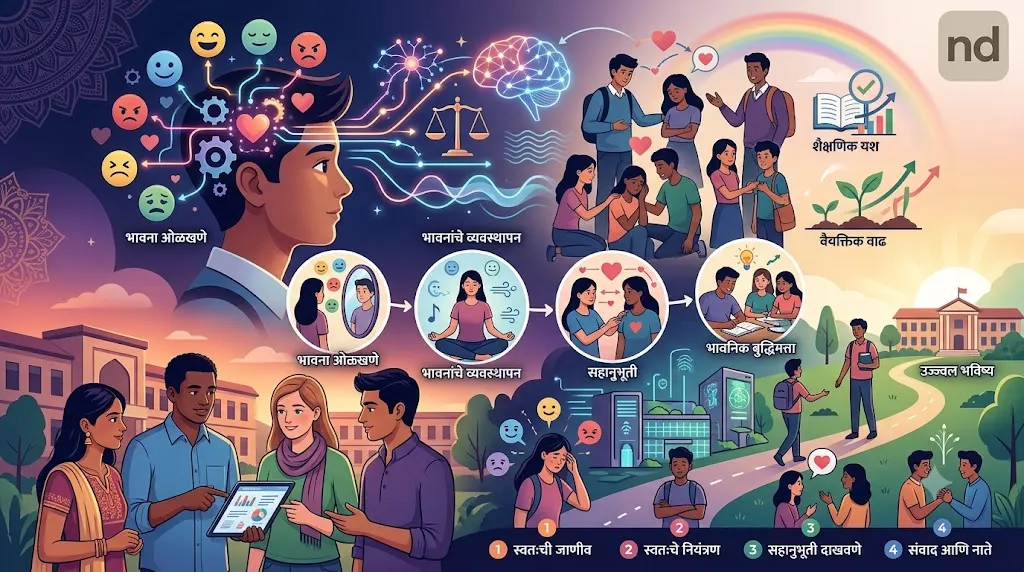
- Emotional Intelligence: Recognizing and managing one's own emotions, and understanding the emotions of others, defines emotional intelligence. Skills like empathy, maintaining good relationships, and resolving conflicts can make you more successful on a social level.
- Communication Skills: The ability to articulate your thoughts clearly and actively listen to others is vital for a successful life. Effective communication through speaking, writing, and body language is paramount.
- Collaboration & Teamwork: In today's world, achieving anything significant alone is challenging. The ability to work cooperatively with others, assist each other, and strive for collective goals demonstrates strong teamwork skills.
- Creativity & Entrepreneurship: Generating new ideas, daring to try something different from conventional paths, and having the courage to bring those ideas to fruition are hallmarks of creativity. Entrepreneurship is the ability to start your own venture and create employment opportunities for others.
The Dual Engines of Education and Innovation
For any nation's progress, education and innovation stand as two critical pillars. Education imparts knowledge, develops critical thinking, and broadens an individual's perspective on the world. India's New Education Policy (NEP) 2020 aims to move beyond rote learning, encouraging students to develop practical skills, critical thinking, and problem-solving abilities. This approach better prepares students for future challenges.
However, education alone is not enough. Innovation involves using that knowledge to create something new, discover novel solutions, or improve existing practices. In today's era, innovation is the catalyst for accelerating progress. Startups, new technologies, scientific discoveries, and social entrepreneurship are all facets of innovation. Indian youth have made significant advancements in STEM (Science, Technology, Engineering, and Mathematics) fields. Many young researchers and engineers are elevating India's name on the global stage.
The government actively encourages youth in innovation and entrepreneurship through initiatives like 'Startup India,' 'Make in India,' and 'Digital India.' These programs provide young people with opportunities to launch their businesses, create new employment avenues, and directly contribute to the nation's economic development. For instance, many young individuals are leveraging modern technology to boost agricultural productivity, while others are devising new solutions for waste management or energy conservation. It is through these dual engines of education and innovation that India will achieve rapid progress in the 21st century.
Responsible Citizenship and Societal Contribution
As empowered and responsible citizens, the role of young people extends beyond their personal progress; they must actively contribute to the development of society and the nation. Responsible citizenship isn't merely about knowing your rights; it's about understanding and fulfilling your duties. It's crucial to respect the rights and freedoms granted by the Indian Constitution while simultaneously recognizing our responsibilities towards the nation.
- Active Participation in Democracy: Voting, engaging with local governance, and voicing opinions on public policies are integral to democracy. Young people should actively participate in the political process to encourage good leadership.
- Social Harmony and Diversity: India is a land of diverse religions, languages, and cultures. Respecting this diversity, maintaining communal harmony, and opposing any form of discrimination are hallmarks of a responsible citizen.
- Environmental Protection: Climate change, pollution, and the depletion of natural resources are grave issues today. Young people should take the lead in environmental protection – be it through tree plantation, waste reduction, or energy conservation. Active participation in campaigns like Swachh Bharat Abhiyan (Clean India Mission) to maintain cleanliness in your surroundings is also a vital responsibility.
- Ethical Values: Values such as honesty, integrity, empathy, and justice should be fostered in society by young people themselves. They should bravely oppose any malpractice or injustice.
- Community Service: By participating in programs like the National Service Scheme (NSS), National Cadet Corps (NCC), or other volunteer organizations, you can contribute to society. Helping those in need, working for the spread of education, or organizing health camps can guide society in a positive direction.
Even your small actions can bring about significant changes. Just as a sapling you plant today will grow into a tree providing shade to many tomorrow, your good deeds will send a positive message to society. As responsible citizens, it is our collective duty to uphold the name of our nation.
Overcoming Challenges with Resilience and Optimism
While youth is a period of dreams and enthusiasm, it is also fraught with numerous challenges. Academic stress, career anxieties, unemployment, social pressures, mental health issues, and substance abuse are some of the difficulties young people encounter. Successfully overcoming these challenges is crucial for their future.
Mental Health: In today's world, mental health issues are on the rise. Examination stress, parental expectations, and social media pressure often lead to anxiety and depression among youth. It's vital to talk openly about these issues and seek help from friends, family, or teachers. Neglecting mental health is not an option; proper measures must be taken. Yoga, meditation, and pursuing hobbies are beneficial for mental well-being.
Unemployment and Skill Gap: Not securing a job despite having an education is a significant problem. To overcome this, young people should not solely rely on degrees but focus on acquiring in-demand skills. Learning new technologies, pursuing vocational training, and considering entrepreneurship are important steps.
Social Pressure and Addiction: Peer pressure and negative influences can lead to addiction or other detrimental habits. In such situations, it's crucial to stand firm on your values, differentiate between right and wrong, and have the courage to say 'no.' Choose your friends wisely and stay in a positive environment.
Digital Dangers: Cyberbullying, online fraud, fake news, and excessive social media use are contemporary digital threats. Verifying online information, adhering to cybersecurity rules, and using social media responsibly are essential.
To overcome these challenges, 'resilience' is an extremely important quality. Resilience is the ability to bounce back after failures or difficulties. Remember that every failure is an opportunity to learn. Maintaining a positive attitude, never giving up, and continuously striving will help you navigate any situation. Believe in yourself, pursue your dreams, and never surrender.
Did You Know?
- International Youth Day is celebrated every year on August 12th to recognize the contributions of youth and address their challenges globally.
- India is home to the world's largest youth population, with nearly 65% of its populace under 35 years of age, a phenomenon referred to as the 'Demographic Dividend.'
- August 12th is also observed as 'World Elephant Day,' raising awareness about the conservation of elephants and the threats they face.
- On August 12, 2012, India's first indigenously built aircraft carrier, 'INS Vikrant (IAC-1),' was launched at Cochin Shipyard, symbolizing India's engineering and technological prowess.
- On August 12, 2018, NASA launched the 'Parker Solar Probe' to study the Sun, an emblem of human curiosity and scientific advancement.
Conclusion
International Youth Day reminds us that youth are not just the future of any nation, but active agents shaping its present. India's youth power is an invaluable asset with immense potential to elevate the nation to the pinnacle of progress. To channel this potential effectively, it's crucial to equip them not only with education but also with essential skills such as critical thinking, problem-solving, digital literacy, and emotional intelligence. As responsible citizens, they must actively participate in democracy, protect the environment, and maintain social harmony. Facing life's challenges with resilience and a positive outlook will lead them to success.
Dear students, you are the pillars of tomorrow's India. Through your every action and every thought, you can contribute to the nation's progress. Believe in yourselves, learn new things, ask questions, and bring about change. On International Youth Day, let us all collectively pledge to build an empowered, prosperous, and responsible India. Let's commit ourselves to our bright future and the nation's advancement!