Hello students and dear readers!
Today, September 22nd, is a day connected to many historical events and the remembrance of important personalities. As we approach the eve of Pārśva Ekādaśī, Parivartinī Ekādaśī, and Vāman Jayantī, we delve into the story of a remarkable Indian scientist who revolutionized our nation's meteorology. Her name is Anna Mani – India's 'Weather Woman'!
The importance of weather in our daily lives is immense. When will it rain? What will be the temperature? Is a storm approaching? The answers to these questions come from the meteorological department. But did you know how complex the instruments needed to accurately measure and forecast this weather are? And that India was once dependent on other countries for these very instruments? Anna Mani undertook the monumental task of changing this situation. Her work was not just limited to scientific progress; it was a crucial step towards making India scientifically self-reliant. Let's embark on her incredible journey.
Anna Mani: A Childhood Thirst for Knowledge and Unconventional Choices
Anna Mani was born on August 23, 1918, in Peermade, Kerala, into a prosperous Syrian Christian family. She was the seventh of nine children, with five brothers and four sisters. Unlike her siblings, who received traditional gifts like diamond earrings on their birthdays, Anna had no interest in such material possessions. On her seventh birthday, she asked for a set of the Encyclopaedia Britannica instead of diamonds, a testament to her intense hunger for knowledge.
From a young age, Anna loved reading books, devouring every volume in her local library. This passion for reading led her not only to stories but also to subjects like science and mathematics. After completing her schooling, Anna pursued a B.Sc. Honours degree in Physics and Chemistry from Presidency College, Madras. At a time when a career in science for women was far from common, Anna chose her own path.
"I loved reading books from a young age, and that's how I developed a fondness for science." - Anna Mani
After graduation, she began her research at the Indian Institute of Science (IISc), Bengaluru, under the guidance of Nobel laureate Sir C. V. Raman. Here, she focused on the spectroscopy of rubies and diamonds. Her research led to the publication of five papers, and she submitted a thesis for her PhD. Unfortunately, due to the lack of provisions for awarding PhD degrees to women at IISc at that time, she was not formally granted the degree. Nevertheless, her significant work was recognized.
Stepping into Meteorology: A Vision for Self-Reliance
Following World War II, Indian students were offered scholarships for higher education in England. Anna Mani was sent to Imperial College, London, where she specialized in meteorological instrumentation. This proved to be a pivotal moment in her life. Upon her return to India in 1948, Anna Mani joined the India Meteorological Department (IMD). This field was then new and challenging, especially for women.
Post-independence, India was heavily reliant on foreign countries for many of the instruments essential for weather forecasting. Anna Mani recognized the urgent need to change this situation. She took charge as the Head of the Meteorological Instruments Division at IMD in Pune. Her goal was clear: to make India self-reliant in the manufacturing of meteorological instruments.
A Revolution in Instrument Manufacturing: Making India Self-Reliant
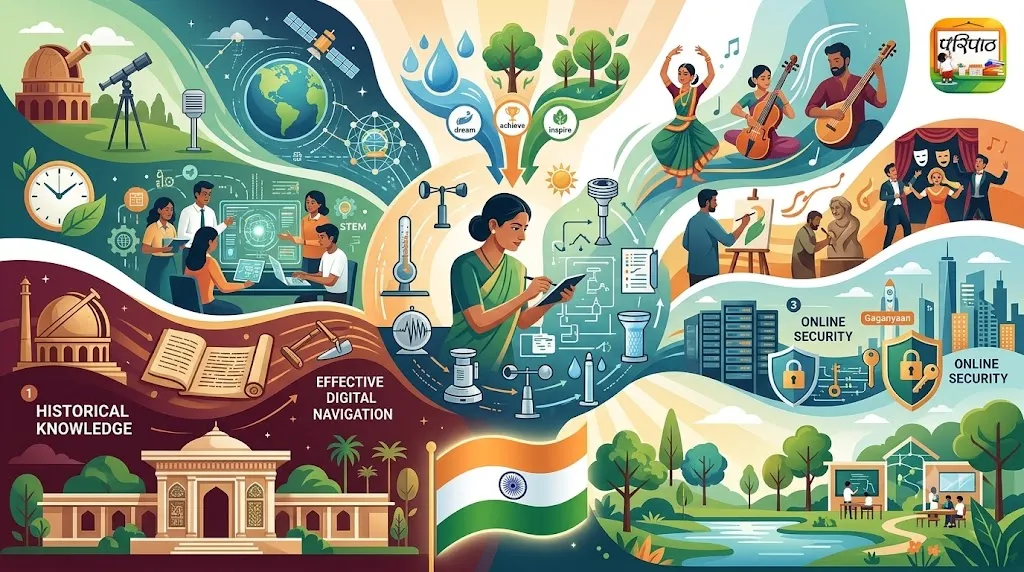
Under Anna Mani's leadership, the IMD workshop in Pune undertook the indigenous development and manufacturing of hundreds of different types of instruments required for weather measurement. These key instruments included:
- Radiosondes: These instruments, launched by balloons, are used to measure temperature, pressure, and humidity in the upper atmosphere. Anna Mani made significant contributions to their indigenous development.
- Radiometers: Essential for measuring sunlight and solar radiation, she developed precise instruments for India.
- Ozonesondes: Used to measure the concentration of ozone gas in the atmosphere, these instruments were crucial for studying the ozone layer.
- Anemometers and Wind Vanes: These instruments are vital for measuring wind speed and direction.
Thanks to Anna Mani's relentless efforts, India no longer had to depend on foreign nations for meteorological instruments. She designed and standardized the production of over 100 different types of weather instruments. During her tenure, India became a leading nation in the manufacturing of meteorological equipment.
Deep Environmental Study: Solar Radiation, Ozone, and Wind Energy
Anna Mani's work was not limited to instrument manufacturing; she also made significant contributions to the in-depth study of the environment. She established a large network of solar radiation observation stations across India. These stations provided crucial data on the intensity and distribution of sunlight, which proved invaluable for solar energy projects.
She also did extensive work on atmospheric ozone. In the 1960s, the importance of the ozone layer was gradually becoming recognized globally. Anna Mani developed instruments to measure ozone and studied the changes in the ozone layer. Her work proved crucial for the World Meteorological Organization (WMO)'s global ozone studies.
Furthermore, she researched the potential of wind energy. By measuring wind speed and direction in various parts of India, she collected data that was highly useful for wind energy projects. The foundation for the wind energy systems we see today was significantly laid by Anna Mani's pioneering work.
Her dedication to gathering precise environmental data was ahead of her time, laying the groundwork for India's future endeavors in renewable energy and climate science. She understood that accurate measurements were the cornerstone of effective environmental policy and sustainable development.
Anna Mani's Legacy: Inspiration and the Future
Anna Mani retired in 1976 as the Deputy Director General of the IMD. Even after retirement, she did not cease her scientific work. She continued her research as a visiting professor at the Raman Research Institute in Bengaluru. In recognition of her remarkable contributions, she was awarded the K.R. Ramanathan Medal in 1987.
Anna Mani was not just an outstanding scientist; she was also a strong and visionary leader. She consistently encouraged women to pursue careers in Science, Technology, Engineering, and Mathematics (STEM) fields. Her life offers us many valuable lessons:
- Determination and Perseverance: The grit to achieve goals without being deterred by challenges.
- Self-Reliance: A fervent desire to contribute to the nation and make it scientifically capable.
- Pioneering New Paths: Always being ready to embrace new ideas and technologies.
- Inspiration: Setting an ideal for women to pursue careers in science.
Today, when the meteorological department provides us with early warnings of cyclones, heavy rainfall, or heatwaves, it is built upon the foundational research and instrument development carried out by visionary scientists like Anna Mani. Her work remains an integral part of our meteorology even today.
Conclusion
Anna Mani's life is a brilliant example of science, dedication, and service to the nation. This girl, who came from a humble family in Kerala, changed the face of Indian meteorology through her intellect and hard work. She made the nation self-reliant by developing essential weather measuring instruments within India. Her research on critical environmental factors like solar radiation, ozone, and wind energy continues to be a guiding light. Anna Mani was not just the 'Weather Woman'; she was a shining symbol of India's scientific progress and women's empowerment. Her life and work will always inspire us, especially the younger generation, to explore new frontiers in science and contribute significantly to the nation.
Did You Know?
- On her seventh birthday, Anna Mani asked for a set of the Encyclopaedia Britannica instead of diamonds.
- She submitted a PhD thesis under Sir C. V. Raman, but was not formally awarded the degree because IISc did not grant PhDs to women at that time.
- Anna Mani designed and standardized the production of over 100 different types of meteorological instruments.
- She established an extensive network of solar radiation observation stations across India.
- She was inspired by Mahatma Gandhi's principles and wore only Khadi clothes throughout her life.