
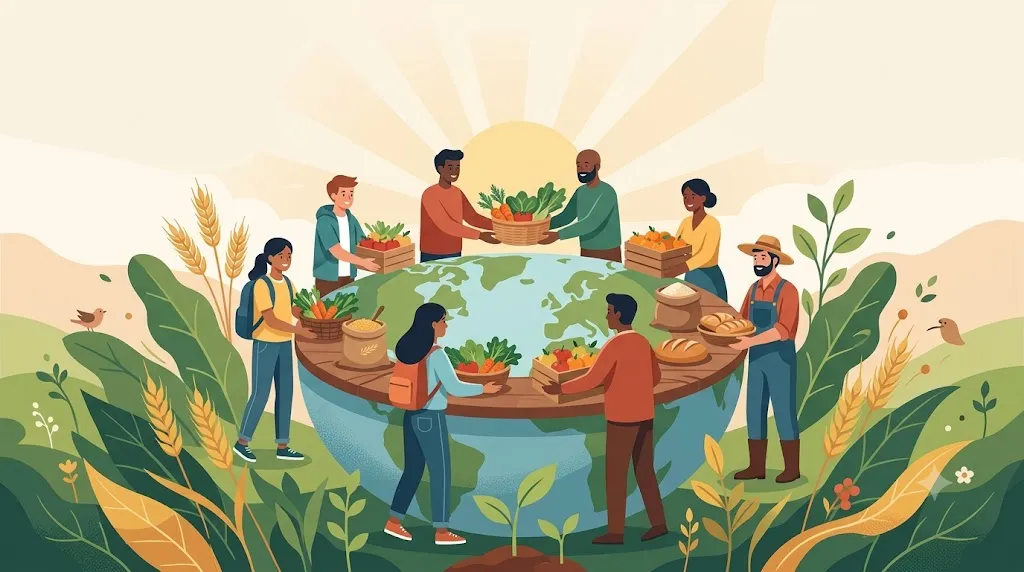
World Food Day: A Global Call to Action
Dear students, every year on October 16th, we observe World Food Day. This day serves as a powerful reminder not just of the importance of food in our lives, but also of a stark global paradox: while millions worldwide go hungry, a significant amount of food is wasted. The United Nations established the Food and Agriculture Organization (FAO) in 1945 with the aim of ensuring 'food for all.' World Food Day commemorates the founding of this vital organization.
As we mark this day in 2026, it's crucial to reflect on two interconnected global challenges: food security and food waste. In a country like India, many families still struggle to afford two square meals a day, even as large quantities of food are carelessly discarded elsewhere. This disparity is a profound issue that demands our collective attention and action. This blog post will explore the meaning of food security, the severe consequences of food waste, and how each of us, as responsible citizens, can make a difference.
Understanding Food Security: More Than Just Enough Food
Food security is a complex concept that extends beyond simply having enough food available. According to the FAO, food security exists when all people, at all times, have physical and economic access to sufficient, safe, and nutritious food that meets their dietary needs and food preferences for an active and healthy life. This definition rests on four key pillars:
- Availability: This refers to the presence of sufficient quantities of food in a country or region, whether through domestic production, imports, or aid. It means ensuring good harvests of grains, fruits, vegetables, and adequate production of milk, meat, and other essentials.
- Access: Availability alone is not enough; people must be able to obtain the food. This includes economic access (affordability) and physical access (proximity to markets or distribution points). People need sufficient income to purchase food, or access to social safety nets and government programs.
- Utilization: Once food is consumed, the body must be able to make good use of its nutritional value. This requires access to clean water, sanitation, and healthcare services, which prevent diseases that hinder nutrient absorption.
- Stability: All three aforementioned pillars must be consistently available over time. Food security can be threatened by natural disasters, economic crises, or political instability, making stability crucial for long-term well-being.
Ensuring food security in a vast and diverse nation like India is a monumental task. The Indian government has implemented various initiatives such as the Public Distribution System (PDS), the Mid-day Meal Scheme, and the National Food Security Act to provide essential food grains to the poor and vulnerable. Despite these efforts, malnutrition and hunger remain significant challenges in many parts of our country.
The Global Crisis of Food Waste
While millions face hunger, a staggering amount of food is lost or wasted globally. The United Nations estimates that approximately one-third of all food produced worldwide—about 1.3 billion tons—is lost or wasted every year. A significant portion of this is perfectly edible food that ends up in landfills.
Key Reasons for Food Waste:
- At the Farm and Storage Level: Post-harvest losses due to inadequate infrastructure, improper handling, and pest infestation. In India, a substantial amount of grains, fruits, and vegetables are lost during storage and transportation due to poor facilities.
- During Distribution and Transportation: Lack of proper cold chain facilities and inefficient packaging during transit lead to spoilage of perishable goods like fruits and vegetables.
- At Retail Stores: Consumers often prefer aesthetically perfect produce, leading to the rejection of slightly blemished but perfectly edible items. 'Best before' dates are also often confused with 'expiry dates,' causing premature disposal.
- In Homes and Food Services: This is a major contributor. Over-purchasing, improper food storage, discarding leftovers, and preparing excessive amounts of food for events and then throwing away the surplus are common practices.
Serious Consequences of Food Waste:
- Environmental Impact: Food production consumes vast amounts of water, land, energy, and fertilizers. When food is wasted, all these precious natural resources are also wasted. Food decomposing in landfills produces methane gas, a potent greenhouse gas 25 times more harmful than carbon dioxide, contributing significantly to global warming.
- Economic Loss: Wasted food represents an economic loss for everyone involved, from farmers and distributors to retailers and consumers. It impacts livelihoods and increases household expenses.
- Ethical and Social Impact: Discarding food when millions are starving is an ethical dilemma. It exacerbates social inequalities and highlights the uneven distribution of resources.
“The food you waste could feed someone who is hungry.”
– Unknown
How You Can Combat Food Waste at Home and School
Combating food waste isn't solely the responsibility of governments or large organizations; it's a personal responsibility for each of us. As students, you can implement small yet impactful changes in your homes and schools to reduce food waste.
Tips to Reduce Food Waste at Home:
- Plan Your Purchases: Before heading to the market, make a list of what you need. Buy only what you will consume. Avoid buying in bulk if you don't have a plan to use it all.
- Store Food Properly: Store fruits and vegetables at appropriate temperatures (in the refrigerator or at room temperature). Keep grains and pulses in airtight containers to prevent pest infestation.
- Follow 'First In, First Out' (FIFO): When storing new items in the fridge or pantry, move older items to the front so they are used first and don't spoil.
- Utilize Leftovers Creatively: Leftover dinner can often be repurposed for breakfast or lunch. For example, turn leftover rice into fried rice, or leftover vegetables into a paratha or sandwich. Get creative with your meals!
- Take Smaller Portions: When serving yourself, take only what you can eat. You can always go back for more if you're still hungry. Avoid leaving food on your plate.
- Understand 'Best Before' vs. 'Expiry Date': 'Best before' indicates when a food product is at its optimal quality, but it might still be safe to eat after this date. 'Expiry date' means the food is no longer safe to consume after that specific date. Understand this difference to avoid unnecessary waste.
Tips to Reduce Food Waste at School and in the Canteen:
- Smart Tiffin Packing: Ask your parents to pack only the amount of food you can comfortably eat. Overpacking often leads to wasted food.
- Share with Friends: If you have extra food or don't particularly like a dish, consider sharing it with a friend instead of throwing it away.
- Order Responsibly in the Canteen: When ordering from the school canteen, only order what you intend to eat. Avoid ordering too much and letting it go to waste.
- Raise Awareness: Discuss the issue of food waste with your friends and teachers. Organize awareness campaigns or activities in your school to encourage others to value food and reduce waste.
Our Role as Responsible Citizens
You are the students of today and the responsible citizens of tomorrow. Even small actions you take can have a significant impact. Saving food is not just important for the environment or the economy; it is essential for social justice and humanity.
- Understand the Value of Food: Reflect on the immense effort farmers put into growing food, and the water, energy, and other resources consumed in the process. The true cost of food isn't just its price tag, but the labor and resources behind it.
- Inspire Others: By setting an example in reducing your own food waste, you can inspire your family, friends, and community to do the same. Initiate conversations about mindful consumption.
- Adopt a Sustainable Lifestyle: Reducing food waste is a crucial component of a sustainable lifestyle. It means using resources wisely and caring for our planet.
- Contribute to the Community: If there are food donation organizations in your area, offer your help (with parental guidance). Take initiative to collect surplus food from weddings or large events and donate it to those in need.
In India, many NGOs like the Robin Hood Army and Feeding India are doing incredible work by collecting surplus food and distributing it to the hungry. You can explore ways to support such organizations with the help of your parents.
Did You Know?
- World Food Day is celebrated on October 16th each year, commemorating the date the Food and Agriculture Organization (FAO) of the United Nations was founded in 1945.
- Roughly one-third of the food produced globally for human consumption is lost or wasted annually, enough to feed all the hungry people in the world twice over.
- Food waste significantly contributes to global warming because when organic waste decomposes in landfills, it releases methane, a greenhouse gas far more potent than carbon dioxide.
- In India, an estimated 67 million tonnes of food are wasted every year, valued at approximately ₹92,000 crores. These figures highlight the urgent need for food conservation.
- Producing just one kilogram of rice requires approximately 2,500 liters of water. If that rice is wasted, all the water used to grow it is also wasted.
Conclusion
World Food Day serves as a vital reminder of the importance of food security and the true value of food. Food waste is a serious global problem with far-reaching environmental, economic, and social consequences. However, it is also a problem that we can collectively address and overcome.
As students, you have the power to make small but significant changes in your homes, schools, and communities. Planning meals wisely, utilizing leftovers, and understanding the true value of food are crucial steps. This World Food Day, let us all pledge to respect food, reduce waste, and strive to ensure that everyone in the world has access to sufficient, nutritious food. Remember, 'Every grain on your plate matters!'
