Hello students and educators!
Today, September 18th, marks World Bamboo Day! This day is dedicated to celebrating the remarkable importance of bamboo, an extraordinary plant often referred to as 'Green Gold.' Bamboo is far more than just a type of grass; it is a powerful pillar supporting environmental protection, economic growth, and cultural richness. Across India and the world, bamboo serves countless purposes that are deeply integrated into our daily lives. Let's embark on a journey to explore the multifaceted aspects of this 'Green Gold' and understand its profound impact.
Bamboo: Nature's Rapidly Renewing Resource
Bamboo holds the title of being the fastest-growing plant on Earth, belonging to the grass family. Globally, there are over 1,500 species of bamboo, with India alone boasting more than 130 species. It thrives predominantly in tropical and subtropical regions. Its rapid growth rate and minimal maintenance requirements make it an incredibly sustainable resource, offering a wealth of benefits.
Ecological Significance of Bamboo
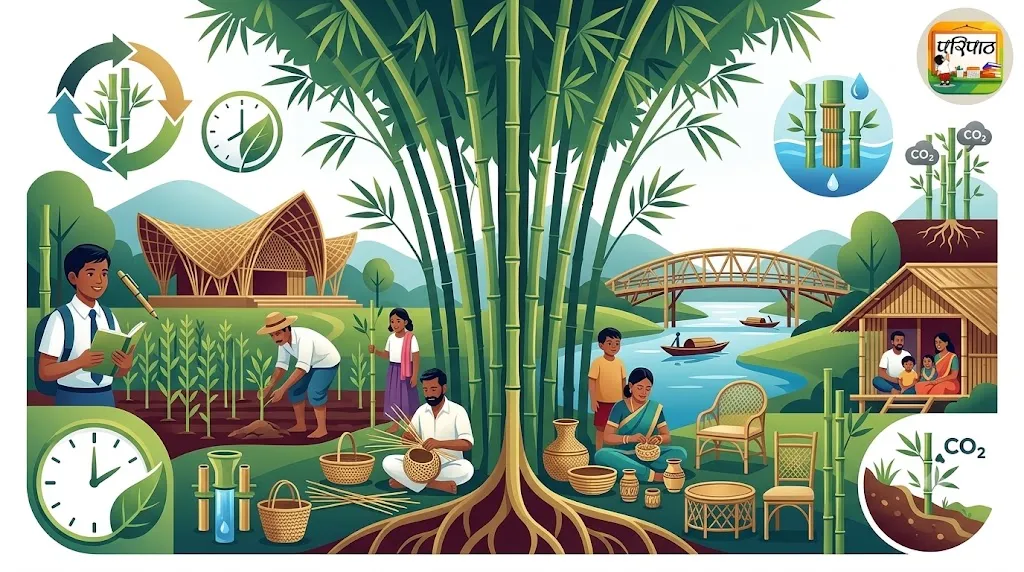
- Soil Conservation: The extensive root systems of bamboo firmly hold the soil together, effectively preventing soil erosion. This makes it particularly valuable in preventing landslides in hilly and riparian areas.
- Water Management: Bamboo groves act as natural reservoirs, helping to retain water and recharge groundwater levels. This contributes significantly to maintaining balance within the natural water cycle.
- Oxygen Production: Compared to an equivalent stand of trees, bamboo releases approximately 35% more oxygen into the atmosphere. Simultaneously, it absorbs a substantial amount of carbon dioxide, contributing to cleaner air.
- Carbon Sequestration: Bamboo is an exceptional carbon sink. A single hectare of bamboo plantation can absorb between 30 to 60 tons of carbon dioxide, playing a crucial role in mitigating climate change.
- Biodiversity Support: Dense bamboo thickets provide vital habitats and shelter for numerous animals, birds, and insects, thereby preserving the biodiversity essential for a healthy ecosystem.
India's Bamboo Wealth
India stands as the world's second-largest producer of bamboo. The northeastern states, in particular, are major bamboo-growing regions, where bamboo is intrinsically woven into the lives of the local communities. Bamboo's contribution to India's economy and rural development is immense and continues to grow.
The Multifaceted Utility of Bamboo for Sustainable Living
The versatility of bamboo is truly astonishing. Its moniker 'Green Gold' is well-deserved, as it finds applications across diverse sectors such as construction, handicrafts, textiles, food, energy, and medicine.
1. Construction and Furniture
- Traditional Homes: In rural areas, bamboo is still widely used to build sturdy and resilient homes.
- Modern Construction: In contemporary architecture, bamboo is increasingly utilized for flooring, wall panels, roofing, and laminated products. Its inherent flexibility also makes it a valuable material in earthquake-resistant construction.
- Furniture: Furniture crafted from bamboo is not only aesthetically pleasing but also exceptionally durable and environmentally friendly. Chairs, tables, beds, and other pieces are commonly made from this versatile material.
2. Handicrafts and Art
Across many Indian states, especially in the Northeast, skilled artisans create beautiful and functional handicraft items from bamboo. These include baskets, mats, decorative pieces, toys, jewelry, and musical instruments. These crafts not only provide livelihoods for artists but also help preserve India's rich cultural heritage.
3. Textiles
Fabrics made from bamboo fibers are remarkably soft, breathable, and possess natural antibacterial properties. Often referred to as 'bamboo silk,' these textiles are used for clothing, towels, bedsheets, and socks, offering a comfortable and healthy option for skin.
4. Food Source
Tender bamboo shoots are a nutritious and popular food source in many parts of the world. They are a staple in the cuisines of Northeast India, China, Japan, and Southeast Asian countries, used in curries, pickles, soups, and various stir-fries. Bamboo shoots are rich in vitamins, minerals, and dietary fiber.
5. Biofuel and Energy
Bamboo is utilized as a biomass fuel, serving as an effective alternative to coal. It can also be processed to produce biogas and ethanol, thereby promoting sustainable energy generation methods.
6. Agriculture and Medicine
In agriculture, bamboo is used for fencing, as support structures for climbing plants, and in making various farm tools. In Ayurveda and traditional medicine, bamboo is credited with several medicinal properties. It is used to alleviate joint pain, reduce inflammation, and improve digestion.
Explore government initiatives like the 'National Bamboo Mission' in India, which support bamboo cultivation, product development, and market linkages for farmers. You could also consider initiating a small bamboo planting project in your school or community. This hands-on experience will not only contribute to environmental well-being but also deepen your understanding of bamboo's incredible benefits. By participating, you can help spread awareness about the importance of 'Green Gold' to others.
Bamboo's Economic Engine: Empowering Rural India
Bamboo is not only vital for environmental protection but also serves as a crucial economic driver for rural India. Bamboo-based industries generate extensive employment opportunities in rural areas and significantly boost local economies.
1. Boosting Micro, Small, and Medium Enterprises (MSMEs)
The growing demand for bamboo products has led to the emergence of numerous small and cottage industries. These enterprises provide economic independence to local artisans and women's self-help groups, fostering entrepreneurship at the grassroots level.
2. Employment Generation
From cultivation and harvesting to processing and crafting, the entire bamboo value chain provides direct and indirect employment to millions of people. This includes farmers, artisans, traders, and transporters. For tribal and rural communities, bamboo is often a primary source of income.
3. Strengthening Local Economies
Bamboo-based industries play a significant role in improving the living standards of people in rural areas. This helps reduce migration to urban centers and provides economic stability to local communities.
4. Export Potential
Indian bamboo products are gaining considerable popularity in international markets. The export of bamboo furniture, handicrafts, and bamboo fiber products earns foreign exchange for India, contributing positively to the national economy.
5. Government Policies and Support
The Indian government has launched initiatives such as the 'National Bamboo Mission' to promote bamboo cultivation, provide training to farmers, and establish market linkages for bamboo products. These efforts have accelerated the growth and development of the bamboo sector.
Environmental Champion: Bamboo in Climate Change Mitigation
Climate change is one of the most pressing global challenges of our time. Bamboo is emerging as an effective and natural solution to this complex problem.
1. Reducing Carbon Footprint
Bamboo actively absorbs large quantities of carbon dioxide and releases oxygen, thereby reducing atmospheric carbon levels. This process is crucial in mitigating global warming and its adverse effects.
2. Combating Deforestation
By using bamboo as an alternative to timber, we can significantly reduce deforestation. Given its rapid growth, bamboo offers a sustainable and eco-friendly substitute for wood, alleviating pressure on natural forests.
3. Biodiversity Conservation
Bamboo forests provide safe habitats for a wide range of wildlife, helping to maintain biodiversity, which is essential for ecological balance.
4. Low Water Footprint
Compared to many other trees, bamboo requires less water to grow. This makes it a suitable crop for cultivation in arid or low-rainfall regions, conserving precious water resources.
5. Natural Regeneration
Once planted, bamboo continues to yield harvests for many decades without the need for replanting. This natural regeneration process prevents the wastage of natural resources and ensures long-term sustainability.
When planning bamboo cultivation, it's crucial to select bamboo species that are well-suited to the local climate and soil conditions. This ensures optimal growth and helps maintain the ecological balance of the area. Bamboo generally requires minimal pesticides or chemical fertilizers, which further protects the soil and water from pollution. Consult with local forest departments or agricultural universities to identify the most appropriate species for your region.
Cultural Tapestry: Bamboo's Place in Indian Heritage
Bamboo holds a special and cherished place in India's rich cultural heritage. It is intricately woven into various traditions, art forms, and daily life.
1. Music and Art
One of India's most beloved musical instruments, the 'Bansuri' (bamboo flute), is made from bamboo. The bansuri is not merely an instrument but an integral part of Indian classical music. Besides flutes, many other traditional instruments like the Ektara and various percussion instruments are crafted from bamboo.
2. Religious Rituals and Festivals
In some cultures, bamboo is considered sacred and is used in religious ceremonies and rituals. During festivals, bamboo is transformed into decorative items, temporary structures (pandals), and even idols, adding to the festive spirit.
3. Folk Arts and Dances
The 'Cheraw' (Bamboo Dance) from Mizoram in Northeast India is a famous folk dance where performers skillfully dance between rapidly moving bamboo poles. Beyond dances, bamboo is used to create numerous folk art pieces and traditional toys.
4. Everyday Utility
In rural areas, bamboo is commonly used to construct bridges, water pipes, ladders, fences, and a wide array of household items. Bamboo mats and blinds also add a touch of natural beauty to homes.
Did You Know?
- Bamboo is the tallest grass species in the world.
- Some bamboo species can grow over 3 feet (nearly 1 meter) in a single day!
- Bamboo boasts a tensile strength greater than steel, making it incredibly strong and durable.
- It is completely biodegradable, meaning it naturally breaks down without harming the environment.
- There are over 1,500 known species of bamboo worldwide, varying greatly in size and application.
Conclusion
On World Bamboo Day, we have explored the diverse facets of 'Green Gold.' Bamboo is not just a plant; it is a vital cornerstone for environmental protection, rural economies, cultural heritage, and a sustainable lifestyle. Its rapid growth, versatility, and numerous environmental benefits position it as a critical natural resource for the future.
Dear students, it is imperative that we all become aware of bamboo's incredible potential and actively promote its use. By embracing bamboo, we can protect our environment, foster rural development, and build a truly sustainable future. Let us recognize the value of this 'Green Gold,' utilize it wisely, and help make our planet greener and healthier for generations to come!