Hello students and dear parents!
Today, October 8, 2026, marks the conclusion of a very important observation: 'Wildlife Week'. Celebrated annually across India from October 2nd to 8th, this week-long event, commencing on the birth anniversary of Mahatma Gandhi, serves as a crucial reminder of our intrinsic connection with nature and its diverse inhabitants. Through this special 'Paripath' article, we delve into India's magnificent wildlife, understand the threats they face, and explore how we, especially school students, can contribute to safeguarding this invaluable natural heritage.
Wildlife Week is dedicated to raising awareness about the conservation and preservation of India's wildlife. The importance of wildlife extends beyond their mere existence; they are integral components of our environment and, indeed, of all human life. Let's explore this vital topic in more detail.
India's Breathtaking Biodiversity: A Natural Treasure Trove
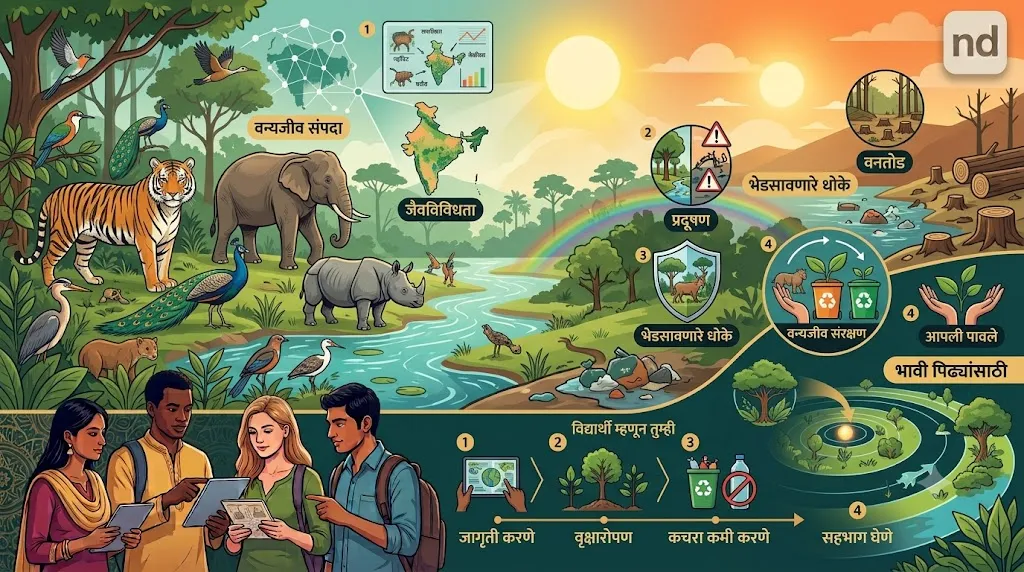
India stands as one of the world's most biodiverse nations. Our land is not only rich in cultures and languages but also incredibly abundant in natural wealth. From the snow-capped Himalayan peaks in the north to the tropical rainforests in the south, from the arid deserts in the west to the dense forests in the east, and from vast coastlines to deep marine ecosystems, India hosts a multitude of habitats. This geographical diversity is precisely why such a wide array of flora and fauna thrive here. Approximately 7-8% of the world's total biodiversity is found within India's borders.
Key Wildlife Species and Their Significance in India:
- Tiger: India's national animal, the tiger, is one of the largest and most powerful feline species globally. As an apex predator, it symbolizes the health of our forests. India is home to over 70% of the world's wild tiger population.
- Asiatic Lion: The only natural habitat for Asiatic lions outside Africa is the Gir Forest National Park in Gujarat. Significant efforts are underway to boost their numbers.
- Indian Elephant: Elephants are an integral part of India's culture and environment, known for their intelligence and complex social structures.
- One-horned Rhinoceros: Kaziranga National Park in Assam is famous for its population of one-horned rhinoceroses. These magnificent creatures are often targeted by poachers for their horns.
- Peacock: India's national bird, the peacock, is celebrated for its stunning iridescent plumage and graceful dance.
- Gangetic Dolphin: Found in the Ganges and Brahmaputra river systems, this freshwater dolphin is India's national aquatic animal. It serves as an indicator of the health of the river ecosystem.
Beyond these iconic species, India is home to thousands of species of birds, reptiles, amphibians, insects, and fish. The Western Ghats and the Eastern Himalayas are recognized as global biodiversity 'hotspots,' harboring numerous endemic and rare species. This biodiversity is not only crucial for us but for all life on Earth.
The Perilous Plight of India's Wildlife: A Growing Challenge
Regrettably, India's incredible wildlife heritage is currently facing numerous severe threats. Due to human interference and natural changes, many species are on the verge of extinction, while the populations of others are rapidly declining. Understanding these threats is the first step towards effective conservation.
Major Threats to Wildlife:
- Habitat Loss: Rapid population growth, urbanization, agricultural expansion, industrial development, and the construction of roads and dams are destroying natural wildlife habitats. Forests are being cleared, wetlands are being filled, forcing animals to struggle for shelter and food.
- Poaching and Illegal Wildlife Trade: The illicit hunting and trade of animal parts for tiger skins, elephant ivory, rhino horns, snake venom, rare birds, and medicinal plants pose one of the gravest threats to wildlife. This has led to alarming declines in the populations of many species.
- Climate Change: Global warming, unpredictable floods, droughts, and forest fires resulting from climate change are severely impacting wildlife life cycles and their habitats. Some species find it difficult to adapt to new environmental conditions.
- Pollution: Water pollution, air pollution, plastic pollution, and chemical waste negatively affect the health of wildlife and their ecosystems. River pollution endangers aquatic life, while plastic waste on land proves fatal for many animals.
- Human-Wildlife Conflict: As habitats shrink, wildlife often ventures into human settlements in search of food. This results in crop damage, attacks on livestock, and sometimes poses a threat to human lives. Such conflicts often lead to the killing of wild animals.
- Invasive Alien Species: Sometimes, non-native plant or animal species are introduced into an ecosystem, outcompeting native species for food and shelter, thereby reducing local populations.
Why Wildlife Conservation is Crucial: For Humans and Nature Alike!
Wildlife conservation is not merely about showing compassion to animals or saving them. It encompasses numerous scientific, environmental, economic, and ethical reasons. The existence of wildlife is profoundly important for the survival of humanity itself.
The Importance of Wildlife Conservation:
- Ecological Balance: Every animal and plant is an integral part of the food chain within an ecosystem. The extinction of one species can disrupt the entire food web, disturbing the environmental balance. Apex predators like tigers and lions keep herbivore populations in check, maintaining the health of grasslands and forests.
- Conservation of Natural Resources: Wildlife protection indirectly conserves natural resources such as forests, rivers, and wetlands, which provide humans with clean water, air, and other essential resources.
- Biodiversity and Research: Every species possesses unique characteristics. Many plants and animals have medicinal properties that are used to develop new drugs. We cannot predict which species might hold future solutions for human health or technology.
- Economic Importance: Wildlife tourism (eco-tourism) is a significant source of income for many countries and local communities. Tourists visiting national parks and sanctuaries boost local economies, creating employment opportunities.
- Cultural and Spiritual Importance: Many wild animals are part of our culture, religion, and mythology. Animals like tigers, lions, elephants, peacocks, and snakes are considered sacred in Indian culture and are worshipped. Protecting them is also protecting our cultural heritage.
- Protection Against Natural Disasters: Healthy ecosystems and wildlife help in combating natural disasters. For example, forests prevent soil erosion, aid in flood control, and mitigate the effects of climate change.
“When the last tree is cut, the last fish is caught, and the last river is poisoned, man will find that he cannot eat money.” – Native American Proverb
This powerful proverb reminds us of the profound importance of wildlife and the environment.
Young Custodians: How Students Can Make a Difference
As students, you have the potential to make a significant contribution to wildlife conservation. Every small action you take can be incredibly important for the environment and its wildlife. Let's discuss some simple yet effective ways you can contribute:
- Spread Awareness: Talk to your friends, family members, and teachers about the importance of wildlife conservation. Organize drawing competitions, essay contests, or skits in school to spread this message. Share informative posts about wildlife conservation on social media.
- Reduce Waste and Dispose Properly: Avoid using plastic. Plastic bags, bottles, and other items are extremely dangerous for wildlife. Recycle whenever possible and dispose of waste in designated bins. Follow the principle of 'Reduce, Reuse, Recycle.'
- Conserve Water and Energy: Avoid unnecessary use of water and electricity. Use water-efficient appliances. This reduces the strain on natural resources, indirectly helping wildlife.
- Plant Trees and Care for Them: Trees are home to wildlife and provide us with oxygen. Plant trees in your school premises, around your home, or in public spaces, and care for them until they grow. Participate in tree-planting drives.
- Participate in Local Conservation Projects: If your local forest department or NGOs are working on wildlife conservation, volunteer for their initiatives. For instance, participate in clean-up drives, tree censuses, or awareness programs.
- Avoid Buying Wildlife Products: Refrain from purchasing items made from ivory, animal skins, feathers, or other wildlife parts. Buying such products encourages illegal poaching.
- Respect Nature: When you visit forests or natural areas, maintain silence, do not litter, and avoid disturbing wildlife. Allow them to live freely in their natural habitat.
India's Conservation Initiatives and Legal Framework
The Indian government and various organizations are continuously working to protect India's wildlife. These efforts have successfully saved many species.
Key Initiatives:
- Wildlife Protection Act, 1972: This act imposes strict restrictions on hunting and illegal trade of wild animals. Under this law, many species are provided legal protection.
- National Parks and Sanctuaries: India has 106 national parks and 567 wildlife sanctuaries, which provide safe habitats for wildlife. These protected areas keep animals away from human interference.
- Biosphere Reserves: India has declared 18 Biosphere Reserves, which are large areas of natural habitat where human and nature coexistence is fostered.
- Special Conservation Projects: Many important projects such as 'Project Tiger' for tiger conservation, 'Project Elephant' for elephants, and 'Project Crocodile' are being implemented, which have helped in increasing the populations of these species.
- Involvement of Local Communities: In many places, local tribal and rural communities are involved in wildlife conservation, as they possess in-depth knowledge of the nature in their surroundings.
Did You Know?
- India is home to approximately 13% of the world's bird species and 8% of its mammalian species.
- The Bengal Tiger is one of the largest big cats in the world and is found in numerous national parks across India.
- The Western Ghats is one of the world's 8 major 'biodiversity hotspots,' known for its high concentration of endemic species.
- The Gangetic Dolphin is a freshwater dolphin found exclusively in the rivers of the Indian subcontinent and is functionally blind.
- Kaziranga National Park in Assam is renowned for the Greater One-Horned Rhinoceros, hosting two-thirds of the world's population of this species.
Conclusion
Wildlife Week not only educates us about the importance of wildlife but also underscores our collective responsibility for their protection. India's rich biodiversity is our invaluable heritage, and it is the duty of all of us to preserve it.
Dear students, you are the citizens of tomorrow, and you hold the power to shape a clean, safe, and prosperous future. If you start taking small steps today in important causes like wildlife conservation, the long-term positive impacts will be immense. Befriend nature, understand its significance, and help others understand it too. Remember, we are a part of nature; nature is not a part of us. Protecting nature means protecting our own future!
Let us all, on the occasion of Wildlife Week, pledge to work together to protect India's amazing wildlife and their habitats!
Thank you!