Hello students and respected parents!
Today, July 12, 2026, we're going to discuss a crucial topic that affects all our futures: Population Growth. On this auspicious day of Ravi Pradosh Vrat and Masik Shivratri, it becomes even more important to reflect on the balance of life on our planet. As we observe World Paper Bag Day, let's also consider how we can protect our environment. Just as the James Webb Telescope has unveiled new mysteries of the universe, let us try to unravel the complex issue of population growth.
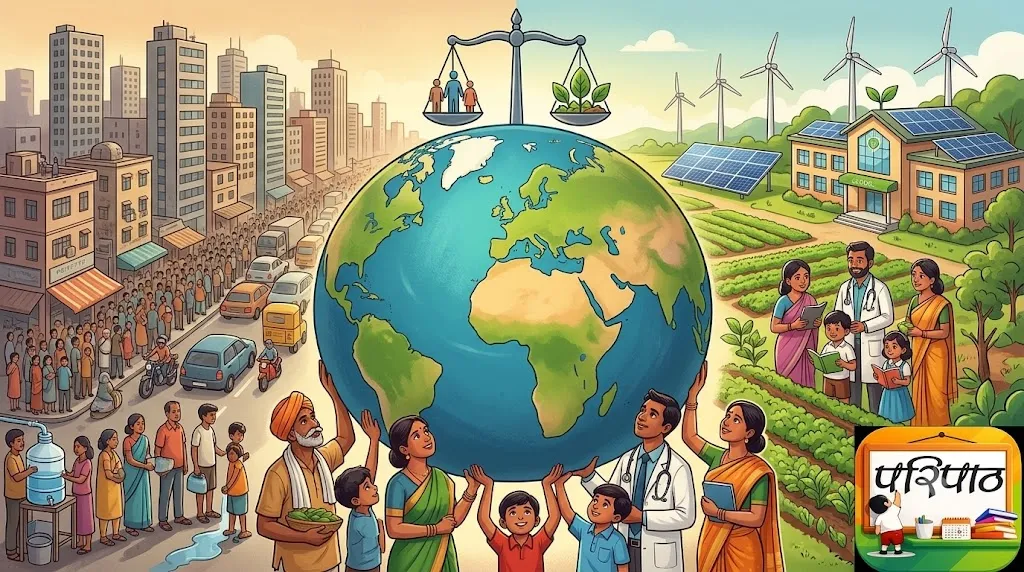
Have you ever wondered how so many people live on our Earth? And what would happen if this number kept growing? Population growth is not just a game of numbers; it's a serious issue that directly impacts our natural resources, our lifestyle, and our environment.
What is Population Growth and Its Journey Through History?
Population growth refers to the increase in the number of people in a specific region or country over a particular period. This growth depends on the difference between the birth rate and the death rate. When the birth rate is higher than the death rate, the population grows.
A Historical Perspective
- Ancient Times and Middle Ages: Thousands of years ago, human population grew very slowly. Struggles for food, epidemics, wars, and a lack of medical facilities led to high death rates, keeping population growth limited.
- Industrial Revolution and Medical Advancements (18th Century Onwards): The Industrial Revolution brought improvements in agriculture, increased food production, and better living standards. Simultaneously, hygiene practices, vaccinations, and medicines helped control diseases, significantly reducing the death rate. However, the birth rate remained high, causing the population to grow rapidly.
- 20th and 21st Centuries: The 20th century witnessed unprecedented population growth. In 1950, the world's population was around 2.5 billion, which has now (in 2026) surpassed 8 billion. That's more than a threefold increase in just over 70 years!
The Indian Context
India has become the most populous country in the world. At the time of independence in 1947, India's population was approximately 350 million. Today, it exceeds 1.4 billion. This growth brings many opportunities for our nation, such as a young workforce (Demographic Dividend), but it also poses significant challenges.
The Looming Challenges of a Growing Population
The increasing population puts a strain on everything on our planet. From natural resources like food, water, land, and energy, to essential infrastructure such as education, healthcare, and transportation, all sectors are affected.
Strain on Natural Resources
- Water: Every individual needs water for drinking, agriculture, and industries. Growing population leads to declining groundwater levels, polluted rivers, and severe water scarcity in many areas. Regions prone to drought in India experience this firsthand.
- Food: Feeding more people requires increased food production. This puts pressure on arable land, leads to deforestation, and increases the use of chemical fertilizers, which can reduce soil fertility. Malnutrition and food security remain significant issues in India.
- Land: Land is needed for housing, agriculture, industries, and roads. Rapid urbanization due to population growth reduces agricultural land and forests. The scarcity of space and rising property prices in cities like Mumbai and Delhi are prime examples.
- Energy: Everyone needs energy for light, transport, industry, and domestic use. Over-reliance on traditional energy sources like coal, oil, and natural gas increases pollution, and as these sources are finite, they may face shortages in the future.
Pressure on Infrastructure
- Education: More children require more schools, colleges, teachers, and educational facilities. Maintaining the quality of education and ensuring access for all becomes a major challenge with a growing population.
- Healthcare: Population growth significantly impacts healthcare services. The demand for hospitals, doctors, nurses, and medicines increases. Healthcare facilities in rural areas, in particular, face immense pressure.
- Transportation: Cities face increased traffic congestion, strain on public transport, and pollution. The crowded local trains in Mumbai are a perfect illustration of this.
- Housing: Providing adequate and clean housing for everyone is a major challenge. The growth of slums and sanitation problems are often exacerbated by increasing population.
Environmental Impact and Climate Change
- Pollution: Increased population leads to more waste, sewage, and industrial pollution. Air, water, and land pollution severely impact human health and the environment. Delhi's air pollution and the pollution of rivers (e.g., Ganga, Yamuna) are stark examples.
- Deforestation and Biodiversity Loss: Forests are cleared to make way for agriculture, homes, and industries. This destroys wildlife habitats, endangering many species or driving them to extinction.
- Climate Change: A larger population means more energy consumption, greater industrial output, and increased transportation, leading to higher emissions of greenhouse gases like carbon dioxide (CO2). This contributes to global warming, increasing the frequency of natural disasters like extreme rainfall, droughts, and rising sea levels.
India's Population Story: A Unique Perspective
India has made significant efforts to control its population over the past few decades. India was the first country in the world to launch a family planning program in 1952. Despite these efforts, our country's population continues to grow rapidly.
A key characteristic of India's population is its youthful demographic. A large proportion of our population is young, which can be a huge opportunity (Demographic Dividend) for our economy. However, if these young people do not receive proper education, skills, and employment opportunities, it can become a challenge.
"Population growth is not just statistics; it's a complex issue intertwined with human development, natural resources, and the environment."
Urbanization is also a major challenge. People migrate from rural areas to cities in search of employment, increasing the strain on urban centers. While cities like Mumbai, Bengaluru, and Delhi offer job opportunities, they also face problems such as high cost of living, space constraints, and pressure on infrastructure.
Paving the Way for a Sustainable Future: Solutions
Controlling population growth and mitigating its adverse effects is not solely the government's responsibility; it is the duty of every citizen. Here are some key solutions for a sustainable future:
1. Education and Awareness
- Girls' Education: Educating girls improves their health, provides them with better employment opportunities, and helps them better understand the importance of family planning. Education helps reduce birth rates.
- Family Planning: It is crucial to inform people about the importance of family planning, its benefits, and available methods. The advantages of a small family are vital for health, financial stability, and a better future for children.
- Gender Equality: Empowering women to make decisions and providing them equal opportunities in society has a positive impact on population growth.
2. Sustainable Resource Management
- Water Conservation: Rainwater harvesting, judicious use of water, and preventing water pollution.
- Organic Farming: Adopting organic farming practices, avoiding chemical fertilizers and pesticides, helps maintain soil fertility and protects the environment.
- Waste Management: Adhering to the principles of 'Reduce, Reuse, Recycle'. Avoiding plastic use and segregating wet and dry waste.
3. Harnessing Technology
- Green Technology: Developing and using technologies that reduce pollution and conserve energy.
- Renewable Energy Sources: Increasing the use of renewable energy sources like solar and wind power to reduce reliance on traditional fuels.
- Smart Cities: Using technology to make cities more efficient and eco-friendly.
4. Responsible Consumption
There's a difference between our needs and wants. We should avoid buying unnecessary items. We should use durable, eco-friendly products. Embracing the principle of 'Less is More' is important.
Your Role as a Student: Small Steps, Big Impact
As students, you can make a significant contribution to this major global issue. Your small efforts can bring about big changes.
- Gain Knowledge and Spread Awareness: Understand the impacts of population growth and the importance of sustainable living. Share this information with your friends, family, and neighbors.
- Save Water and Electricity: Adopt habits like switching off unnecessary lights, properly closing taps, and using less water for bathing.
- Avoid Plastic Use: Use cloth bags instead of plastic bags, and carry a steel water bottle instead of plastic ones. Remember the significance of World Paper Bag Day.
- Reduce Waste: Avoid buying unnecessary items. Segregate waste properly (wet, dry, hazardous).
- Use Public Transport: If possible, use a bicycle or public transport, which will save fuel and reduce pollution.
- Plant Trees and Care for Them: Plant trees in your school, home, or neighborhood. Trees purify the air and maintain environmental balance.
- Be a Responsible Consumer: Buy only what you truly need. Prioritize durable and locally produced items.
Did You Know?
- According to UN estimates, the world's population reached 8 billion (800 crores) on November 15, 2022.
- India's Total Fertility Rate (TFR) has now dropped to 2.0, close to the replacement level of 2.1 needed to stabilize the population. This indicates a slowing down of the population growth rate.
- An average Indian citizen emits about 500 kg of carbon dioxide (CO2) annually. While this is lower than the global average, India's overall emissions are significant due to its large population.
- Approximately 1.3 billion tons of food are wasted globally each year, which is one-third of all food produced. This amount could feed all malnourished people in the world four times over!
- A single plastic bottle takes over 450 years to fully decompose.
Conclusion
Population growth is a major and complex challenge facing our world. It has serious impacts on natural resources, infrastructure, and the environment. However, with proper education, family planning, adopting a sustainable lifestyle, and responsible consumption, we can overcome these challenges.
As students, you are crucial agents of this change. Through your every small action, you can build a sustainable and prosperous future. Just as Mithali Raj set a world record in cricket, we too can establish a new record by contributing to environmental protection and acting as responsible citizens. Let us all work together to protect our beautiful Earth!