Today, September 18, 2026, as we celebrate Jyeshtha Gauri Pujan and the beginning of Mahalaxmi Vrat, we turn our attention to a critical issue that directly impacts our future and that of generations to come: Climate Change and its profound effects on India. Just as historical events like the passing of Ruth Bader Ginsburg, Satyadev Dubey, or Shivani (Gaura Pant), or the Uri terrorist attack, teach us valuable lessons, it's time we learn and act for our planet's future.
We often hear the term 'Climate Change,' but do we truly understand its implications and how it affects our daily lives? It's more than just rising temperatures; it's a significant and dangerous shift in our environmental patterns, influencing everything from agriculture and water resources to health and the economy.
What is Climate Change?
Climate change refers to long-term shifts in temperatures and weather patterns. These shifts may be natural, but since the 19th century, human activities have been the main driver of climate change, primarily due to the burning of fossil fuels like coal, oil, and gas, which produces heat-trapping gases.
Global Warming and the Greenhouse Effect
Our planet is naturally surrounded by a layer of 'greenhouse gases,' including carbon dioxide (CO2), methane (CH4), nitrous oxide (N2O), and water vapor. These gases trap some of the sun's heat, keeping the Earth warm enough to sustain life. This is known as the 'Natural Greenhouse Effect.'
However, human activities have dramatically increased the concentration of these gases in the atmosphere. This thickening layer traps more heat, leading to a steady rise in Earth's average temperature, a phenomenon known as 'Global Warming.' Global warming is a critical component of climate change, with far-reaching consequences for ecosystems and human societies.
Primary Causes of Climate Change
While natural factors can influence climate, the overwhelming scientific consensus points to human activities as the dominant cause of the rapid climate change observed since the Industrial Revolution. Our reliance on certain practices has significantly altered the atmospheric composition.
- Burning Fossil Fuels: The combustion of coal, oil, and natural gas for electricity generation, transportation, and industrial processes releases vast amounts of carbon dioxide into the atmosphere.
- Deforestation: Forests act as vital carbon sinks, absorbing CO2 from the atmosphere. Large-scale deforestation for agriculture, logging, or urbanization reduces the planet's capacity to absorb carbon, leading to higher atmospheric concentrations.
- Agricultural Practices: Activities such as rice cultivation and livestock farming produce significant amounts of methane, a potent greenhouse gas. The use of synthetic fertilizers also contributes to nitrous oxide emissions.
- Industrial Processes: Industries like cement production, chemical manufacturing, and other industrial activities release various greenhouse gases into the atmosphere.
- Waste Management: Landfills generate methane as organic waste decomposes, especially when not properly managed. This contributes to greenhouse gas emissions.
Specific Impacts of Climate Change on India
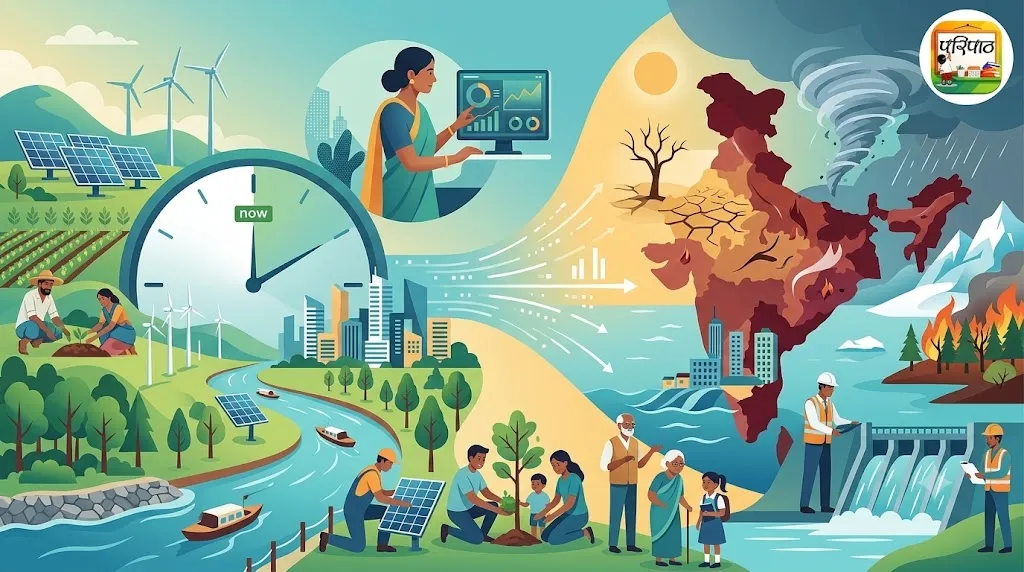
India, with its large population, extensive coastline, and agriculture-dependent economy, is highly vulnerable to the impacts of climate change. The effects are already visible and are projected to intensify in the coming decades.
1. Agriculture and Food Security
Agriculture is the backbone of India's economy, supporting a majority of its population. Climate change is profoundly altering agricultural patterns, threatening food security.
- Changing Monsoon Patterns: The erratic nature of the Indian monsoon is a major concern. Some regions experience extreme rainfall and floods, while others face prolonged droughts. This unpredictability severely impacts crop yields. For instance, regions like Marathwada and Vidarbha in Maharashtra frequently face droughts, while the Konkan coast experiences heavy floods.
- Rising Temperatures and Crop Yields: Increasing temperatures negatively affect the growth and quality of staple crops like wheat, rice, and maize. Heat stress can lead to reduced yields and lower nutritional value.
- Pest and Disease Outbreaks: Changing climatic conditions can foster the proliferation of new pests and diseases, further damaging crops and reducing farmers' incomes.
2. Water Resources and Scarcity
India's water security is under severe threat from climate change, with water being fundamental for life and livelihoods.
- Himalayan Glacier Melt: Himalayan glaciers, which feed major rivers like the Ganges, Yamuna, and Brahmaputra, are melting at an accelerated rate. Initially, this might increase river flows, but in the long term, it will lead to severe water scarcity as glaciers diminish.
- Depleting Groundwater Levels: Irregular rainfall and rising temperatures contribute to declining groundwater levels across many states, creating severe challenges for drinking water and agricultural irrigation.
- Water Quality Degradation: Extreme rainfall events can lead to increased siltation and pollution in rivers, compromising the quality of drinking water sources.
3. Extreme Weather Events
Climate change is increasing the frequency and intensity of extreme weather events, causing significant loss of life and damage to infrastructure.
- Floods and Droughts: India often faces the paradox of simultaneous floods in one region and droughts in another. For example, in 2023, while Himachal Pradesh and Uttarakhand faced devastating floods, parts of Maharashtra experienced drought-like conditions due to insufficient rainfall.
- Cyclones and Storms: The Bay of Bengal and the Arabian Sea are witnessing an increase in the frequency and intensity of cyclones, causing widespread destruction in coastal states.
- Heatwaves: Summers are characterized by more intense and prolonged heatwaves, posing serious risks to human health and agricultural productivity.
4. Coastal Erosion and Rising Sea Levels
India's coastline, stretching over 7,500 kilometers, is highly vulnerable to the impacts of climate change.
- Rising Sea Levels: Global warming-induced melting of polar ice caps and glaciers is causing sea levels to rise. This threatens coastal cities like Mumbai, Chennai, and Kolkata with submergence in the future.
- Coastal Erosion: Increased intensity of sea waves and storms accelerates coastal erosion, leading to loss of fertile land and damage to coastal infrastructure and homes.
- Impact on Mangrove Forests: Mangrove forests, vital for coastal protection, are threatened by rising sea levels and pollution. Regions like the Sundarbans are already experiencing significant impacts.
How Students Can Contribute to Climate Solutions
As students, you might feel that your individual actions are small, but collectively, they can make a huge difference. You are the future, and your actions today shape tomorrow.
- Raise Awareness: Educate yourself and then share your knowledge with friends, family, and neighbors. Organize discussions or presentations in your school.
- Conserve Energy: Turn off lights, fans, and electronic devices when not in use. Encourage the use of renewable energy sources like solar power.
- Save Water: Avoid wasting water. Take shorter showers, turn off taps while brushing, and advocate for water recycling.
- Plant Trees: Plant as many trees as possible around your home, school, or community. Trees absorb carbon dioxide and help maintain ecological balance.
- Use Public Transport/Cycle: Whenever possible, walk, cycle, or use public transportation. This reduces fossil fuel consumption and air pollution.
- Reduce, Reuse, Recycle: Minimize plastic usage. Reuse items, and ensure proper waste segregation and recycling.
- Support Local Products: Buy locally produced goods. This reduces the carbon footprint associated with long-distance transportation.
The Importance of Collective Action
Individual efforts, while crucial, are not enough on their own. Tackling a problem as vast as climate change requires collective and global action. Governments, industries, communities, and international organizations must work together.
- Government Policies: Governments need to implement stringent regulations to reduce pollution, promote renewable energy sources (like solar and wind), and launch robust forest conservation programs.
- Industry and Business: Industries must adopt environmentally friendly technologies, invest in sustainable practices, and set ambitious targets for reducing carbon emissions.
- International Cooperation: Climate change is a global challenge that transcends national borders. All countries must collaborate, share knowledge, and provide mutual support to develop and implement effective solutions.
Conclusion
Climate change is a global crisis, and its impacts on India are severe, affecting agriculture, water resources, natural disasters, and coastal regions. However, solutions are within our reach. As students, you can make a significant contribution by raising awareness, conserving energy, planting trees, and adopting eco-friendly habits. Small individual actions, when combined, can lead to monumental change. Let us all commit to protecting our planet and our future, because 'Action Today, Shapes Tomorrow'!
Did You Know?
- The Earth's average temperature has risen by approximately 1.1°C over the last 100 years.
- India accounts for about 7% of global carbon emissions, ranking third after China and the United States.
- Global sea levels are rising at an average rate of 3.6 millimeters per year, threatening coastal cities worldwide.
- A single mature tree can absorb approximately 22 kilograms of carbon dioxide per year.
- About 20% of global methane emissions come from rice cultivation.