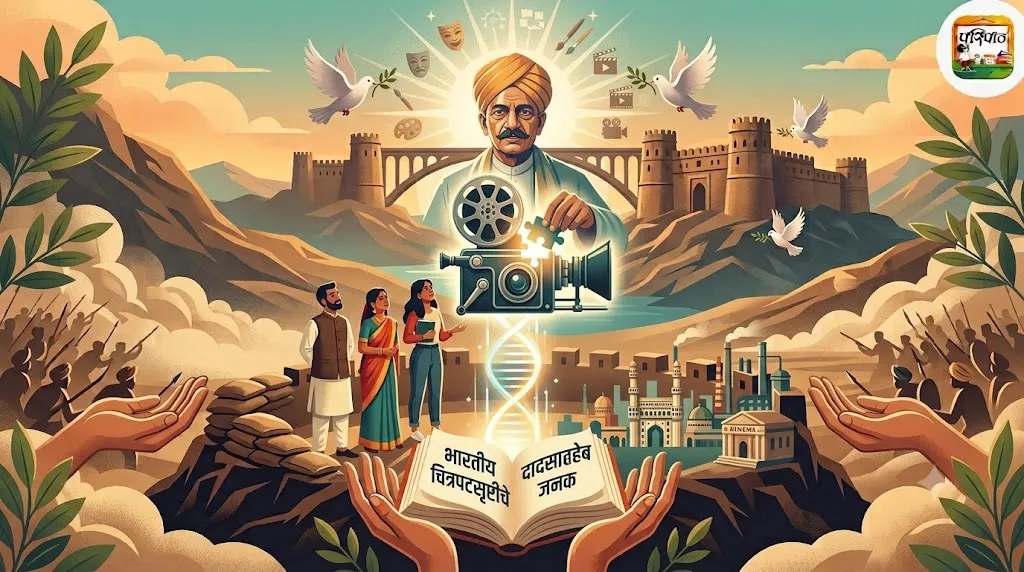
The Thrilling Journey of Indian Cinema: From Silent Films to the Digital Age
Dear students and educators,
Today, we delve into an art form that has been an integral part of our lives for over a century: cinema. Films are not just a source of entertainment; they are mirrors of our society, reflecting culture, history, social change, and human emotions. Indian cinema, often referred to as 'Bollywood,' is one of the largest and most influential film industries globally. From its modest beginnings as silent films to its current sophisticated digital era, Indian cinema has undertaken an incredible journey. Let's explore the milestones, key personalities, technological advancements, and profound cultural impact of this captivating art form.
The Silent Era: The Dawn of Indian Cinema (1913-1930)
The foundation of Indian cinema was laid by Dadasaheb Phalke, widely known as the 'Father of Indian Cinema.' In 1913, he released 'Raja Harishchandra,' the first full-length Indian silent feature film. This was a historic moment, as it marked the birth of a new art form in India. Phalke himself wrote the screenplay, directed, produced, and edited the film. In the early days, filmmaking was a monumental challenge. Technology was limited, and cinema halls were scarce. Yet, through Phalke's vision and tireless efforts, Indian cinema took its first steps.
- Raja Harishchandra (1913): This film was based on a mythological story, and male actors played the roles of female characters, as women were hesitant to work in films during that period.
- Early Themes: Initial silent films primarily focused on mythological tales, historical events, and folk stories. These films offered audiences a new entertainment experience through familiar narratives.
- Technological Limitations: Without dialogue, the story in silent films relied on visual storytelling and intertitles, which provided text to advance the plot. Live orchestras or pianists often provided background music in cinema halls.
Dadasaheb Phalke went on to make many successful silent films like 'Mohini Bhasmasur' and 'Lanka Dahan,' shaping the direction of Indian cinema. It is thanks to his pioneering work that we celebrate Indian cinema on a global stage today.
The Advent of Sound: The Magic of Talkies (1931-1940)
The year 1931 proved revolutionary for Indian cinema. It was in this year that 'Alam Ara,' the first Indian talkie film, was released. Directed by Ardeshir Irani, this film premiered at the Majestic Cinema in Mumbai and made history. The release of 'Alam Ara' brought about a significant transformation in Indian cinema. Talkies allowed audiences to hear the characters' dialogues, making the cinematic experience more vivid and engaging.
“'Alam Ara' not only revolutionized filmmaking but also offered Indian audiences the magic of sound and music, deeply impacting cultural and social life.”
With the arrival of talkies, music and singing gained immense importance in films. 'Alam Ara' featured seven songs, and since then, songs have become an inseparable part of Indian cinema. This period also witnessed the growth of regional cinema. Films began to be made in various languages such as Marathi, Bengali, Tamil, and Telugu, giving local cultures and stories a platform on the big screen.
The Golden Age and Parallel Cinema: A Pinnacle of Artistry (1940-1970)
The period from 1940 to 1970 is often regarded as the 'Golden Age' of Indian cinema. During these decades, numerous great directors, actors, and technicians emerged, elevating Indian cinema to international acclaim. Films during this era not only entertained but also conveyed social messages and reflected the changes in post-independence India.
- Legendary Directors: Directors like Satyajit Ray, Guru Dutt, Bimal Roy, Raj Kapoor, V. Shantaram, and Mehboob Khan created masterpieces. Satyajit Ray's 'Pather Panchali' brought India international recognition. Guru Dutt's films like 'Pyaasa' and 'Kaagaz Ke Phool' depicted profound human emotions.
- Unforgettable Artists: Actors such as Dilip Kumar, Dev Anand, Raj Kapoor, Madhubala, Nargis, Meena Kumari, and Vyjayanthimala captivated audiences with their performances.
- Social and Artistic Themes: Films like 'Mother India' showcased the struggles of rural life and women's strength, while 'Do Bigha Zamin' highlighted the plight of farmers.
This era also saw the rise of the 'Parallel Cinema' movement, which focused on creating more realistic and artistic films, distinct from commercial cinema. Directors like Shyam Benegal, Govind Nihalani, and Mrinal Sen propelled this movement, giving Indian cinema a new dimension.
Transformation and Globalization: The Changing Landscape (1980-2000)
The 1980s brought significant changes to Indian cinema. This period saw the rise of 'Masala Films,' a blend of action, romance, comedy, and songs. Actors like Amitabh Bachchan, Dharmendra, Rajesh Khanna, Hema Malini, Sridevi, and Madhuri Dixit dominated the screens. The advent of Doordarshan and later private television channels altered film exhibition, providing in-home entertainment options.
The 1990s, with globalization, opened new avenues for Indian cinema. The influence of foreign technology and production values became evident. Major production houses like Yash Raj Films and Dharma Productions began producing grand and visually appealing films, featuring the popular 'Khan trio' – Shah Rukh Khan, Salman Khan, and Aamir Khan.
- Technological Adoption: Color films became more prevalent, and new technologies were integrated into film production.
- Music and Fashion: Film music and fashion trends began to exert a significant influence on society.
- International Recognition: Indian films started being showcased at international film festivals, gaining global recognition.
The Digital Revolution and Beyond (2000 onwards)
The 21st century has been the 'Digital Age' for Indian cinema. Technological advancements have brought about significant changes in film production, distribution, and exhibition methods.
- Digital Cameras and VFX: The use of digital cameras has increased, replacing traditional film rolls, which has reduced production costs and sped up the process. Visual Effects (VFX) and graphics have particularly amazed audiences in films like 'Baahubali' and '2.0'.
- Multiplexes and OTT Platforms: Single-screen theaters have been replaced by multiplexes, offering audiences a better viewing experience. Over-The-Top (OTT) platforms like Netflix, Amazon Prime Video, and Hotstar have made films and web series accessible from home, giving filmmakers opportunities for new stories and experimental content.
- International Collaborations and Crossover Films: Indian filmmakers are now collaborating with international directors and technicians, expanding the reach of Indian cinema. Films like 'RRR' have won international awards, bringing glory to India.
- New-Age Cinema: Today's films are more realistic, thought-provoking, and diverse in their themes. Films addressing social issues, environment, and gender equality are being made, attracting younger generations.
Indian cinema is no longer just a source of entertainment; it has become a crucial part of our culture, history, and social progress. It makes us laugh, cry, ponder, and inspires us. This art form has played a significant role in our nation's development and in establishing India's identity on a global scale.
Conclusion
The journey of Indian cinema, which began with Dadasaheb Phalke's silent film 'Raja Harishchandra,' has progressed through the talkie revolution of 'Alam Ara,' the artistic heights of the Golden Age, the popularity of 80s masala films, and now to the advanced technology of the digital era. Throughout this journey, numerous directors, artists, and technicians have contributed, establishing Indian cinema's identity not just nationally but globally. Films are not just stories on screen; they are an integral part of our lives and society. There is no doubt that in the future, Indian cinema will continue to captivate its audiences through new technologies and narratives.
It is our hope that students appreciate the significance of this rich art form and draw inspiration from it.
Did You Know?
- Dadasaheb Phalke Award: The highest honor in Indian cinema is named after Dadasaheb Phalke.
- World's Largest Film Industry: India produces the highest number of films annually, surpassing even Hollywood.
- First Color Film: The first full-length color film in Indian cinema, 'Kisan Kanya,' was released in 1937.
- First Oscar Nomination: The film 'Mother India,' released in 1957, received an Oscar nomination for Best Foreign Language Film.
- Importance of Regional Cinema: Apart from Bollywood, regional film industries like Tamil (Kollywood), Telugu (Tollywood), Bengali (Tollywood), and Marathi cinema also make significant contributions to Indian cinema.