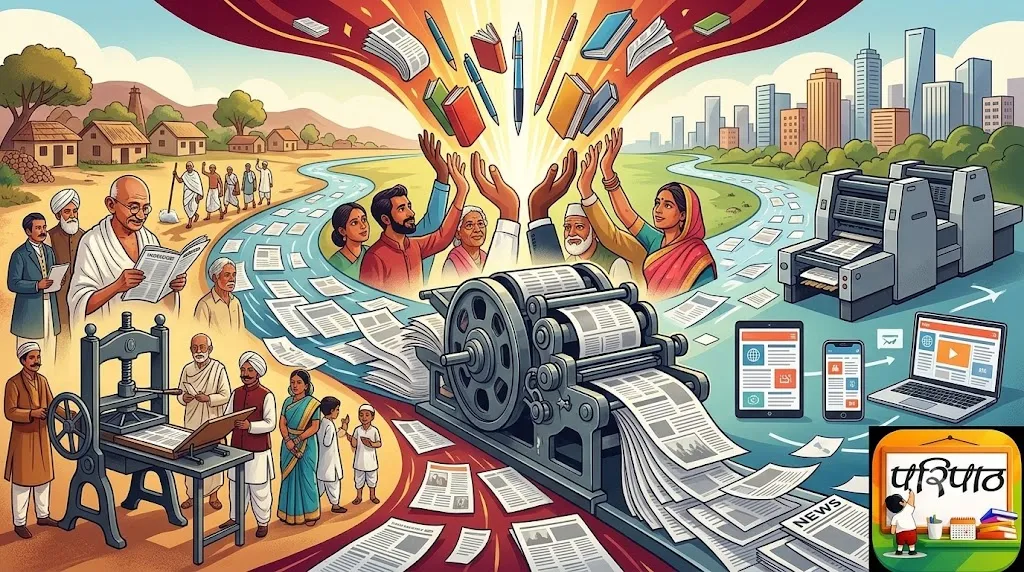
Today, July 13th, marks a day of historical significance. On this very day in 1838, 'The Times of India', a newspaper that would become a cornerstone of Indian journalism, was established. As we commemorate the anniversary of this venerable publication, we embark on a journey through the fascinating evolution of journalism in India. The press is not merely a purveyor of news; it is a mirror reflecting society, a pillar upholding democracy, and a potent instrument of change. In a diverse nation like India, journalism has played an unforgettable role, from the shackles of colonial rule to the fervor of the independence movement, and through the complex tapestry of modern democratic nation-building. This blog post will delve into these pivotal stages, highlighting key journalists and publications, and exploring the challenges and opportunities that define contemporary Indian journalism.
The Dawn of the Fourth Estate: Journalism in Colonial India
The seeds of journalism in India were sown by European colonizers, particularly the British East India Company. Initially, these publications primarily served the European community, aiming to disseminate information among company employees and British officials. In 1780, 'James Augustus Hicky' launched the 'Bengal Gazette', widely recognized as India's first newspaper. Also known as 'Calcutta General Advertiser', Hicky was a remarkably bold and outspoken journalist. He frequently criticized the company's corruption and the misconduct of its officials, often incurring the wrath of the British administration. Consequently, his newspaper was swiftly shut down. Yet, Hicky ignited the first flame of press freedom, a beacon that would inspire generations of Indian journalists.
Following Hicky's pioneering efforts, several other European individuals established newspapers in India, such as the 'Calcutta Gazette' (1784), 'Madras Courier' (1785), and 'Bombay Herald' (1789). These were predominantly English-language publications with a limited readership. The British administration, wary of the press's potential influence, enacted several restrictive laws, including the 'Censorship of Press Act, 1799' and the 'Licensing Regulation, 1823'. These acts posed significant challenges for journalists and publishers.
The advent of vernacular journalism in India began in the early 19th century. 'Raja Ram Mohan Roy' is often hailed as the "Father of Indian Journalism." In 1821, he launched 'Sambad Kaumudi', a Bengali weekly, through which he advocated for social reforms, campaigned against superstitions, and promoted education. He also started 'Mirat-ul-Akhbar', a Persian-language newspaper, which was the first of its kind in India. Raja Ram Mohan Roy transformed newspapers from mere news outlets into powerful tools for social change and public awareness.
Marathi journalism also boasts a rich history. On January 6, 1842, 'Balshastri Jambhekar' launched 'Darpan', the first Marathi newspaper. Jambhekar is revered as the "Father of Marathi Journalism." Through 'Darpan', he wrote on social, political, and cultural issues, publishing articles in both English and Marathi to disseminate information and ideas to society. 'Darpan' laid the foundation for the spread of knowledge and thought in the Marathi language. He later also started the monthly magazine 'Digdarshan'.
During this period, the primary functions of newspapers were to inform, promote social and religious reforms, and critique the policies of the British Raj. Despite numerous restrictions imposed by the British, Indian journalists skillfully used their pens to awaken a sense of nationalism among the people, performing a crucial service in shaping public opinion.
The Press as a Weapon: Fueling the Freedom Struggle
In the late 19th and early 20th centuries, Indian journalism played an absolutely vital role in the freedom struggle. Newspapers ceased to be mere sources of information; they transformed into potent weapons that united the populace, fostered a sense of nationalism, and vocalized dissent against British rule.
Many visionary leaders of this era became journalists themselves. 'Lokmanya Bal Gangadhar Tilak' stands as a prime example. In 1881, he launched 'Kesari' (Marathi) and 'Mahratta' (English) newspapers. 'Kesari', through its Marathi language, reached the common people, igniting political awareness among them. Tilak's famous proclamation, "Swarajya (self-rule) is my birthright, and I shall have it!", was propagated through 'Kesari'. His fiery editorials often unnerved the British government, leading to his frequent imprisonment. Tilak's writings possessed immense power; he didn't just report news, he articulated people's emotions and encouraged them to participate in the freedom movement.
Mahatma Gandhi also effectively wielded journalism. Through newspapers like 'Young India', 'Harijan', and 'Indian Opinion', he propagated his principles of non-violence and Satyagraha. Gandhi's writings were not solely political; they also emphasized social reform, eradication of untouchability, and rural development. His newspapers made the common person an integral part of the freedom struggle.
Annie Besant, through her newspapers 'New India' and 'Commonweal', propelled the Home Rule League movement. Publications such as Lala Lajpat Rai's 'Vande Mataram', Maulana Abul Kalam Azad's 'Al-Hilal', and Jawaharlal Nehru's 'National Herald' also made significant contributions to the independence movement.
The British government enacted several draconian laws to curb the growing influence of the press. The 'Vernacular Press Act of 1878' was one such legislation, imposing severe restrictions on Indian language newspapers. Under this act, the government had the authority to confiscate the property of newspapers that published anti-government content. However, these laws did not deter Indian journalists. They continued to critique British rule through various means, sometimes using symbolic language, at other times directly. Many journalists sacrificed their lives, endured imprisonment, but kept the flame of their pens burning. Newspapers fostered a sense of national unity, bringing together people from different regions for a common goal and inspiring them towards the dream of independence.
During this period, newspapers not only conveyed political messages but also served as a medium for social reform, education, and cultural renaissance. They advocated for women's rights, opposed child marriage, and spoke out against caste discrimination. Thus, Indian journalism acted not merely as a source of information but as a driving force in the freedom struggle.
Post-Independence Journalism: The Fourth Pillar of Democracy
India gained independence on August 15, 1947, marking the beginning of a new era in Indian journalism. The press no longer had the task of opposing British rule; instead, it faced the challenge of playing a constructive role in building an independent India. The framers of the Indian Constitution recognized the importance of journalism by including the right to freedom of expression (Article 19(1)(a)) among the fundamental rights, officially recognizing the press as the 'Fourth Pillar of Democracy'.
In the post-independence era, Indian journalism witnessed many ups and downs. The initial years focused on the challenges faced by the newly independent nation. Newspapers highlighted development projects, five-year plans, social changes, and international relations. English newspapers like 'The Hindu', 'The Statesman', 'Indian Express', and 'The Times of India', along with regional language newspapers such as 'Maharashtra Times', 'Loksatta', 'Ananda Bazar Patrika', and 'Dainik Jagran', solidified their influence.
In the 1970s, Indian democracy faced a major setback with the imposition of the 'Emergency' (1975-1977). The then-government imposed strict censorship on newspapers. News was scrutinized, editorials were left blank, and many journalists were imprisoned. This was a severe assault on the freedom of the press. Nevertheless, many courageous journalists and newspapers resisted government oppression. 'Indian Express' published blank editorials as a protest, while some newspapers tried to convey the truth to the public through symbolic language. The resilience shown by journalism during the Emergency proved crucial for strengthening Indian democracy. After the Emergency ended, press freedom was re-established, and the role of newspapers became even stronger.
Subsequently, 'investigative journalism' gained prominence. Newspapers exposed numerous scams, corruption, and social issues. They played a vital role in cases like the 'Bofors scam' and the 'Fodder scam'. During this period, television also arrived. 'Doordarshan', being a government-owned medium, had limited reach, but in the 1990s, private television channels emerged, revolutionizing news delivery. This increased the speed of news dissemination, and visual media made news more engaging.
Newspapers contributed significantly not only to political but also to social, economic, and cultural development. They raised awareness on crucial issues such as education, health, environment, and human rights. From local problems to global affairs, newspapers helped inform the public and empower them to become aware citizens.
Post-independence, journalism faced various challenges, including government pressure, economic constraints, and technological changes. Despite these, Indian journalism maintained its credibility and played a significant role in safeguarding democratic values.
Modern Journalism: Challenges and Opportunities
In the 21st century, the revolution in information technology and the internet has completely transformed the landscape of journalism. With smartphones, social media, and 24x7 news channels, there is an unprecedented deluge of information. In today's era, the challenges and opportunities for journalism are immense.
Challenges:
- Fake News and Misinformation: Social media rapidly spreads false and misleading information. 'Fake news' is one of the biggest challenges facing journalism today. It can erode public trust in news and sow discord in society.
- Lack of Digital Literacy: Many people struggle to differentiate between reliable sources and fake news, making them susceptible to misinformation.
- Economic Pressure: The growth of digital media has impacted the revenue of traditional newspapers. Many newspapers are facing financial difficulties, which can potentially compromise their journalistic independence.
- Bias and Subjectivity: Some media outlets are accused of bias and promoting specific ideologies, which threatens the impartiality of journalism.
- Information Overload: With 24-hour news availability, it becomes challenging for people to decide which information to trust and what to prioritize.
Opportunities:
- Rapid Information Dissemination: The internet allows news to reach globally almost instantly. This provides people with immediate updates on events.
- Citizen Journalism: Social media enables ordinary citizens to become eyewitnesses to events and share information directly with the public. This has fostered 'citizen journalism'.
- New Platforms: Digital platforms like podcasts, blogs, and YouTube channels have provided journalists with new avenues to express their views and deliver news.
- International Reach: Digital media has given Indian journalism an opportunity to reach a global audience.
- Verification and Fact-Checking: The challenge of fake news has increased the importance of 'fact-checking' and verification. Many organizations and journalists are now making dedicated efforts to verify information.
In today's age, every citizen needs to critically evaluate the information they consume. It is crucial to learn which sources to trust, how to verify information, and to think critically. The future of journalism depends on its ability to adapt to technology while upholding ethical values.
Key Figures and Publications That Shaped India's Destiny
The journey of Indian journalism is indebted to numerous great personalities and publications that played a pivotal role. Without their contributions, the history of Indian journalism would be incomplete.
- James Augustus Hicky: Launched India's first newspaper, 'Bengal Gazette', igniting the first spark of press freedom.
- Raja Ram Mohan Roy: Through 'Sambad Kaumudi' and 'Mirat-ul-Akhbar', he championed social reforms and public awareness. He is considered the Father of Indian Journalism.
- Balshastri Jambhekar: Laid the foundation of Marathi journalism with 'Darpan' and promoted knowledge dissemination in the Marathi language.
- Lokmanya Bal Gangadhar Tilak: Through 'Kesari' and 'Mahratta', he sharpened the edge of the freedom struggle and awakened a sense of nationalism among the masses. His editorials remain inspiring to this day.
- Mahatma Gandhi: Propagated ideals of non-violence, Satyagraha, and social justice through 'Young India', 'Harijan', and 'Indian Opinion'.
- Ganesh Shankar Vidyarthi: Supported the national movement and voiced for the oppressed through his Hindi newspaper 'Pratap'.
- Acharya Atre: His sharp writing in 'Maratha' newspaper significantly influenced Maharashtra's politics and society. His contribution to the Samyukta Maharashtra movement is unforgettable.
- Ramnath Goenka: Founder of 'Indian Express', who set an example by steadfastly standing against the government for press freedom during the Emergency.
- Khushwant Singh: As editor of 'Illustrated Weekly of India' and 'Hindustan Times', he attracted readers with his witty and outspoken style.
Countless journalists like them, and their publications, have played a significant role in the social, political, and cultural shaping of India. They have protected democratic values, educated the public, and held power accountable.
Did You Know?
Did you know that the history of Indian journalism is full of fascinating facts?
- India's first newspaper, the 'Bengal Gazette', was in English but was started by an Irish individual, 'James Augustus Hicky'.
- 'The Times of India' was initially known as 'The Bombay Times' and was started in 1838. Its name was changed to 'The Times of India' in 1861.
- Before independence, 'Amrita Bazar Patrika' famously converted overnight into an English newspaper to circumvent the 'Vernacular Press Act'!
- Mahatma Gandhi himself hand-wrote the content for his newspaper 'Young India' for publication because he lacked sufficient funds for printing at the time.
- 'National Press Day' in India is celebrated every year on November 16th, commemorating the establishment of the 'Press Council of India'.
Conclusion
India's journey through journalism is not merely a chronicle of news dissemination; it is a mirror reflecting the soul of a nation, its struggles, aspirations, and democratic values. This journey, which began under the stringent restrictions of colonial rule, transformed into a powerful weapon during the freedom struggle and stood tall as the fourth pillar of democracy in the post-independence era. Today, in the digital age, journalism faces new challenges and opportunities. While grappling with issues like 'fake news' and information overload, it is imperative for journalism to remain steadfast in its core values of truth and impartiality.
As students, you are the citizens of the future. It is crucial for you to be aware, verify sources, and think critically when consuming information. Journalism is not just a medium for information; it is a vital force for social change and the protection of democracy. Recognizing the significance of this power, it is essential for all of us to contribute to building an informed and discerning society. May the power of the press endure, always standing on the side of truth, justice, and democracy.