Hello, young learners!
Imagine a life without problems. Sounds peaceful, right? But the truth is, problems are an unavoidable part of life, much like the sun rising every morning. From deciding what to wear for school to figuring out a tricky math problem, or even navigating a disagreement with a friend – our days are filled with little challenges. Instead of seeing them as roadblocks, what if we viewed them as opportunities? Opportunities to learn, grow, and become smarter, more capable individuals.
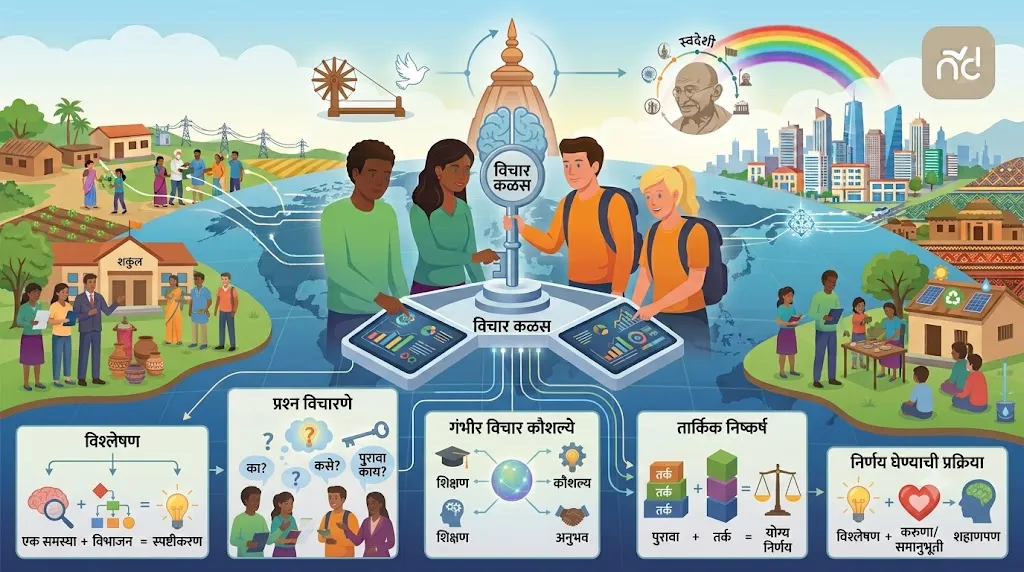
Today, we're diving deep into "The Power of Problem Solving: Critical Thinking to Find Solutions." This isn't just about finding quick fixes; it's about developing a core life skill that will empower you in academics, personal life, and future careers. We'll explore what problems truly are, how to approach them systematically, use critical thinking to understand them better, and finally, develop innovative solutions. Let's embark on this exciting journey to unlock your inner problem-solving superhero!
Embracing Challenges: Why Problems Are Your Best Teachers
At its core, a problem is simply a situation where there's a gap between where you are and where you want to be, or an obstacle preventing you from achieving a goal. For instance, if your bicycle tire goes flat on the way to school, that's a problem. If you're struggling to understand a concept in science, that's also a problem. Problems come in all shapes and sizes, but one thing is constant: they push us to think, adapt, and evolve.
"Problems are not stop signs, they are guidelines." – Robert H. Schuller
This quote perfectly encapsulates why problems are so crucial for our development. Every challenge you face is a chance to learn something new, to test your abilities, and to discover strengths you didn't know you had. When you engage with a problem, your brain becomes more active, exploring different angles and possibilities. This process sharpens your mind, expands your knowledge, and clarifies your thinking. History itself is a testament to problem-solving. Every major invention, every scientific breakthrough, every societal advancement has stemmed from someone trying to solve a problem – be it the need for light, faster travel, or better communication.
Think about it: the electric bulb solved the problem of darkness; the wheel, the problem of efficient transport; and the internet, the problem of global information exchange. These innovations weren't accidental; they were the result of persistent problem-solving. Therefore, mastering this skill is not just about getting good grades; it's about preparing you for a future where you can contribute meaningfully and overcome any hurdle that comes your way.
The Scientific Method of Problem Solving: A Step-by-Step Guide
Solving a problem isn't about guesswork; it's a systematic and logical process, much like the scientific method you learn in science class. By following a structured approach, you can break down complex issues into manageable parts and arrive at effective solutions. Let's explore these essential steps:
1. Define the Problem Clearly (What's Really Going On?)
Before you can solve a problem, you need to understand exactly what it is. Often, we jump to solutions without truly grasping the root cause, leading to wasted effort. Ask yourself:
- What precisely is the issue?
- What are its symptoms or effects?
- When and where does this problem occur?
- What is the core reason behind it?
Example: You received a low score on your history test. The immediate problem is the low score. But the real problem might be "not understanding how to study history effectively," or "difficulty memorizing dates and events," or even "poor time management during the test." Until you pinpoint the actual issue, any solution will be a shot in the dark.
2. Gather Information and Analyze (Become a Detective!)
Once the problem is defined, collect as much relevant information as possible. This might involve reading books, researching online, talking to teachers, or seeking advice from experienced individuals. Critically analyze the information you gather:
- Is this information reliable and accurate?
- Which details are most important?
- What are the different aspects related to this problem?
- Has anyone faced a similar problem before, and what did they do?
Example: For your history test score, you could review your textbook, check your notes, ask your teacher for feedback, or discuss study methods with high-scoring friends. Analyzing this information will help you identify patterns and potential areas for improvement.
3. Brainstorm Potential Solutions (Think Outside the Box)
At this stage, don't hold back any ideas – no idea is too silly! Engage in "brainstorming," either alone or with a group. The goal is to generate as many possible solutions as you can without immediately judging them.
- What are all the possible ways I could solve this?
- How might others approach this problem?
- Are there any unconventional or creative solutions?
Example: For the history test, potential solutions could include: creating flashcards for dates, drawing timelines, explaining concepts to a friend, practicing past papers, asking the teacher for extra help, watching educational documentaries, or revising your study schedule.
4. Evaluate and Select the Best Solution (Make an Informed Choice)
Now that you have a list of ideas, it's time to weigh the pros and cons of each. Consider which solution is most effective, practical, cost-efficient (in terms of time and effort), and likely to yield long-term results.
- What are the positive outcomes of this solution?
- What are the potential negative consequences?
- What resources (time, money, support) will I need to implement it?
- Will this solution truly address the root cause of the problem?
Example: You might decide that "creating flashcards and practicing past papers" combined with "asking the teacher for specific feedback" would be the most effective and practical approach for your history problem.
5. Implement the Solution (Take Action!)
Choosing a solution is only half the battle; putting it into action is crucial. Develop a plan and start executing it. Break down the implementation into smaller, manageable steps.
Example: Dedicate 30 minutes each day to create flashcards and review them. Schedule a specific time with your history teacher to discuss your test performance and get advice. Commit to solving at least one past paper every week.
6. Review and Reflect (Learn and Adjust)
After implementing your solution, it's essential to evaluate its effectiveness. Did it solve the problem? Did you achieve the desired outcome? If not, why? What can be improved or adjusted?
- Has the problem's intensity decreased?
- Did the solution create any new, unforeseen problems?
- Are further modifications necessary?
- If this solution failed, do you have a "Plan B" ready?
Example: In your next history test, if your scores improve, your solution was successful. If not, reflect on what went wrong. Perhaps you need to try a different study technique, or you misidentified the core problem. This step is about continuous learning and adaptation.
Cultivating Critical Thinking: Your Superpower
Critical thinking is the engine that drives effective problem-solving. It's not just about thinking; it's about thinking about thinking – analyzing, evaluating, and synthesizing information to make logical judgments and avoid flawed conclusions.
Key Attributes of Critical Thinking:
- Analysis: Breaking down information into its components and examining each part thoroughly.
- Evaluation: Assessing the credibility, relevance, and accuracy of information.
- Inference: Drawing logical conclusions based on available evidence.
- Explanation: Clearly articulating your thoughts, reasoning, and conclusions to others.
- Self-Regulation: Monitoring and correcting your own thinking processes, acknowledging biases, and revising your views when necessary.
How to Develop Critical Thinking Skills:
- Ask Probing Questions: Always ask "Why?", "How?", "What if?", "Who?", "When?". Don't accept information at face value; dig deeper for reasons and evidence.
- Challenge Assumptions: We often make assumptions without realizing it. Question these underlying beliefs and check their validity.
- Consider Multiple Perspectives: Understand that different people can view the same situation differently. Listen to and empathize with others' viewpoints.
- Evaluate Evidence: Look for credible evidence to support claims. Don't rely solely on hearsay or opinions.
- Think Logically: Base your decisions on facts and reasoning, rather than emotions or impulses.
- Engage in Debates and Discussions: Participate in healthy debates with friends or teachers. This helps clarify your thoughts and exposes you to diverse ideas.
Example: When you encounter a news story on social media, a critical thinker won't immediately share it. Instead, they'll check the source, verify the facts with other reputable news outlets, look for potential biases, and then form an informed opinion.
Real-World Applications: From Classroom to Life
Let's apply these problem-solving steps and critical thinking principles to common scenarios you might face:
1. Academic Challenges: Managing a Big Project
- Problem: A large school project with a tight deadline.
- Information Gathering: Understand project requirements from the teacher, research the topic, see how peers are approaching it.
- Brainstorm Solutions: Break the project into smaller tasks, set mini-deadlines, delegate tasks if it's a group project, gather materials in advance, dedicate a specific time each day.
- Best Solution: Breaking it down, creating a timeline, and daily dedicated work.
- Implementation: Create a detailed schedule, allocate time for research, writing, and revisions. Stick to the schedule.
- Evaluation: Regularly check your progress against the timeline. If you're falling behind, adjust your schedule or seek help from your teacher.
2. Social Dilemmas: Resolving a Misunderstanding with a Friend
- Problem: A misunderstanding has caused a rift in your friendship.
- Information Gathering: Talk to your friend directly and calmly to understand their perspective. Avoid gossip.
- Brainstorm Solutions: Apologize (if you're at fault), explain your side, suggest a neutral mediator, agree to disagree, spend time together doing something fun to reconnect.
- Best Solution: A direct, honest conversation to clear the air.
- Implementation: Arrange a private meeting with your friend. Express your feelings calmly, listen actively to theirs, and offer an explanation or apology.
- Evaluation: Has the misunderstanding been resolved? Is your friendship back on track? What can you do to prevent similar issues in the future?
3. Personal Growth: Improving Time Management
- Problem: You often feel overwhelmed with homework, extracurriculars, and personal time, leading to missed deadlines or stress.
- Information Gathering: Track how you currently spend your time for a few days. Identify time-wasting activities. Research effective time management techniques (e.g., Pomodoro Technique, Eisenhower Matrix).
- Brainstorm Solutions: Create a daily/weekly schedule, prioritize tasks, set specific goals for each study session, reduce distractions (phone), learn to say 'no' to non-essential activities.
- Best Solution: Creating a realistic schedule and prioritizing tasks.
- Implementation: Use a planner or a digital app to map out your day. Assign time blocks for study, hobbies, and rest. Start with the most important tasks.
- Evaluation: At the end of each day or week, review how well you stuck to your schedule. Were you productive? Did you feel less stressed? Adjust your schedule as needed to find what works best for you.
The Mindset of a Master Problem Solver: Resilience and Innovation
The journey of problem-solving isn't always smooth. You'll encounter setbacks, failed attempts, and moments of frustration. This is where "resilience" and "independent thinking" become your greatest assets.
Resilience: Bouncing Back Stronger
Resilience is the ability to recover quickly from difficulties. When a solution doesn't work, instead of giving up, a resilient person learns from the failure and tries again. Every setback is a learning opportunity. Thomas Edison famously said after thousands of attempts to invent the light bulb, "I have not failed. I've just found 10,000 ways that won't work." This is the essence of resilience.
Embrace your mistakes, modify your approaches, adopt new perspectives, and persist. This not only helps you solve problems but also builds character, making you stronger and more capable of tackling any challenge life throws at you.
Independent Thinking: Innovating Solutions
Independent thinking is the ability to think and make decisions using your own intellect, rather than relying solely on others' opinions. It's about fostering creativity and innovation. Sometimes, conventional solutions aren't enough, and you need to think "outside the box."
- Cultivate Creativity: Engage in activities that spark your imagination, like art, music, writing, or creative storytelling.
- Seek Different Angles: Try to view a problem from perspectives no one else has considered.
- Be Open to Risk: Trying new solutions often involves a degree of risk. But it's through taking calculated risks that significant breakthroughs occur.
Independent thinking transforms you from a mere follower into an innovator. It empowers you to not just solve existing problems but to foresee future challenges and create novel solutions, positioning you as a leader and a trailblazer.
Conclusion: Building a Capable Future
Dear students, problem-solving is more than just an academic skill; it's a fundamental life skill. It will empower you to excel in school, college, your career, and your personal life. The ability to think critically, analyze information systematically, devise innovative solutions, and remain resilient in the face of setbacks will distinguish you as an exceptional individual.
Start practicing these steps today with the small challenges you encounter daily – from deciphering a complex homework question to strategizing for a school game. Remember, every problem is an opportunity to become smarter, more capable, and more confident.
The more you practice, the more proficient you'll become. So, don't shy away from challenges; embrace them. Your future is in your hands, and problem-solving is the key to unlocking its full potential.
Did You Know?
- The invention of the zero by ancient Indian mathematicians like Aryabhata was a profound problem-solving feat that revolutionized mathematics globally, making complex calculations possible.
- India's first female President, Pratibha Patil, overcame numerous political and social challenges to reach the highest office, demonstrating remarkable resilience and problem-solving acumen.
- Renowned Indian classical singer Gangubai Hangal faced significant societal hurdles but persevered to establish herself as a legend, proving that passion and determination can solve the problem of adversity.
- ISRO's successful Chandrayaan-3 mission to the Moon's South Pole involved solving incredibly complex scientific and engineering problems, showcasing India's prowess in space exploration and innovative thinking.
- Draupadi Murmu's journey from a tribal community to becoming the President of India is an inspiring testament to overcoming numerous obstacles through sheer will and strategic problem-solving.