Atomic Energy: From Destruction to Development
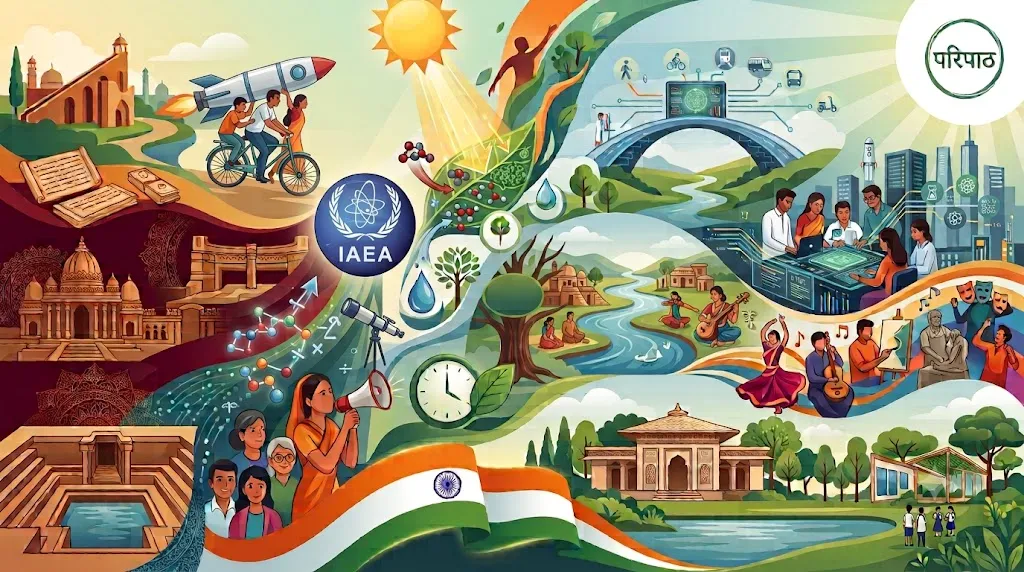
The very mention of 'atomic energy' often conjures images of devastating nuclear bombs, recalling the horrors of Hiroshima and Nagasaki. This powerful, destructive image is so deeply ingrained that its more positive, life-enhancing applications are frequently overlooked. Yet, atomic energy holds immense potential as a tool for human welfare, development, and progress. Today, September 26th, marks the anniversary of the first General Conference of the International Atomic Energy Agency (IAEA) in 1957 – an organization established precisely to ensure the peaceful uses of atomic energy and prevent its proliferation. On this significant date, let's explore how atomic energy is harnessed for peaceful purposes, particularly in electricity generation, medicine, and agriculture, and understand India's pivotal role in this journey.
At its core, atomic energy is the immense power stored within the nucleus of an atom. This energy is released either by splitting atoms (fission) or by combining them (fusion). Nuclear power plants primarily utilize the controlled fission of heavy atoms like uranium and plutonium. The heat generated from this process is used to boil water, producing steam that drives turbines to generate electricity. This is what we call Nuclear Power.
Nuclear Power Generation: A Clean and Sustainable Energy Source
The world's escalating population and rapid industrialization have led to a massive increase in energy demand. Traditional fossil fuels like coal and petroleum are finite resources, and their combustion releases significant amounts of greenhouse gases, exacerbating climate change. In this context, nuclear energy emerges as a clean and sustainable alternative.
- Low Carbon Emissions: Nuclear power plants produce electricity without emitting carbon dioxide or other greenhouse gases, making them a crucial tool in combating climate change.
- High Energy Density: A single small pellet of uranium can produce as much energy as thousands of tons of coal. This allows for massive energy generation in a compact space using minimal fuel.
- Consistent Energy Supply: Nuclear power plants can operate 24/7, providing a continuous baseload power supply, unlike solar or wind energy, which are dependent on weather conditions and daylight.
- Economic Stability: The cost of nuclear fuel tends to be stable, leading to more predictable electricity generation costs.
In India, the nuclear energy program was envisioned by Dr. Homi J. Bhabha, who recognized its importance for the nation's energy security. Today, India operates 23 nuclear power reactors with a total installed capacity of 7,480 MW, and several more are under construction.
Safety is a paramount concern in nuclear power generation. While incidents like Chernobyl and Fukushima raised global alarms, modern nuclear power plants are designed with stringent safety standards and advanced technology. Multiple layers of safety systems, automatic shutdown mechanisms, and robust emergency preparedness plans significantly reduce the risk of accidents.
Revolutionizing Medicine with Atomic Energy
The peaceful applications of atomic energy extend far beyond electricity generation, profoundly transforming the field of medicine. Radioisotopes, which are radioactive forms of elements, are invaluable for diagnosing and treating a wide range of serious diseases.
- Cancer Diagnosis and Treatment: Radioisotopes like Cobalt-60, Iodine-131, and Technetium-99m are widely used in oncology. Cobalt-60 is crucial for radiotherapy, targeting and destroying cancer cells. Iodine-131 is highly effective in treating thyroid cancer. Modern imaging techniques like PET (Positron Emission Tomography) scans also utilize radioisotopes to detect diseases early within the body.
- Sterilization: Gamma radiation is employed to sterilize medical equipment, syringes, and other healthcare products. This process is highly effective, ensuring the safety of medical instruments.
- Diagnostic Tracers: Radioisotopes are used as 'tracers' to monitor blood flow, organ function, and metabolic processes within the body. This helps in identifying heart diseases, kidney disorders, and bone abnormalities.
India's Bhabha Atomic Research Centre (BARC) and other institutions are major producers of medical radioisotopes, contributing significantly to India's self-reliance in the medical sector and enabling life-saving treatments for countless patients.
Significant Contributions to Agriculture and Food Security
Atomic energy also plays a vital role in agriculture, enhancing food security and improving crop yields. Feeding the world's growing population is a monumental challenge, and nuclear technology offers innovative solutions.
- Crop Improvement: Radiation is used to induce mutations in plant seeds, leading to the development of new and improved crop varieties. These varieties can be higher-yielding, disease-resistant, and more tolerant to adverse climatic conditions. For instance, India's Department of Atomic Energy has developed numerous improved crop varieties that benefit farmers across the nation.
- Pest Control: The 'Sterile Insect Technique' (SIT) involves sterilizing male insects using radiation and then releasing them into the wild. These sterile males mate with female insects, but no offspring are produced, leading to a reduction in pest populations and protecting crops.
- Food Preservation and Storage: Exposing food items to controlled radiation (food irradiation) eliminates microorganisms and pests, extending their shelf life and maintaining quality. This process is applied to various foods like onions, potatoes, spices, fruits, and meat, significantly reducing food spoilage and waste.
- Soil and Water Management: Radioactive tracers help scientists study water movement in soil, nutrient absorption by plants, and fertilizer efficiency. This information assists farmers in optimizing the use of water and fertilizers, leading to more sustainable agricultural practices.
India's Peaceful Journey in Nuclear Technology
India's nuclear energy program is a testament to Dr. Homi J. Bhabha's foresight. He envisioned an India self-reliant in nuclear energy, strictly for peaceful applications. The Atomic Energy Commission was established in 1948, followed by the Department of Atomic Energy (DAE) in 1954.
India has developed a unique 'Three-Stage Nuclear Power Programme' designed to utilize the country's vast thorium reserves for long-term energy security. The program's stages are:
- Stage 1: Pressurized Heavy Water Reactors (PHWRs) use natural uranium to generate electricity and produce Plutonium-239.
- Stage 2: Fast Breeder Reactors (FBRs) use Plutonium-239 and Uranium-238 to produce more plutonium and Uranium-233.
- Stage 3: Thorium-based reactors will use Uranium-233 to generate power. Given India's abundant thorium reserves, this stage is crucial for meeting the nation's long-term energy needs.
India has consistently emphasized its commitment to the peaceful uses of atomic energy. The nuclear tests conducted in 1974 and 1998 were declared by India to be for peaceful purposes, demonstrating its technological capabilities while adhering to a 'No First Use' policy for nuclear weapons. While India is not a signatory to the Nuclear Non-Proliferation Treaty (NPT), it has actively opposed proliferation and demonstrated its commitment to global nuclear security.
Raja Ramanna and India's Nuclear Program: Among the many notable individuals whose death anniversaries fall around September 26th, is Dr. Raja Ramanna (whose passing anniversary is September 24th), a pivotal figure in India's nuclear program. He played a crucial role in the 1974 Pokhran nuclear test, and his work remains a cornerstone of India's peaceful nuclear development.
Global Cooperation and Safety: The Role of the IAEA
Ensuring the peaceful use of atomic energy and preventing the proliferation of nuclear weapons is of paramount international importance. This led to the establishment of the International Atomic Energy Agency (IAEA) in 1957. The commencement of its first General Conference on September 26th symbolizes the global regulation of atomic energy.
The primary objectives of the IAEA are:
- Promoting Peaceful Uses: Assisting member states in developing and utilizing nuclear technology for peaceful applications.
- Establishing Safety Standards: Developing and helping implement global safety standards for nuclear safety and radiation protection.
- Preventing Proliferation: Applying 'safeguards' to ensure that nuclear technology is not diverted for the development of nuclear weapons.
The IAEA operates under the umbrella of the United Nations and plays a critical role in global nuclear governance. Many countries, including India, are members of the IAEA and actively participate in international efforts for nuclear safety and non-proliferation.
Atomic Energy: Future Power and Responsibility
Atomic energy holds immense potential to bring about positive change in human lives. From generating clean electricity to saving lives and ensuring food security, its applications are vast. However, with such immense power comes great responsibility.
- Nuclear Waste Management: Safely managing radioactive waste generated from nuclear power production is a significant challenge. This waste can remain radioactive for thousands of years, necessitating secure storage and disposal solutions.
- Risk of Proliferation: Ensuring that nuclear technology is used solely for peaceful purposes and not diverted for destructive weapons requires stringent international regulations and inspections.
- Safety: The safety of nuclear power plants remains a top priority. Future efforts are focused on developing even safer and more efficient reactor designs, such as Small Modular Reactors (SMRs).
For developing nations like India, where energy demand is soaring and climate change needs to be addressed, nuclear energy is a vital option. When used responsibly and safely, atomic energy can be an invaluable asset for humanity's progress.
Did You Know?
- The world's first self-sustaining nuclear chain reaction was achieved in Chicago Pile-1 at the University of Chicago in 1942, led by Enrico Fermi.
- India's first nuclear power plant, Tarapur Atomic Power Station, began commercial operation in 1969.
- Globally, about 10% of the world's electricity is generated from nuclear power, with over 440 operational reactors.
- The volume of high-level radioactive waste produced by nuclear power plants is relatively small compared to other industrial wastes.
- Nuclear technology is also used to analyze lunar soil samples brought back by space missions.