Introduction: The Intersection of Heritage and Silicon
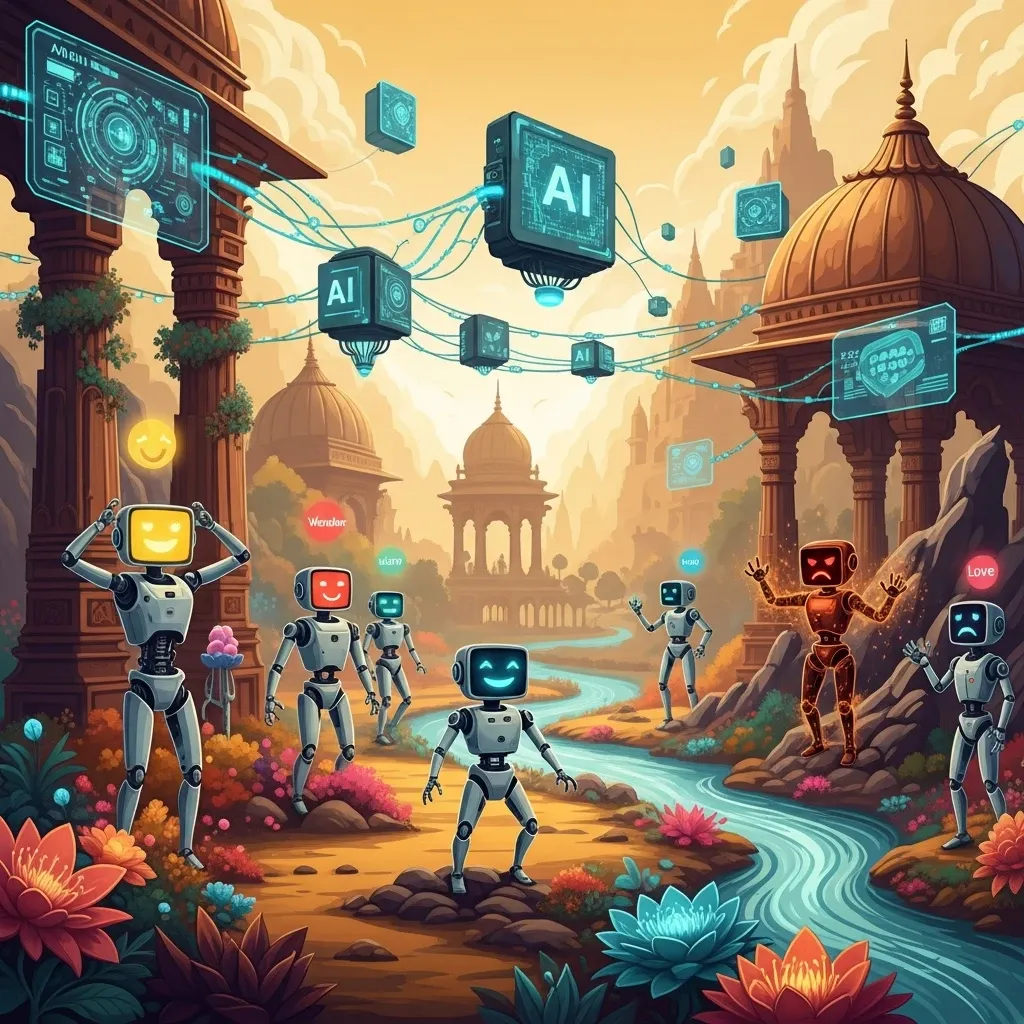
As we approach the 2026 National School Science-Art Fair, a revolutionary concept is taking center stage: the integration of Bharata Muni's Natya Shastra with modern Affective Computing. The 'Navras' of Robotics is not just a project; it is a philosophy that seeks to bridge the gap between cold, logical circuits and the warm, complex world of human emotion. Imagine a robot that doesn't just process commands but reacts with the grace of a dancer or the intensity of a warrior. This guide delves deep into how students can utilize the Nine Classical Indian Emotions (Shringara to Adbhuta) to design the next generation of AI interfaces.
Historical Context: From Natya Shastra to Neural Networks
The Natya Shastra, an ancient Indian treatise on the performing arts, defines 'Rasa' as the essence of an aesthetic experience. For centuries, Indian classical dancers have used these nine rasas to communicate complex stories. In the digital age, we translate these into User Experience (UX) and Human-Computer Interaction (HCI). Instead of just 'input' and 'output', we now talk about 'stimulus' and 'aesthetic response'.
The Evolution of Emotional AI
Historically, AI was designed to be neutral. However, research in the 2020s proved that humans trust robots more when they display recognizable emotional cues. By using the Navras framework, Indian students have a unique cultural toolkit to lead this global shift in robotics design.
Decoding the Nine Rasas for AI Design
Each Rasa provides a specific blueprint for color palettes, movement speeds, and vocal frequencies in your robot project.
| Rasa (Emotion) | Primary Color | Movement Type | AI Application |
|---|---|---|---|
| Shringara (Love/Beauty) | Light Green/Pink | Fluid & Graceful | Personal Assistant Robots |
| Hasya (Laughter) | White/Bright Yellow | Bouncy & Rapid | Educational/Toy Robots |
| Karuna (Compassion) | Grey/Soft Blue | Slow & Subtle | Healthcare/Elderly Care |
| Raudra (Anger) | Red | Sharp & Jerky | Security Alerts/Critical Errors |
| Veera (Heroism) | Saffron/Gold | Upright & Sturdy | Search & Rescue Drones |
| Bhayanaka (Fear) | Black/Purple | Cowering/Retracting | Hazard Warning Systems |
| Bibhatsa (Disgust) | Blue/Indigo | Avoidance/Turning Away | Waste Management Filters |
| Adbhuta (Wonder) | Yellow/Sparkling | Expansive/Rising | Science Education Displays |
| Shanta (Peace) | Pure White | Minimalist/Still | Meditation & Sleep Aids |
Designing the Interface: A Step-by-Step Guide
1. Sentiment Analysis and Mapping
Your robot must first 'perceive'. Use a camera for facial recognition and a microphone for tone analysis. Example: If the user's voice is high-pitched and fast (indicating stress), the robot should respond with Shanta (Peace) or Karuna (Compassion) to calm the user.
2. Visual Feedback (The Face of AI)
Use NeoPixel LED rings or OLED screens to represent the Rasas. A rotating wheel of colors can represent the transition from one emotion to another. For Adbhuta, you might use a 'breathing' light effect that expands and glows brighter.
3. Kinematics (The Body Language)
Robotic arms and servos should be programmed for specific velocities. Veera requires high torque and steady positioning, whereas Shringara requires smooth interpolation between angles.
Frequently Asked Questions
Conclusion: The Future is Emotional
The 'Navras' of Robotics represents a shift from machines that 'do' to machines that 'feel' and 'connect'. As a student participating in the 2026 National School Science-Art Fair, your goal should be to create an interface that doesn't just function but resonates with the human soul. By mastering these nine essences, you are not just coding; you are performing an ancient art in a modern medium.