Introduction: The Clarion Call for Environmental Stewardship in 2026
Welcome to the academic year 2026-27! As the monsoon clouds gather over the Indian subcontinent, June 5th brings us more than just the promise of rain; it brings World Environment Day. In 2026, the global conversation has shifted from mere 'awareness' to 'radical action.' For students and educators, the school campus serves as the primary laboratory for sustainable living. Mission Green Campus is an ambitious initiative designed to transform educational institutions into zero-waste, carbon-neutral zones.
Historical Context: Why June 5th Matters
Established by the United Nations General Assembly in 1972 during the Stockholm Conference on the Human Environment, World Environment Day (WED) has grown to be the largest global platform for environmental public outreach. Over the decades, it has tackled issues from marine pollution to global warming. In the Indian context, the 'LiFE' (Lifestyle for Environment) mission launched by the government has further localized these global goals, urging every citizen to make mindful choices.
"The earth provides enough to satisfy every man's needs, but not every man's greed." - Mahatma Gandhi
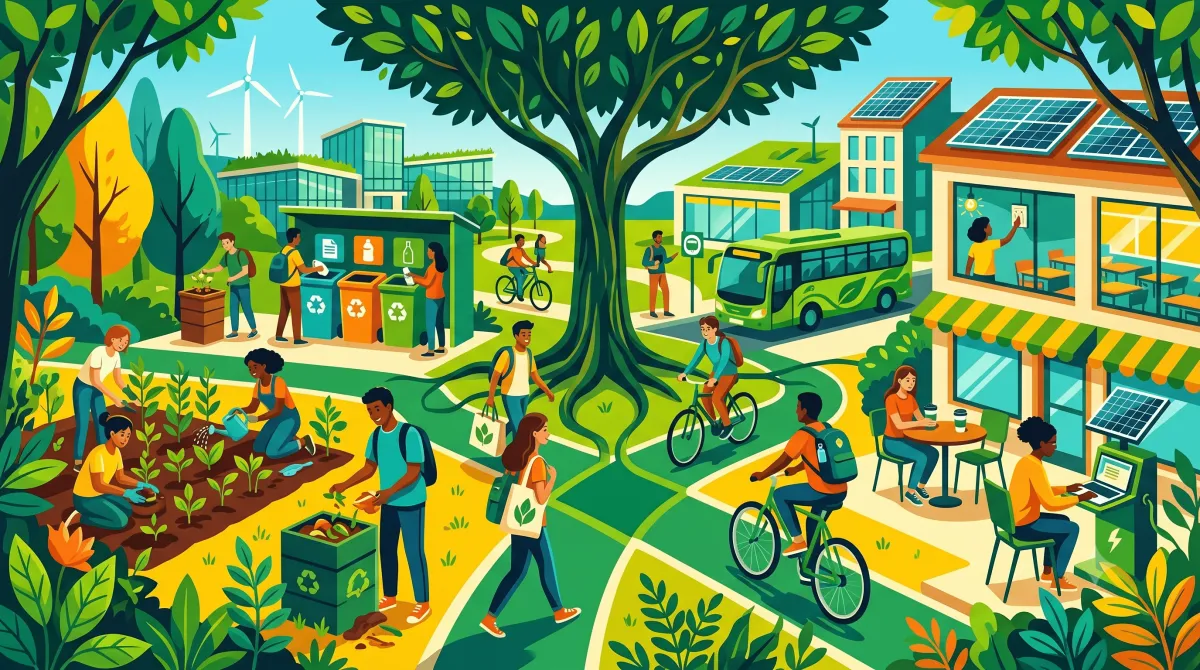
10 Sustainable Habits for a Green School Year
1. Eradicating Single-Use Plastic
Despite bans, single-use plastics often find their way into lunchboxes and school events. In 2026, we aim for a 100% plastic-free campus. Transitioning to stainless steel bottles and copper containers is not just eco-friendly but also healthier.
| Item | Plastic Impact | Sustainable Alternative |
|---|---|---|
| Water Bottle | Takes 450 years to decompose | Stainless Steel / Copper |
| Lunch Box | Leaches chemicals into food | Glass / Steel / Bamboo |
| Pens | Contributes to landfill mass | Refillable Fountain Pens / Bamboo Pens |
2. Implementing Five-Bin Waste Segregation
Moving beyond just 'Dry' and 'Wet' waste, modern green campuses implement a five-bin system to ensure maximum recycling efficiency. This habit ensures that resources are recovered rather than buried.
- Blue: Paper and Cardboard
- Green: Organic/Food Waste
- Yellow: Plastic and Metal
- Red: Hazardous/Electronic Waste
- Grey: Non-recyclable landfill waste
3. Active Energy Conservation
Energy saved is energy produced. Schools often consume massive amounts of electricity during peak hours. Habitual switching off of fans, lights, and smartboards when not in use can reduce a school's carbon footprint by up to 15%.
4. Promoting Green Commuting
Encourage 'Bicycle Fridays' or 'Walking Wednesdays.' If students live within a 2km radius, walking or cycling to school significantly reduces the localized air pollution (PM2.5 levels) around the school gate.
5. Native Tree Plantation and Maintenance
Planting a tree is easy; maintaining it is the challenge. For 2026, adopt a 'Tree-Twin' program where every student is responsible for one sapling throughout their academic year.
6. Digital-First Note Taking
While writing is essential for memory, excessive paper use leads to deforestation. Use both sides of the paper and transition to digital assignments where possible. 1 ton of paper saved prevents 17 trees from being cut.
7. The 'Close the Tap' Culture
Water scarcity is a looming threat. Simple habits like reporting leaking taps and using reusable water from bottles to water plants can save thousands of liters of water annually.
8. Eco-Stationery Choices
Choose seed-pencils (pencils that can be planted after use) and notebooks made from recycled paper. Avoid 'glitter' and plastic-coated covers which are non-biodegradable.
9. In-house Composting
Convert the canteen waste into 'Black Gold.' Setting up a vermicompost pit on campus teaches biology and chemistry in a real-world setting while providing fertilizer for the school garden.
10. Environmental Advocacy
Start an 'Eco-Club.' Use your voice to influence school policies. A green campus is a result of collective student demand and administrative support.
Frequently Asked Questions
Conclusion
Mission Green Campus is not a one-day event; it is a lifestyle. As we celebrate World Environment Day 2026, let these 10 habits be your guide to a fulfilling and responsible academic year. By changing our small daily routines, we contribute to a massive global impact. Let us make our school a beacon of sustainability for the rest of the community.