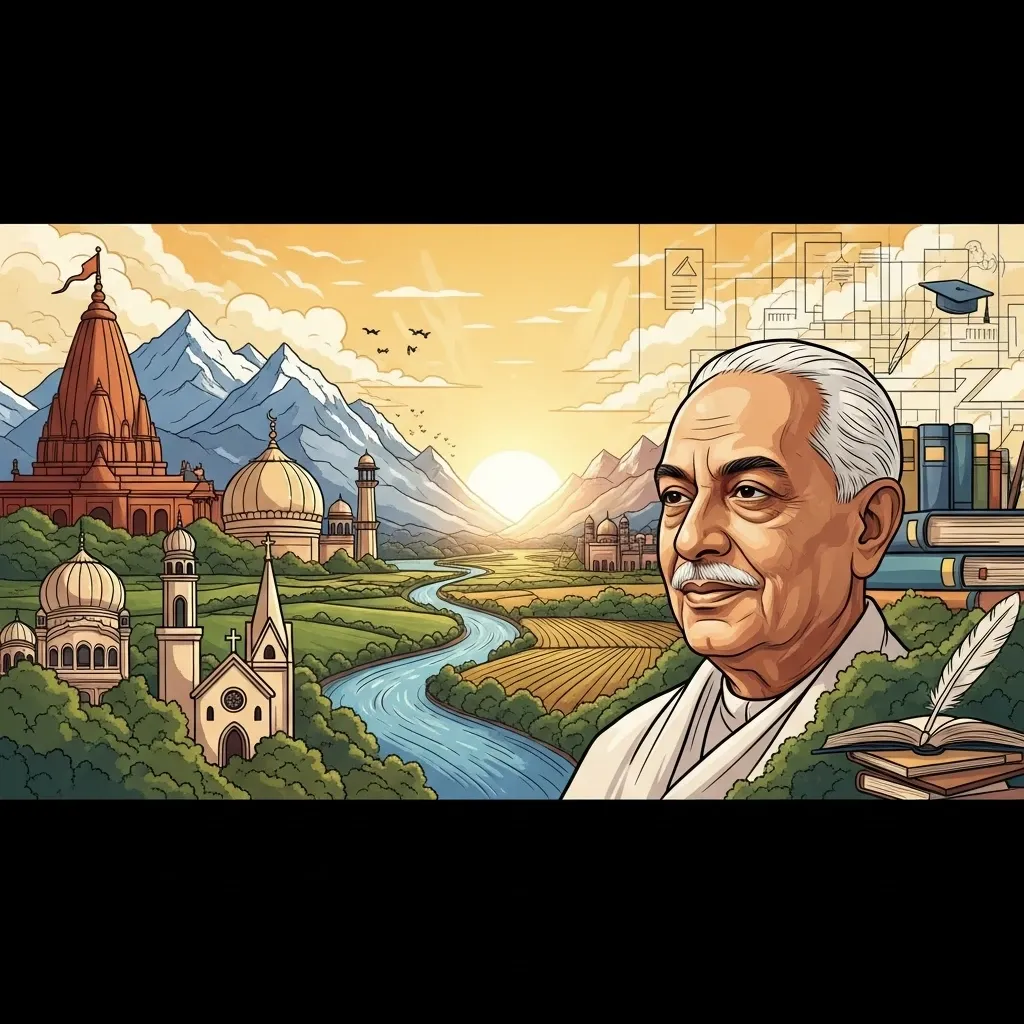
Jhumpa Lahiri: A Global Voice Bridging Cultures Through Storytelling
Today, July 11, 2026, marks a significant date for several reasons. While it's a day for observing Yogini Ekadashi and remembering historical events like ISRO's launch of five British satellites, and the somber Mumbai train bombings of 2006, it's also a day to celebrate the birth of a literary giant whose words have transcended borders. We are talking about none other than Jhumpa Lahiri, an author who has given voice to the complexities of immigration, cultural identity, and human relationships with unparalleled grace and insight.
The name Jhumpa Lahiri conjures images of poignant tales exploring the joys and sorrows of immigrant life, the struggles between two cultures, and the profound nuances of human emotion. Born on July 11, 1967, in London, Lahiri's formative years and education took place in the United States. Her parents, originally from West Bengal, India, instilled in her a deep connection to her heritage. This unique upbringing, straddling Bengali culture and American life, profoundly shaped her writing, giving her stories a universal resonance.
Who is Jhumpa Lahiri?
Born Nilanjana Sudeshna Lahiri, she adopted the nickname 'Jhumpa' for her writing career, a name given to her by her teachers. Her father, a librarian, and her mother, a teacher, fostered an environment rich in books and reading, sparking Lahiri's early love for literature. She earned her Bachelor's degree in English literature from Barnard College and pursued multiple graduate degrees from Boston University, including English, Comparative Literature, and Creative Writing. This academic journey exposed her to diverse cultures and literary traditions, broadening the scope and depth of her narratives.
Through her stories, Jhumpa Lahiri has consistently explored the emotions of Indian immigrants, their struggle to maintain cultural identity, and the intricate process of adapting to a new country. Her debut short story collection, 'Interpreter of Maladies,' was awarded the prestigious Pulitzer Prize in 2000, a testament to her extraordinary talent. This accolade catapulted her to international recognition, establishing her as a significant voice in contemporary literature almost overnight.
A Distinctive Narrative Voice
Jhumpa Lahiri's narrative style is characterized by its subtlety, honesty, and emotional depth. Rather than focusing on grand dramatic events, she masterfully weaves tales from the small, everyday moments of life, revealing the intricate tapestry of human emotions and relationships. Her language, though seemingly simple, possesses a poetic quality and sensitivity that deeply touches the reader.
- Subtle Observation: Lahiri excels at observing the inner thoughts and feelings of her characters with remarkable precision. Her characters are often quiet, introspective, and prone to concealing their emotions, yet the author portrays their inner worlds so effectively that readers feel a profound connection to them.
- Realistic Portrayal: Her stories are devoid of exaggeration. She presents the challenges faced by immigrants, the misunderstandings arising from cultural differences, and the generational gaps with unflinching realism. This allows readers to see themselves or people they know reflected in her narratives.
- Flowing Language: Her prose is fluid and accessible. By avoiding complex vocabulary or convoluted sentence structures, she reaches directly into the hearts of her readers. This makes her literature appealing not just to seasoned literary enthusiasts but also to young students.
For instance, in her novel 'The Namesake,' Lahiri tells the story of Gogol, an Indian-American boy who grapples with the meaning of his name and his bicultural identity. Lahiri's portrayal of Gogol's psychological struggle is so beautiful and sensitive that readers can easily empathize with his feelings. This novel is not just one person's story; it is a mirror reflecting the emotions of thousands of immigrants caught between two cultures.
“Sometimes I wonder if my parents know anything about me at all. They know the facts, of course. My age, my name, my address. But the real me, the person inside, I don't think they know that at all.”
— Jhumpa Lahiri, The Namesake
Immigration and Cultural Identity: The Core of Her Work
A significant portion of Jhumpa Lahiri's literature revolves around the themes of immigration and cultural identity. Being an immigrant herself, she possesses an intimate understanding of these experiences. Through her stories, she illuminates the following issues and emotions faced by immigrants:
- Conflict Between Two Cultures: Immigrants often find themselves caught between two cultures – their heritage culture and the culture of their new country. Lahiri's characters frequently struggle to reconcile these two worlds. For example, Indian parents wish to impart the importance of Indian culture to their children, while the children strive to assimilate into the American lifestyle. She effectively portrays the misunderstandings and emotional distance that arise from this conflict.
- Search for Identity: For the second generation of immigrants, finding one's identity is a major challenge. They are neither fully Indian nor fully American; they perceive themselves as being 'in between.' Lahiri's stories offer a psychological portrayal of this search for identity.
- Loneliness and Alienation: Immigrating to a new country often brings feelings of loneliness and alienation. Leaving behind old friends, family, and familiar surroundings to establish roots in a new place can be incredibly difficult. Lahiri's characters often grapple with this loneliness, experiencing a sense of isolation even when surrounded by people.
- Defining 'Home': 'Home' is not just a building; it is a place filled with emotions and memories. For immigrants, the concept of 'home' is complex. Their ancestral home might be in India, but their present home is in America. Lahiri's stories depict this shifting definition of 'home' and the emotional dilemma it creates.
In her short story collection 'Unaccustomed Earth,' Lahiri focuses on intergenerational relationships within immigrant families and the conflicts arising from cultural changes. These stories often feature children trying to balance their parents' expectations with their own American aspirations.
The Intricacies of Human Connection: Invisible Threads of Relationships
Jhumpa Lahiri's stories are not solely confined to immigration or identity; they also shed light on the complexities of human relationships. She meticulously examines emotions such as love, marriage, parent-child bonds, friendship, and solitude.
- Challenges in Love and Marriage: Many of her stories portray the love and marriages of Indian immigrant couples. She illustrates how the conflict between old traditions and new ideas impacts their relationships. In 'The Namesake,' the intricate relationship between the protagonist Gogol and his wife is clearly depicted.
- The Gap Between Parents and Children: In immigrant families, the cultural and ideological gap between parents and children can be significant. Parents often cling to their heritage culture, while children assimilate into the new culture. This can lead to a breakdown in communication and increased misunderstandings. Lahiri's stories offer a poignant yet truthful portrayal of this distance.
- Loneliness and Emotional Distance: Her characters often experience loneliness and emotional distance, even when surrounded by family or society. This distance is not merely physical but psychological and emotional. She effectively portrays their struggles to understand each other and their frequent failures in doing so.
The relationships in Jhumpa Lahiri's stories are rarely idealized; instead, they are reflections of reality. She also focuses on the imperfections, misunderstandings, and silences within these relationships. This makes readers feel that these characters are like people they know, and their emotions resonate with experiences they might have had themselves.
Did You Know?
- Jhumpa Lahiri was awarded the Pulitzer Prize in 2000 for her debut short story collection, 'Interpreter of Maladies.' She is one of the few authors of Indian descent to receive this prestigious award.
- Her novel 'The Namesake' was adapted into a successful Hollywood film directed by Mira Nair, starring Irrfan Khan and Tabu in lead roles.
- In 2011, Jhumpa Lahiri was appointed as a member of the President's Committee on the Arts and Humanities by then-U.S. President Barack Obama.
- Since 2015, Jhumpa Lahiri has begun writing in Italian, a language not native to her. Her first book in Italian, 'In Altre Parole' (In Other Words), explores her experience of learning the language.
- Her literature often features descriptions of food (especially Bengali dishes), which serves as an important aspect of cultural identity for immigrant families.
Inspiration for Students: Appreciating Diverse Literary Voices
Reading authors like Jhumpa Lahiri is incredibly valuable for school students. It not only enhances their English language skills but also imparts many important lessons:
- Understanding Diverse Cultures: Her stories help you understand Indian culture, American culture, and the lives of people who navigate both. This fosters respect and curiosity about different cultural backgrounds.
- Empathy and Sensitivity: Reading about the challenges, emotions, and struggles of immigrants increases your empathy and sensitivity. This enables you to understand others' feelings more deeply.
- The Search for Identity: In adolescence, everyone is on a journey to discover their identity. The identity struggles of Lahiri's characters can inspire you to understand yourself better and reflect on your own identity.
- Appreciation for Excellent Writing Style: Her simple yet profound writing style teaches you the importance of good writing. You can draw inspiration from her style when writing your own stories or essays.
- Global Perspective: Her literature encourages you to view the world from a broader perspective. It helps you understand global events and diverse human experiences, moving beyond the confines of your immediate surroundings.
In today's world, where information overload is common, reading good literature offers solace to the mind and intellect. Jhumpa Lahiri's stories not only entertain but also provoke thought, offering a more sensitive way of looking at the world. Her characters are often ordinary people from our own society, living their lives in extraordinary circumstances. The inspiration derived from her stories can help you become a better citizen and a more compassionate individual in the future.
Conclusion
Jhumpa Lahiri is more than just an author; she is a vital literary bridge connecting two cultures. Her stories powerfully articulate the emotions of immigrants, the struggle for cultural identity, and the intricate web of human relationships. Her writing is not only engaging for young students but also provides them with a perspective to view the world with greater sensitivity.
Today, on her birth anniversary, let us celebrate her remarkable literary journey. By reading her stories, we can understand different cultures and appreciate the diverse facets of human experience more intimately. Jhumpa Lahiri's literature reminds us that all of us, regardless of our backgrounds, are connected by fundamental human emotions. The lessons learned from her stories can prove invaluable in our lives.