Hello Students!
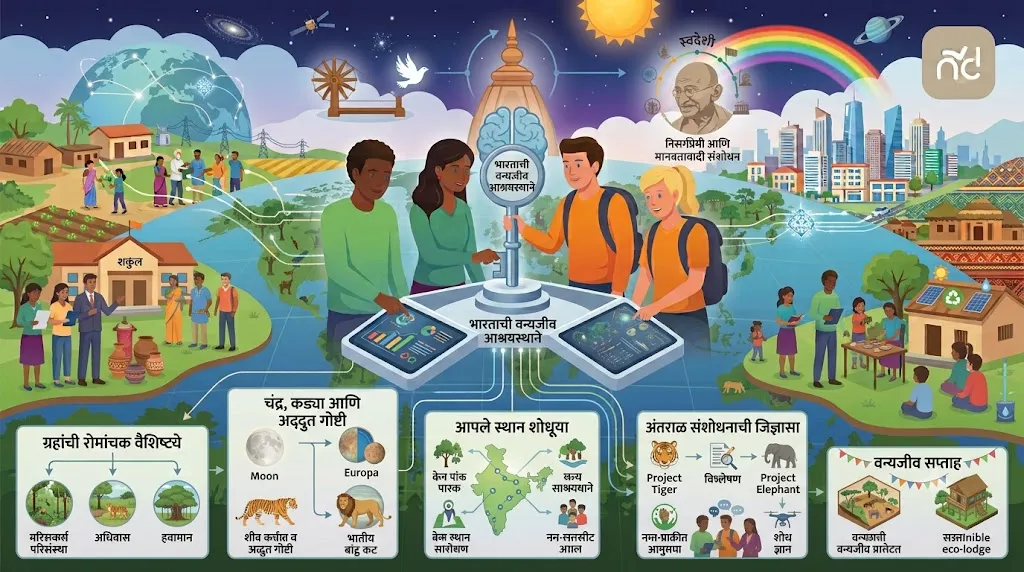
Today, October 1, 2026, we embark on a special journey to explore India's magnificent wildlife heritage and understand the crucial importance of its conservation. As we approach India's 'Wildlife Week,' celebrated annually from October 2nd to 8th, it's the perfect time to reflect on our nation's incredible biodiversity and our collective responsibility to protect this invaluable natural treasure. Let's delve into the fascinating world of India's National Parks and Wildlife Sanctuaries!
India's Incredible Biodiversity: A Priceless Heritage
India stands as one of the world's most biodiverse nations. Our country boasts an extraordinary range of geographical features, from the snow-capped peaks of the Himalayas to the tropical rainforests of the south, and from the arid deserts of the west to the dense forests of the east. This immense geographical diversity has fostered an unparalleled variety of flora and fauna. Though India accounts for only 2.4% of the world's land area, it is home to over 8% of the world's known species, including numerous rare and endangered ones.
Our land is home to thousands of species, including majestic tigers, regal lions, mighty elephants, one-horned rhinoceroses, elusive leopards, a myriad of birds, reptiles, and insects. This biodiversity not only enhances the beauty of nature but also plays a critical role in maintaining ecological balance. Every species is a vital link in the food chain, and its existence ensures the smooth functioning of natural processes.
National Parks & Sanctuaries: Fortresses of Conservation
To safeguard India's rich biodiversity, the Indian government has taken significant steps, most notably by establishing National Parks and Wildlife Sanctuaries. These protected areas serve as safe havens for wildlife, allowing them to thrive in their natural habitats and ensuring the conservation of their species.
- National Parks: These are areas designated for their ecological, faunal, geological, historical, or scientific importance. Human interference in National Parks is strictly limited, with activities like logging, hunting, and grazing strictly prohibited. Their primary objective is the rigorous protection of wildlife and their habitats. India currently has 106 National Parks.
- Wildlife Sanctuaries: These areas are established to protect specific animal or plant species. Compared to National Parks, some human activities (e.g., collection of fuelwood by local residents, limited grazing) might be permitted in sanctuaries, provided they do not disturb the wildlife. India has over 567 Wildlife Sanctuaries.
Both types of protected areas are established under the Wildlife Protection Act, 1972. This act helps curb poaching, illegal wildlife trade, and habitat destruction. These parks and sanctuaries protect not only wildlife but also rare plant species, natural ecosystems, and water sources, thereby maintaining ecological balance and providing essential natural services (like clean air and water) for humans.
Project Tiger and Other Conservation Initiatives
Launched in 1973, Project Tiger is one of India's most successful conservation programs. Initiated due to the dwindling tiger population, its goal was to protect tigers and their habitats. This project has significantly contributed to the increase in tiger numbers. Additionally, programs like Project Elephant, Project Lion, and Project Rhino are successfully implemented, aiding the conservation of other endangered species in India.
Journey Through India's Iconic Wildlife Havens
Let's embark on a virtual tour of some of India's most renowned National Parks and Sanctuaries, where we can witness the splendor of our nation's wildlife heritage:
1. Jim Corbett National Park (Uttarakhand)
India's first National Park, a haven for tigers.
Established in 1936, Jim Corbett National Park is India's oldest and first National Park. Initially known as 'Hailey National Park,' it was renamed in memory of the famous hunter-turned-conservationist Jim Corbett. Located in the Nainital district of Uttarakhand, this park is particularly renowned for the conservation of Bengal Tigers. Situated along the Ramganga River, the park is characterized by dense forests, grasslands, and hills. Besides tigers, it is home to leopards, elephants, deer, sambar, crocodiles, and a rich variety of bird species. Corbett is also a paradise for birdwatchers, with over 500 species of birds.
2. Gir National Park (Gujarat)
The last refuge of the Asiatic Lion.
Located in the Junagadh district of Gujarat, Gir National Park is the only place in the world where Asiatic Lions can be found in their natural habitat. Once on the verge of extinction, these lions have seen a remarkable recovery due to conservation efforts in Gir. The park was declared a sanctuary in 1965 and later gained National Park status. Besides lions, it shelters leopards, sambar, chital, nilgai, chowsingha (four-horned antelope), and a diverse array of birds and reptiles. Gir's dry deciduous forest is unique to its ecosystem.
3. Kaziranga National Park (Assam)
A World Heritage Site for the One-horned Rhinoceros.
Situated in the Golaghat and Nagaon districts of Assam, Kaziranga National Park is globally famous for its One-horned Rhinoceroses. Two-thirds of the world's population of these rhinos reside here. Located along the Brahmaputra River, the park comprises vast grasslands, marshlands, and tropical deciduous forests. In 1985, UNESCO declared it a World Heritage Site. Apart from rhinos, it hosts tigers, elephants, wild water buffalo, swamp deer, and numerous migratory birds. Kaziranga's wetland ecosystem is crucial for many aquatic animals.
4. Ranthambore National Park (Rajasthan)
A unique blend of tigers and historic forts.
Located in the Sawai Madhopur district of Rajasthan, Ranthambore National Park is celebrated for its magnificent tigers and the historic Ranthambore Fort. It is considered one of the best places in India for tiger sightings, with tigers often visible during the day, making it a favorite spot for wildlife photographers. Beyond tigers, the park is home to leopards, nilgai, sambar, chital, sloth bears, and various bird species. The historical fort and its surrounding lake-forest ecosystem create a unique and picturesque landscape.
5. Sundarbans National Park (West Bengal)
Mangrove forests and the mysterious abode of the Royal Bengal Tiger.
Situated in the delta region of the Ganges and Brahmaputra rivers in West Bengal, Sundarbans National Park is the largest mangrove forest in the world. This park is famous for its Royal Bengal Tigers, known for their ability to swim in saline waters. UNESCO declared it a World Heritage Site in 1987. The Sundarbans are vital due to their unique ecosystem and biodiversity, featuring diverse mangrove species, crocodiles, dolphins, kingfishers, and many bird species. These forests also act as a natural barrier, protecting coastal areas from cyclones.
6. Periyar National Park and Wildlife Sanctuary (Kerala)
South India's jewel, rich in elephants and biodiversity.
Nestled in the Western Ghats of Kerala, Periyar National Park and Wildlife Sanctuary is renowned for its elephants and tigers. Located on the banks of Periyar Lake, the park is characterized by lush evergreen and deciduous forests. It is home to elephants, tigers, gaurs (Indian bison), sambar, leopards, wild boars, and a variety of bird species. Boating on Periyar Lake offers an unforgettable experience of wildlife viewing. This park is a crucial part of South India's biodiversity.
Threats to Wildlife and the Urgent Need for Conservation
As we've seen, India's wildlife heritage is incredibly rich and diverse. However, this beautiful world faces numerous threats, pushing many species towards extinction. Key threats include:
- Poaching and Illegal Trade: Animals like tigers, rhinos, and elephants are hunted for their skin, bones, horns, or tusks, endangering their species.
- Habitat Loss: Due to increasing urbanization, agriculture, mining, and infrastructure development (e.g., roads, dams), forests are being cleared. This destroys the natural habitats of wildlife, leaving them with no place to live.
- Climate Change: Global warming and climate change negatively impact wildlife habitats, food chains, and breeding cycles.
- Human-Wildlife Conflict: As forests shrink, wildlife ventures into human settlements in search of food, leading to increased conflicts.
- Pollution: Plastic pollution, water pollution, and air pollution severely affect the health of wildlife and the environment.
Addressing these threats requires immediate and collective action. Not just governments or wildlife organizations, but every individual must contribute to this cause.
Our Role: Protecting Nature for Future Generations
Students, protecting nature is our collective moral responsibility. It is essential that we strive to ensure that the environment and wildlife we witness today can also be enjoyed by future generations. You too can participate in this noble cause:
- Raise Awareness: Learn more about wildlife and the environment. Share this knowledge with your friends, family, and teachers. Use social media to spread awareness.
- Reduce Waste: Avoid plastic, dispose of waste properly, and use reusable items. Plastic is extremely harmful to wildlife and the environment.
- Respect Nature: When visiting National Parks or Sanctuaries, adhere to the rules. Do not disturb wildlife, do not feed them, and maintain peace in their natural habitats.
- Support Conservation Programs: Participate in any wildlife conservation programs organized by your school or community.
- Conserve Water and Energy: Use natural resources judiciously. This indirectly contributes to environmental protection.
Did You Know?
- India is home to the largest tiger population in the world, accounting for over 70% of the global wild tiger population.
- The Sundarbans in India is the only mangrove forest in the world where tigers are found.
- Kaziranga National Park hosts two-thirds of the world's great one-horned rhinoceroses.
- India has over 40 'Project Tiger' tiger reserves.
- Witnessing herds of elephants bathing and swimming in the river at Periyar National Park in South India is an unforgettable experience.
Conclusion
India's wildlife heritage is a source of immense national pride. National Parks and Wildlife Sanctuaries stand as strong fortresses protecting this invaluable treasure, providing safe havens for numerous species like tigers, lions, rhinos, and elephants. However, threats like poaching, habitat destruction, and climate change jeopardize their existence. The upcoming Wildlife Week reminds us of this critical situation and underscores our responsibility to protect nature. As students, you can make a significant contribution by raising awareness, reducing waste, and respecting nature. Let's pledge today to protect our nation's beautiful wildlife, for their existence is intertwined with our future!
Thank you!