Hello students and nature enthusiasts!
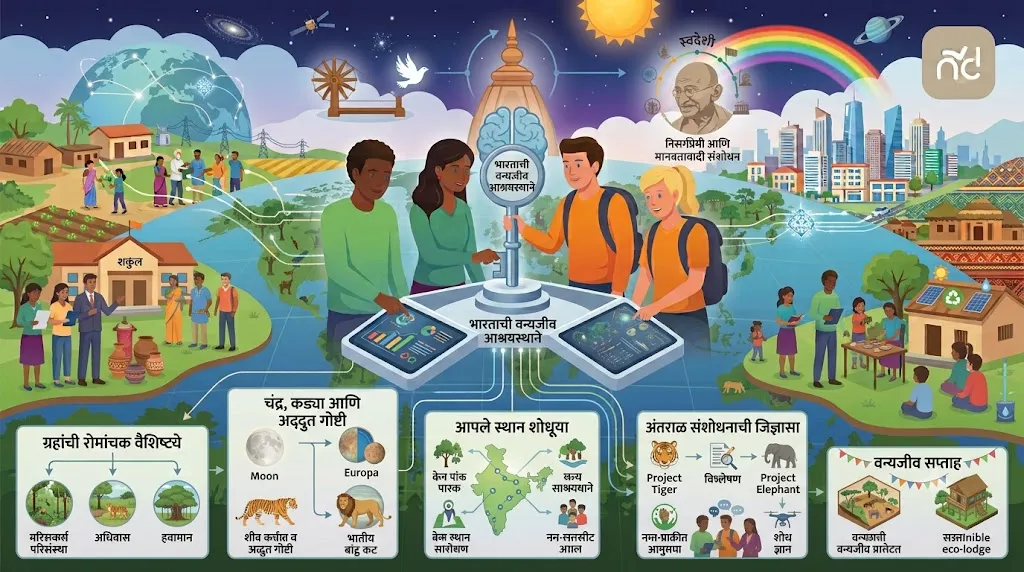
Today, September 20, 2026, on the auspicious occasion of Bhadrapada Shukla Navami, we delve into a fascinating and crucial topic: India's Rich Wildlife! Our incredible nation is blessed with an astounding variety of flora and fauna. From the towering Himalayas to the dense forests of South India, and from the Western Ghats to the Sundarbans in the East, India is a treasure trove of biodiversity.
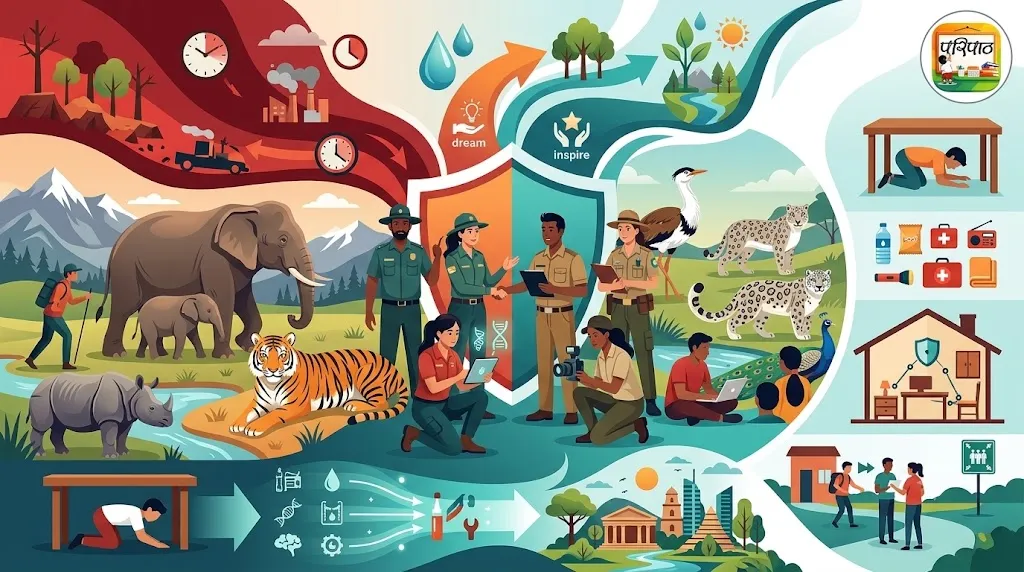
This biological wealth is not just a treat for our eyes but also vital for maintaining the delicate balance of our planet's ecosystems. India is home to iconic species like tigers, lions, elephants, rhinoceroses, and a myriad of bird and reptile species. To protect these magnificent creatures and their natural habitats, the Indian government has established numerous National Parks and Wildlife Sanctuaries.
Join us as we explore this amazing world of wildlife, learn about its inhabitants, and understand the paramount importance of wildlife conservation for a sustainable future.
India's Biodiversity: A Global Treasure
India is one of the world's 17 'megadiverse' countries, meaning it possesses a high level of biodiversity. It accounts for approximately 8% of the world's known species, including mammals, birds, reptiles, amphibians, fish, and insects. This diversity is not just about numbers; each species plays a unique role in its ecosystem and contributes to the overall health of the environment.
For instance, India is home to over 1250 species of birds, which is about 13% of the world's total bird species. Additionally, it shelters over 400 species of mammals, more than 450 species of reptiles, and over 200 species of amphibians. These figures truly highlight the immense wildlife wealth our country holds.
National Parks and Sanctuaries: Pillars of Conservation
National Parks and Wildlife Sanctuaries serve as safe havens for wildlife. These protected areas safeguard not only the animals but also the plants and the entire ecosystem they inhabit. National Parks are strictly protected by law, with minimal human intervention allowed. Wildlife Sanctuaries, on the other hand, are established to protect specific animal species or natural habitats, where some human activities might be permitted as long as they do not threaten the wildlife.
These protected areas have been instrumental in the survival of many rare and endangered species. Ambitious conservation programs like 'Project Tiger,' for example, have significantly helped in increasing the tiger population. These projects not only protect tigers but also ensure the preservation of the entire forest ecosystem.
Iconic National Parks and Their Treasures: A Journey of Discovery
Let's embark on a virtual tour of some of India's most renowned National Parks and discover their unique features:
1. Kaziranga National Park (Assam)
- Main Attraction: The One-horned Rhinoceros. Kaziranga is home to two-thirds of the world's great one-horned rhino population.
- Other Wildlife: Tigers, elephants, wild water buffalo, swamp deer, and numerous bird species.
- Special Feature: Situated on the banks of the Brahmaputra River, its vast grasslands and wetlands provide an ideal habitat for its diverse wildlife. It is a UNESCO World Heritage Site.
2. Ranthambore National Park (Rajasthan)
- Main Attraction: Tigers. Ranthambore is considered one of the best places in India to spot tigers in their natural habitat.
- Other Wildlife: Leopards, sloth bears, sambar deer, chital, and many bird species.
- Special Feature: The park is famous for its historical Ranthambore Fort, offering a unique blend of nature and history. Its lakes and dense forests are perfect for big cats.
3. Gir National Park and Wildlife Sanctuary (Gujarat)
- Main Attraction: The Asiatic Lion. Gir is the only place in the world where Asiatic lions can be found in their natural habitat.
- Other Wildlife: Leopards, sambar deer, chital, nilgai, and a variety of birds.
- Special Feature: The Gir forest is an excellent example of dry deciduous forest. Special conservation efforts here have led to a significant increase in the lion population.
4. Sundarbans National Park (West Bengal)
- Main Attraction: The Royal Bengal Tiger and the unique mangrove forests.
- Other Wildlife: Saltwater crocodiles, Gangetic dolphins, kingfishers, and various reptiles.
- Special Feature: It is the world's largest mangrove forest, situated in the delta formed by the Ganges, Brahmaputra, and Meghna rivers. A UNESCO World Heritage Site, its tigers are uniquely adapted to the estuarine environment.
5. Jim Corbett National Park (Uttarakhand)
- Main Attraction: Tigers, elephants, and a wide array of bird species.
- Other Wildlife: Leopards, various deer species, and Himalayan black bears.
- Special Feature: Established in 1936, it is India's first national park. Located at the foothills of the Himalayas along the Ramganga River, it offers breathtaking natural beauty.
6. Periyar National Park and Wildlife Sanctuary (Kerala)
- Main Attraction: Elephants and tigers.
- Other Wildlife: Leopards, wild dogs, sambar, macaques, and diverse birdlife.
- Special Feature: Nestled in the Western Ghats, the Periyar Lake is a vital water source for its wildlife. Boat safaris offer a unique opportunity to observe elephants in their natural environment.
The Imperative of Wildlife Conservation: For Our Future
Conserving wildlife is not just important for the animals themselves; it is crucial for humanity and the future of our planet. Wildlife and their habitats are interconnected components of our environment. They maintain ecological balance, facilitate pollination, control natural pests, and play vital roles in processes like the water cycle.
When you visit a national park or sanctuary, remember to maintain silence, avoid disturbing animals, do not litter, and refrain from unnecessary interference in their natural habitat. Respect nature and allow wildlife to live peacefully. Responsible tourism is a key part of conservation!
Today, many wildlife species are on the brink of extinction, and the populations of others have drastically declined. Human activities such as deforestation, pollution, urbanization, poaching, and climate change are major contributing factors. If we do not address these issues promptly, future generations might only read about these magnificent creatures in books.
Our Contribution: Small Steps, Big Impact
How can we, as students and citizens, contribute to wildlife conservation? Here are some simple yet effective ways:
- Education and Awareness: Learn about wildlife and conservation, and share your knowledge with others. Educate your friends and family about these important issues.
- Reduce Waste: Minimize plastic usage and dispose of waste properly. Plastic is extremely harmful to wildlife.
- Responsible Tourism: When visiting national parks or sanctuaries, adhere to the rules. Do not disturb wildlife, avoid feeding them, and maintain peace in their natural environment.
- Conserve Water and Energy: Use natural resources judiciously. This helps reduce carbon emissions, a major cause of climate change.
- Support Local: If you are near a wildlife area, support eco-friendly products made by local communities. This helps them earn a livelihood while encouraging environmental care.
Conclusion
India's wildlife is an invaluable heritage, and its preservation is our collective responsibility. While national parks and sanctuaries are central to this conservation, the burden cannot be left solely to the government or forest departments. Each one of us must make efforts at our own level.
Recognizing the significance of this incredible gift of nature, let us all pledge to work together to protect India's wildlife and their habitats. Let's be witnesses to nature's marvels and strive to create a beautiful and thriving environment for future generations.
Did You Know?
- India has 106 National Parks and 567 Wildlife Sanctuaries, covering over 5% of the country's total geographical area.
- 'Project Tiger,' launched in 1973, is considered one of the most successful wildlife conservation projects globally, significantly increasing the tiger population.
- The Pin Valley National Park in Himachal Pradesh is famous for the elusive Snow Leopard, a rare and majestic big cat.
- India is home to four dolphin species: the Ganges River Dolphin, Irrawaddy Dolphin, Indo-Pacific Humpback Dolphin, and Finless Porpoise. The Ganges River Dolphin is India's National Aquatic Animal.
- The world's largest congregation of flamingos comes to breed in the Rann of Kutch, Gujarat, every year.