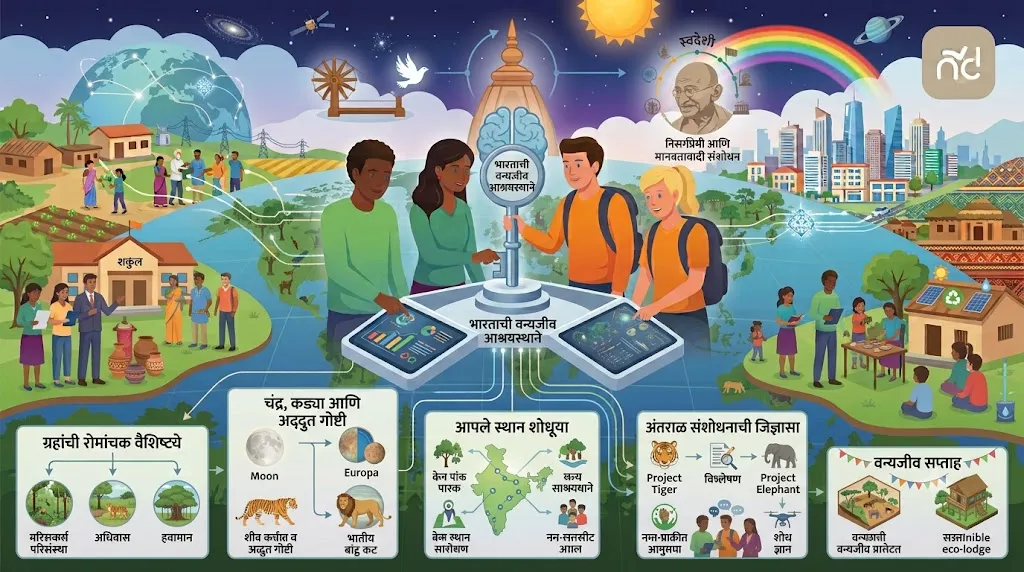
Hello students, and welcome to this special blog post from 'Paripath'! Today, we're going to explore a topic that is incredibly vital and deeply connected to our very existence: India's Wildlife Heritage and Its Conservation. India, a land blessed by nature, boasts an astonishing variety of landscapes – from towering mountains and dense forests to vast deserts, extensive coastlines, and numerous rivers. This geographical diversity has fostered an extraordinary and unique array of wildlife within our borders.
Despite having only 2.4% of the world's land area, India is home to 7-8% of all known species of plants and animals globally. This statistic alone highlights the immense biodiversity our country possesses. From majestic creatures like tigers, elephants, rhinos, lions, and snow leopards to a myriad of birds, reptiles, and insects, India is their cherished home. However, this invaluable natural wealth is currently facing numerous threats. In this article, we will delve into the significance of these wildlife species, the dangers they confront, and why their conservation is absolutely essential.
India's Breathtaking Wildlife Diversity
India is recognized as one of the world's 17 'Mega-diverse' countries, signifying its immense biological richness. Our nation's diverse geography means that each region supports distinct and unique wildlife. Let's explore some key regions and their special inhabitants:
1. The Himalayan Region: Life on Icy Peaks
- Snow Leopard: An extremely rare and elusive big cat, the Snow Leopard inhabits the high, snowy altitudes of the Himalayas. Spotting this magnificent creature in its natural habitat is a testament to its stealth.
- Musk Deer: Hunted for its valuable musk, this species is highly endangered.
- Himalayan Brown Bear: Found in the higher reaches of the Himalayas, this bear is known for its strength and adaptability to harsh environments.
2. The Western Ghats: A Biodiversity Hotspot
Stretching from Maharashtra down to Kerala, the Western Ghats is one of the world's 8 major biodiversity hotspots. It is home to numerous endemic species (meaning they are found nowhere else on Earth).
- Lion-tailed Macaque: This striking black primate, with its distinctive silver mane around its face, is found exclusively in the Western Ghats.
- Nilgiri Tahr: A nimble mountain goat, the Nilgiri Tahr is native to the Nilgiri Hills of Southern India, perfectly adapted to its rocky habitat.
- Great Indian Bustard: One of the heaviest flying birds, this critically endangered species is found in the dry grasslands of states like Rajasthan, Gujarat, and Maharashtra.
3. North Indian Plains and Central India: Home of Tigers and Elephants
- Bengal Tiger: India's national animal, the Bengal Tiger, is found in the forests of Madhya Pradesh, Uttarakhand, Karnataka, Maharashtra, and the Sundarbans in West Bengal. India hosts over 70% of the world's wild tiger population.
- Indian Elephant: This subspecies of the Asian Elephant roams the forests of Karnataka, Kerala, Assam, and Uttarakhand.
- One-horned Rhinoceros: One of the largest rhinoceros species, it is predominantly found in the Kaziranga National Park in Assam.
4. The Thar Desert: Unique Desert Dwellers
- Indian Wolf: Adapted to arid and semi-arid regions, the Indian Wolf is known for its resilience.
- Chinkara (Indian Gazelle): A graceful antelope perfectly suited to the desert environment.
5. Coastal and Marine Life
- Olive Ridley Sea Turtle: These turtles undertake mass nesting events (Arribada) on the beaches of Odisha, a spectacle of nature.
- Gangetic Dolphin: A rare freshwater dolphin found in the Ganges River system, it is India's national aquatic animal and is functionally blind, relying on echolocation.
Did you know? India is the sole natural habitat for several unique species, including the Asiatic Lion (found only in Gujarat's Gir Forest), the Kashmir Stag or Hangul (found only in Jammu & Kashmir's Dachigam National Park), and the One-horned Rhinoceros (primarily in Assam).
The Looming Threats to India's Wildlife
Our nation's invaluable wildlife heritage is currently facing numerous severe threats. Human activities have put the existence of these species in jeopardy. Let's explore some of the major threats:
1. Habitat Loss and Deforestation
As cities expand, agricultural land increases, and developmental projects like roads, dams, and factories proliferate, forests are being cleared at an alarming rate. This deprives wildlife of their homes, leading to shortages of food and water. In the last decade, India has lost an average of over 13,000 hectares of forest cover annually.
2. Pollution
- Water Pollution: Industrial effluents, agricultural chemicals, and urban waste discharged into rivers contaminate water bodies. This directly impacts fish and other aquatic life, which serve as food sources for many wildlife species. Species like the Gangetic Dolphin are particularly vulnerable.
- Plastic Pollution: Plastic waste poses a significant threat to wildlife. Many animals ingest plastic or become entangled in it, leading to severe injury or death.
- Air Pollution: Air pollution from urban areas and industries negatively affects the health of both plants and animals.
3. Poaching and Illegal Wildlife Trade
Wildlife is illegally hunted for their skin, bones, claws, tusks, or other body parts. Tigers are poached for their skin and bones, rhinos for their horns, and elephants for their ivory tusks. This illicit trade has pushed many species to the brink of extinction.
4. Human-Wildlife Conflict
As forests shrink, wildlife ventures into human settlements in search of food. This leads to conflicts between humans and animals. Sometimes, it results in human casualties, while at other times, the animals are killed. This conflict is particularly prevalent with elephants, leopards, and tigers.
5. Climate Change
Rising temperatures, erratic rainfall patterns, extreme floods, or droughts are altering wildlife habitats. Coastal ecosystems like the Sundarbans mangrove forests are threatened by rising sea levels, impacting species like the Royal Bengal Tiger.
- Conserve water by taking shorter showers and turning off taps.
- Save electricity by switching off unnecessary lights and appliances.
- Reduce plastic use; opt for reusable cloth bags and bottles.
- Segregate your waste (wet and dry) for proper disposal and recycling.
- Walk, cycle, or use public transport whenever possible to reduce your carbon footprint.
Why Conservation Matters: Sustaining Life and Our Future
Wildlife conservation is not just about saving animals; it is crucial for our own survival. Every living organism is part of an intricate ecological web, and if even one link breaks, the entire chain is affected.
1. Ecological Balance
Wildlife plays a critical role in maintaining ecological balance. For example:
- Pollination: Bees, butterflies, and some birds transfer pollen between flowers, enabling the production of fruits and seeds. A significant portion of our food supply depends on these pollinators.
- Seed Dispersal: Birds and animals consume fruits and disperse seeds far and wide, helping new plants grow and forests regenerate.
- Pest Control: Certain birds and animals naturally control harmful insect populations, protecting crops without the need for chemical pesticides.
- Water and Air Purification: Healthy forests and wetlands act as natural filters, purifying water and keeping the air clean.
2. Economic Benefits
Wildlife tourism or eco-tourism generates employment for many people. National parks and sanctuaries attract tourists from around the world, boosting local economies and providing livelihoods.
3. Ethical Responsibility
Every living being has a right to exist on our planet. As humans, it is our moral and ethical responsibility to protect other species and their habitats. We must strive to ensure that future generations can also experience and appreciate the wonders of nature.
India's Commitment to Conservation: Success Stories and Initiatives
India has taken significant steps towards wildlife conservation and achieved notable successes in several areas:
1. National Parks and Wildlife Sanctuaries
India has 106 National Parks and 567 Wildlife Sanctuaries, which provide safe havens for wildlife. These protected areas shield animals from poaching and human interference.
2. Flagship Conservation Projects
- Project Tiger: Launched in 1973, this project has been immensely successful in tiger conservation. The tiger population has seen a significant increase. As per the 2018 census, India had 2,967 tigers, accounting for over 70% of the global wild tiger population.
- Project Elephant: Initiated in 1992, this project works towards the protection of elephants and their habitats.
- Project Rhino: This project has been particularly successful in Assam, leading to an increase in the population of the One-horned Rhinoceros.
3. Legal Protection
The Wildlife Protection Act, 1972, is a robust legal framework designed to protect wildlife. Under this act, hunting animals or damaging their habitats is a serious offense.
4. Community Involvement
In many regions, local communities are actively involved in wildlife conservation efforts. This helps reduce human-wildlife conflict and makes conservation initiatives more effective.
Empowering the Next Generation: Your Role in Wildlife Protection
As students, you can make a significant contribution to wildlife conservation. Even small efforts can lead to big changes:
- Spread Awareness: Talk to your friends, family, and teachers about the importance of wildlife conservation. Participate in school essay competitions, drawing contests, or debates on this topic.
- Reduce Waste: Follow the '3 R's' – Reduce, Reuse, Recycle. Buy fewer items, reuse things, and segregate your waste for recycling. Try to completely avoid single-use plastics.
- Respect Nature: Whenever you visit a park, forest, or any natural area, avoid littering. Do not disturb plants or animals.
- Support Conservation Efforts: If your school or community organizes any wildlife conservation programs, actively participate in them.
- Report Illegal Activities: If you come across any instances of illegal poaching or wildlife trade, report it immediately to the forest department or relevant authorities.
- Plant Trees and Care for Them: Planting trees is a simple yet effective way to protect the environment. Trees provide habitat and food for wildlife.
Did You Know?
- India is home to approximately 13% of the world's bird species, 8% of mammal species, 14% of amphibian species, and 6% of reptile species.
- The Asiatic Lion is found exclusively in the Gir National Park in Gujarat, making it the only place in the world where lions exist outside of Africa.
- The Gangetic River Dolphin is one of only four freshwater dolphin species globally and is functionally blind, navigating its environment using echolocation.
- The Kashmir Stag, also known as Hangul, is found only in the Dachigam National Park in Jammu and Kashmir.
- The Sundarbans in India and Bangladesh form the world's largest mangrove forest, providing a unique habitat for the Royal Bengal Tiger.
Conclusion
India's wildlife heritage is a source of immense pride for our nation. It's not just about the animals; it's crucial for maintaining the balance of our environment, purifying our air and water, and ensuring a healthy planet for future generations. Threats like deforestation, pollution, poaching, and climate change jeopardize this invaluable heritage. However, due to the concerted efforts of the Indian government and various organizations, significant successes have been achieved in conservation.
As students, you can play a vital role in this noble cause by spreading awareness, avoiding plastic, reducing waste, and respecting nature. Remember, 'Protecting nature is protecting ourselves!' Let's pledge today to safeguard our priceless wildlife heritage for a sustainable tomorrow.