Dear students and readers,
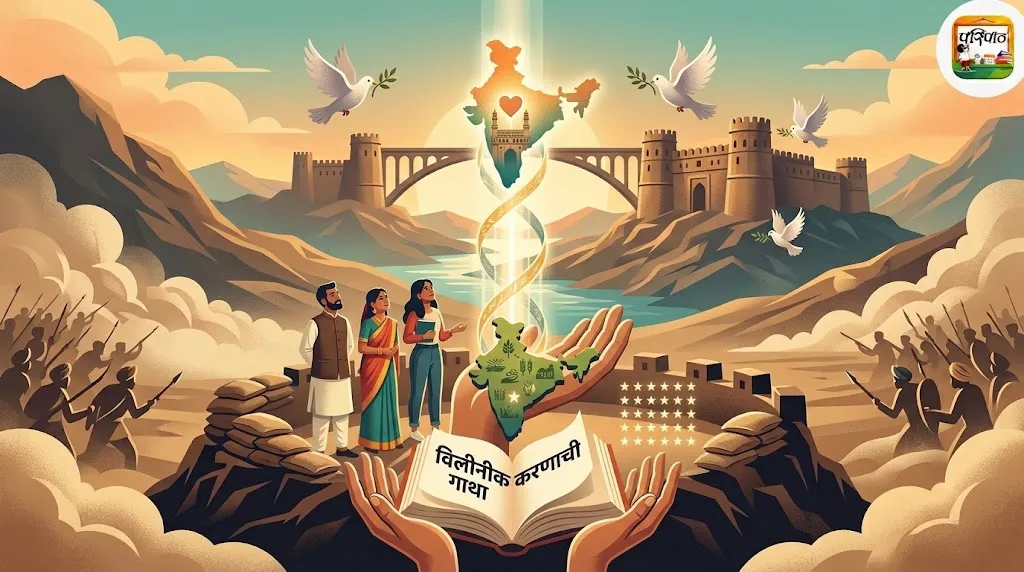
Today, September 18th, marks a significant date in India's post-independence history – the integration of the princely state of Hyderabad into the Indian Union. While India celebrated its newfound freedom in 1947, several challenges remained, one of the most formidable being the assimilation of over 560 princely states into the new nation. Among these, Hyderabad held a unique and challenging position. Geographically located at the heart of India, vast, and prosperous, it became a crucial test for the unity of the nascent Indian nation.
This article delves into the thrilling journey of how Sardar Vallabhbhai Patel’s visionary leadership and unwavering resolve addressed this challenge, culminating in 'Operation Polo' and Hyderabad becoming an integral part of India. Let's explore the historical context, the hurdles faced, and the strategic brilliance that led to this monumental event.
Hyderabad: A Princely State at the Crossroads of Independence
When India gained independence on August 15, 1947, it was a moment of triumph, yet it came with complexities. The British Raj, in its departure, offered the princely states three choices: accede to India, accede to Pakistan, or remain independent. While most states readily joined either India or Pakistan, some harboured ambitions of independent sovereignty, posing a direct threat to India's territorial integrity.
Hyderabad was one such state, presenting a formidable challenge. Spanning approximately 82,000 square miles (about 212,000 square kilometers), it was larger than countries like Belgium or Scotland. Its population of around 1.6 crore (16 million) was predominantly Hindu (about 85%), yet it was ruled by a Muslim monarch, Nizam Mir Osman Ali Khan. The Nizam was considered one of the wealthiest individuals globally, possessing his own currency, railways, postal system, and army. Hyderabad’s fertile lands and strategic location in the heart of the Deccan Plateau made it immensely significant, both economically and militarily.
The Nizam’s aspiration was to maintain Hyderabad as an independent nation. Following India's independence, he signed a 'Standstill Agreement' with India in November 1947. This agreement aimed to temporarily maintain the status quo between India and Hyderabad, similar to their relationship under British rule. However, the Nizam used this period to strengthen his position, seeking international support and even threatening to take the issue to the United Nations. The prospect of an independent, potentially hostile, state in the geographical heart of India was an unacceptable security risk for the newly formed nation.
The Nizam's Ambition for Independence
Nizam Mir Osman Ali Khan was a highly ambitious ruler who envisioned Hyderabad as the 'Pakistan of the South'. This dream of an independent Muslim state surrounded by India was a grave concern for Indian leaders. He actively sought support from various international players, including Portugal, Britain, and even the UN. His stance fueled growing discontent among Hyderabad's Hindu majority, who desired integration with India and democratic rule. Organizations like the Indian National Congress and Arya Samaj actively campaigned for these goals, leading to increasing unrest within the state.
Challenges to Hyderabad's Integration: A Web of Complexities
Integrating Hyderabad into India was far from straightforward, fraught with a multitude of complex challenges that tested the resolve of India's leadership.
The Rise of the Razakars and Their Reign of Terror
One of the most significant obstacles was the emergence of the 'Razakars', a militant volunteer force led by Qasim Razvi, the head of the 'Majlis-e-Ittehadul Muslimeen' (MIM) party. Razvi fiercely advocated for Hyderabad's independence and vehemently opposed its integration into India. The Razakars, an armed Muslim militia, unleashed a reign of terror across Hyderabad, particularly in rural areas. They perpetrated atrocities against Hindus and those who supported integration, engaging in looting, arson, and murder. Thousands fled their homes, seeking refuge in neighbouring Indian provinces, as the violence escalated. This growing humanitarian crisis intensified pressure on the Indian government to intervene decisively.
Communist Insurgency in Telangana
Adding to the complexity was a burgeoning communist insurgency in the Telangana region of Hyderabad. These communists, advocating for land reforms and against the Nizam's feudal rule, had launched an armed struggle involving numerous peasants and labourers. This multi-faceted conflict meant the Indian government faced a daunting task: confronting not only the Nizam and the Razakars but also the armed communist factions, making a peaceful resolution increasingly difficult.
The Nizam's International Maneuvering
Nizam Mir Osman Ali Khan was a shrewd international player. He relentlessly tried to internationalize the Hyderabad issue, seeking support from countries like Britain and the United States, and threatening to appeal to the United Nations. India was wary of military intervention that could draw international condemnation or spark widespread bloodshed within Hyderabad. The international spotlight added another layer of complexity to an already delicate situation.
India's Diplomatic Dilemma
Initially, the Indian government, particularly Prime Minister Jawaharlal Nehru, was hesitant to resort to military action. They preferred a peaceful resolution, fearing international backlash and potential large-scale bloodshed. However, as the Razakar violence spiralled out of control, the Nizam remained intransigent, and tensions mounted along the Indian border, Sardar Patel became convinced that military action was the only viable option left.
Sardar Patel's Iron Will: Architect of Indian Unity
Following India's independence, while most princely states acceded to India, Hyderabad, Junagadh, and Kashmir remained notable exceptions. In the integration of these three crucial states, Sardar Vallabhbhai Patel played the role of the 'Iron Man of India', demonstrating unparalleled foresight, unwavering determination, and exceptional negotiating skills.
The Vision of an Undivided India
Sardar Patel's unwavering commitment was to forge an 'Akhand Bharat' (Undivided India). He was resolute in preserving India's unity and integrity at all costs. His stance on Hyderabad was clear: an independent, potentially hostile, regime in the heart of India would pose an unacceptable threat to the nation's security and development. Initially, he pursued peaceful negotiations with the Nizam, offering various proposals, including significant autonomy for Hyderabad within the Indian Union. However, the Nizam remained unyielding.
“My objective was to ensure that the princely states became an integral part of India, not merely a political arrangement but a spiritual reunification of India’s soul.” - Sardar Vallabhbhai Patel
The Decision for Decisive Action
When all avenues of peaceful negotiation were exhausted, and the Razakar violence became uncontrollable, Sardar Patel recognized the inevitability of military intervention. Despite initial reservations from Prime Minister Nehru and some other leaders, Patel steadfastly argued his case. He was convinced that this action was essential for India's interests and would succeed. He ordered the military to prepare for action, laying the groundwork for 'Operation Polo'.
Patel ensured that the military operation would be swift, decisive, and result in minimal casualties. His strategy was clear: offer ample time for negotiation, but when cooperation failed, act firmly. It is largely due to his steadfast resolve that India stands as a unified nation today.
Operation Polo: A Swift and Decisive Action
With all negotiations with the Nizam proving fruitless and the Razakar violence reaching an intolerable peak, the Government of India made the difficult but necessary decision to launch a military operation. This covert operation was codenamed 'Operation Polo'. It commenced in the early hours of September 13, 1948.
Execution and Swift Victory
Indian Army units, under the command of Major General J.N. Chaudhuri, moved into the Hyderabad state from all directions. The Indian forces executed the operation with remarkable speed and efficiency. The Razakars, armed with outdated weapons, were no match for the modern weaponry and disciplined training of the Indian Army. The Nizam's own army was also significantly weaker than the Indian forces and could not sustain resistance for long.
Within a mere five days, on September 17, 1948, the Indian Army entered Hyderabad city, and the Nizam surrendered. On September 18, 1948, Nizam Mir Osman Ali Khan officially signed the Instrument of Accession, formally integrating Hyderabad into the Indian Union. The swift and relatively bloodless nature of the operation led India to officially refer to it as a 'Police Action', emphasizing that it was undertaken to restore law and order and protect the populace, a stance communicated to the international community.
Aftermath and Repercussions
The successful execution of 'Operation Polo' not only brought an end to the violence in Hyderabad but also averted a major threat to India's integrity. It demonstrated the strength and unity of the Indian Union. While some international quarters criticized India's action, the majority of the global community recognized it as an internal matter for India and expressed satisfaction at the restoration of peace.
Following the operation, the Nizam was allowed to serve as the 'Rajpramukh' (governor) for a period, which helped preserve his dignity and ensured a peaceful transition in Hyderabad. This event stands as a testament to Sardar Patel's diplomatic acumen and decisive leadership.
Hyderabad After Integration: A Testament to India's Unity
Following its integration, Hyderabad underwent significant transformations, becoming an integral part of the Indian Union. Initially known as the 'Hyderabad State', it was later reorganized along linguistic lines in 1956 under the States Reorganisation Act, leading to the formation of parts of present-day Andhra Pradesh and Telangana, as well as portions of Maharashtra (Marathwada) and Karnataka.
Unity in Diversity
Hyderabad's integration significantly strengthened India's ethos of 'unity in diversity'. It proved that despite diverse cultures, languages, and religions, national unity remains supreme. Hyderabad, with its rich cultural heritage and history, now contributes significantly to the broader Indian cultural tapestry. Its people, speaking Urdu, Telugu, and Marathi, along with their art, literature, and culinary traditions, have further enriched India's vibrant cultural mosaic.
A Strong and United India
The integration of Hyderabad was not merely about absorbing a princely state; it was a crucial step towards establishing India as a strong and unified nation. It eliminated the threat of a foreign-aligned entity in the heart of the country, ensuring national security. This event demonstrated India's capacity to protect its integrity and confront any challenge to its sovereignty.
Today, Hyderabad stands as a major Indian metropolis, a thriving hub of information technology, and a significant cultural centre. The city has made substantial contributions to India's growth and development. All this was made possible by Sardar Patel's foresight and the decisive action of 'Operation Polo'.
Conclusion
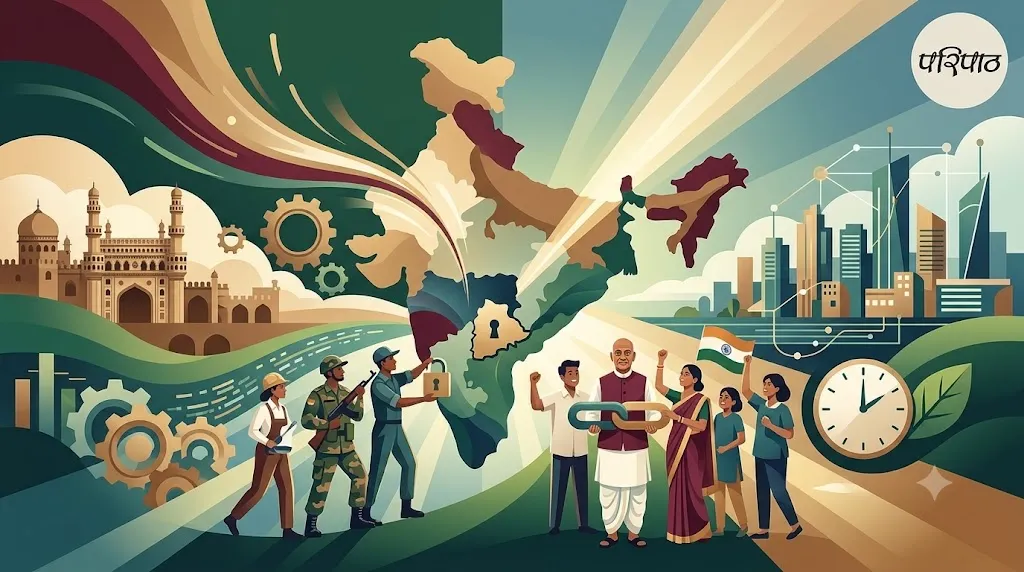
The integration of Hyderabad into India on September 18, 1948, is a golden chapter in India's post-independence history. Facing numerous challenges, including the Nizam's insistence on independence, the terror unleashed by the Razakars, and the growing influence of communists, Sardar Vallabhbhai Patel, with his visionary leadership and unwavering determination, resolved this complex crisis. 'Operation Polo', a swift military action, brought Hyderabad into the Indian Union in just five days, thereby preserving India's unity and integrity.
This event serves as a powerful lesson on the importance of national unity. It reminds us of the immense hard work and crucial decisions made by our nation's leaders, which have enabled us to stand as a strong and united India today. Sardar Patel's legacy will continue to inspire future generations, embodying the spirit of 'Ek Bharat, Shreshtha Bharat' – One India, Great India.
Did You Know?
- The Hyderabad state was larger in area than Belgium or Scotland and was one of the wealthiest princely states in the world.
- Nizam Mir Osman Ali Khan was considered one of the richest men globally and possessed his own army, currency, and postal services.
- 'Operation Polo' was initially given the secret codename 'Operation Caterpillar'.
- Before the 1948 integration, Urdu was the official language of Hyderabad, even though the majority of the population spoke Telugu and Marathi.
- The Indian Army in Operation Polo was led by Major General J. N. Chaudhuri, who later went on to become the Chief of the Indian Army Staff.