
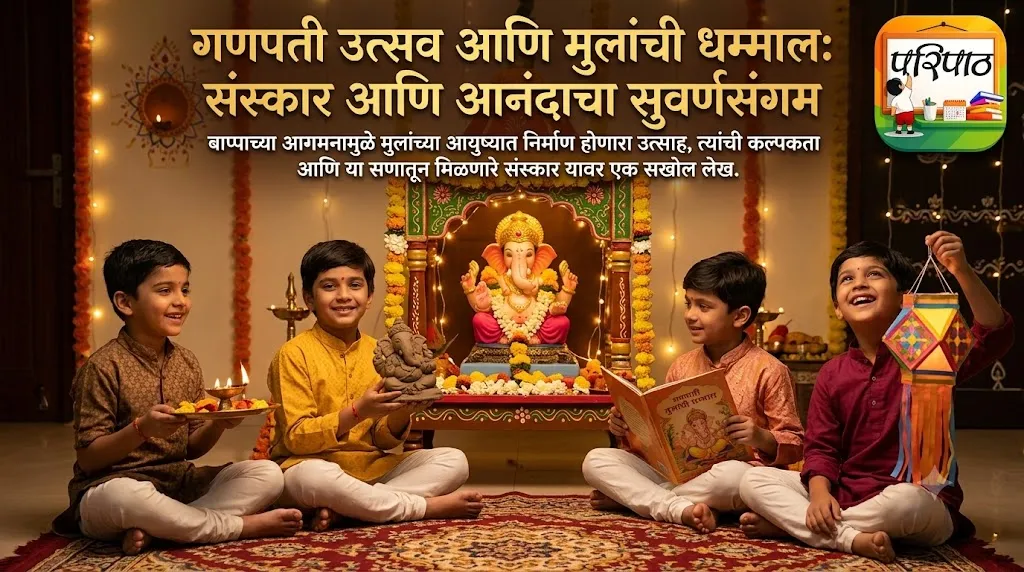
Introduction: The Magic of Ganeshotsav through a Child’s Eyes
Ganeshotsav is not just a festival; it is an emotion that resides in the hearts of millions, especially in the vibrant state of Maharashtra. For children, the arrival of Lord Ganesha—affectionately called Bappa—marks the beginning of a ten-day period filled with unparalleled excitement, creativity, and spiritual growth. This blog post explores the multifaceted experience of children during Ganpati Utsav, examining how it transcends mere celebration to become a classroom for moral values and social ethics.
The Historical and Cultural Backdrop
Lokmanya Tilak’s Vision
To understand the depth of this festival, one must look back at its history. Lokmanya Bal Gangadhar Tilak recognized that a shared cultural identity could bridge the gap between different castes and classes. By bringing Ganesha out of private homes into public mandaps, he created a space for intellectual discourse and nationalistic fervor. For children, this history teaches the importance of Unity in Diversity and the power of community organization.
"Our festivals are not just about rituals; they are the threads that bind the fabric of our society." - A reflection on Tilak’s ideology.
The Pre-Arrival Excitement: Preparation and Creativity
The fun begins weeks before the actual festival. Children are often at the forefront of the planning process. From choosing the idol to designing the Makhar (decoration), their involvement is total. This phase is crucial for developing problem-solving skills and artistic expression.
The Shift to Eco-Friendly Celebrations
In recent years, there has been a massive movement towards Shadu Mati (natural clay) idols. Schools and local groups conduct workshops where children learn to mold their own Ganesha. This teaches them the ethical value of Environmental Stewardship.
| Traditional Aspect | Modern Interpretation | Moral Lesson for Kids |
|---|---|---|
| Plaster of Paris (PoP) | Clay (Shadu Mati) | Respect for Mother Nature |
| Chemical Colors | Natural Pigments | Health and Sustainability |
| Noise Pollution | Traditional Instruments | Cultural Authenticity |
Daily Rituals: Discipline and Devotion
The daily Aarti (prayer) is perhaps the most rhythmic part of the day. Children learn the lyrics of 'Sukhakarta Dukhaharta' and 'Shendur Laal Chadhayo'. This isn't just about singing; it’s about discipline (waking up early/attending on time) and concentration.
The Gastronomic Delight: Modaks and More
No Ganpati Utsav is complete without the Ukadiche Modak (steamed rice-flour dumplings). Children often help their mothers or grandmothers in the kitchen, observing the delicate art of folding the modak pleats. This is an informal way of passing down culinary heritage and learning the value of hard work and patience.
Cultural Programs: The Stage of Confidence
In residential societies (Chawls and Colonies), the evenings are reserved for cultural programs. Children participate in:
- Storytelling: Narrating the legends of Ganesha's wisdom.
- Dance and Drama: Performing skits on social issues like cleanliness or education.
- Competitions: Drawing, elocution, and talent shows.
These activities are vital for building self-confidence and public speaking skills. It is here that a child learns to handle both victory and defeat with grace.
Social Responsibility and Ethics
During the ten days, many Mandals organize blood donation camps or distribute food to the needy. Children witnessing these acts of charity imbibe the value of Selfless Service (Seva). They understand that Ganesha represents the removal of obstacles (Vighnaharta), and they too can help remove obstacles from others' lives.
The Symbolism of Lord Ganesha’s Form
Lord Ganesha’s unique appearance is a treasure trove of moral lessons for children:
- Large Ears
- To listen more and judge less.
- Small Eyes
- To focus with precision on the task at hand.
- Big Stomach
- To digest all the good and bad experiences of life calmly.
- Small Mouth
- To talk less and act more.
Conclusion: The Eternal Legacy
When the time comes for Visarjan (immersion), there is a bittersweet feeling. As the chants of "Pudhchya Varshi Lavkar Ya" (Come back soon next year) fill the air, children learn the most profound lesson of all: Detachment and the Cycle of Life. The fun they had, the sweets they ate, and the prayers they said culminate in a promise to be better human beings until Bappa returns. Through Ganeshotsav, children do not just celebrate a deity; they celebrate the values of wisdom, integrity, and communal love.
