
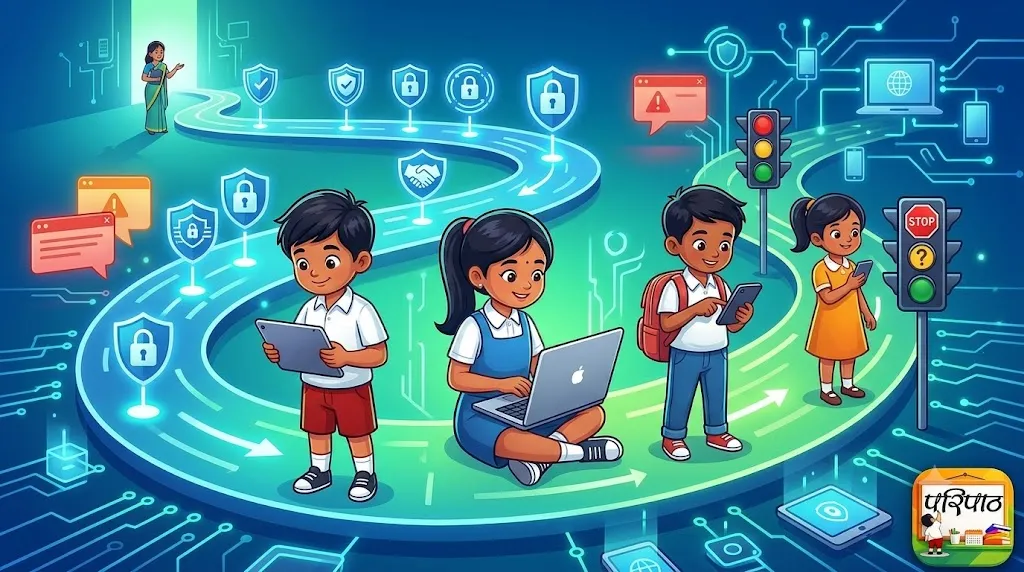
The world we live in is rapidly evolving, driven by technology and an ever-expanding digital landscape. For students, the internet, smartphones, and computers are no longer just tools for entertainment; they are powerful mediums for education, information, and communication. To thrive in this online world, it's essential to understand and practice 'Digital Citizenship'.
Digital citizenship goes beyond merely using the internet; it's about using it responsibly, ethically, and safely. Just as we follow rules and responsibilities in our schools and communities, there are guidelines for our conduct in the online realm. This article will guide Indian students on how to be safe and successful digital citizens.
Online Privacy: Safeguarding Your Digital Identity
Every action you take online leaves a 'digital footprint'. What you search, which websites you visit, what you post – all these contribute to information about you. Protecting your online privacy is therefore paramount.
1. Understanding Personal Information
- What Not to Share: Never publicly share your full name, home address, school name, phone number, date of birth, Aadhaar number, bank details, or any confidential information about your family.
- Privacy Settings: Regularly check and adjust your privacy settings on social media platforms (e.g., Instagram, Facebook, Snapchat) and other apps. Limit who can view your posts, photos, and personal information to 'Friends Only' or 'Only Me'.
- Location Sharing: Keep location sharing turned off on your smartphone. This prevents strangers from knowing your whereabouts.
2. Strong Passwords and Security Measures
- Create Strong Passwords: Use unique and robust passwords for all your accounts (email, social media, gaming). Combine uppercase and lowercase letters, numbers, and special characters. For example,
P@r!p@th2026#. - Two-Factor Authentication (2FA): Enable 2FA wherever possible. This adds an extra layer of security, requiring a One Time Password (OTP) sent to your phone even if someone knows your password.
- Public Wi-Fi: Exercise caution when using free public Wi-Fi (at bus stops, cafes, malls). Avoid sharing sensitive information (banking details, passwords) on these networks as they are often unsecured.
Statistics show that over 70% of Indian students are active on online gaming and social media platforms, increasing their potential exposure to online risks.
Say No to Cyberbullying: Safe and Respectful Communication
Cyberbullying involves using the internet or mobile phones to harass, threaten, embarrass, or shame someone. This can be done through messages, photos, videos, or by spreading rumors. It's crucial to know what to do if you are a victim or a witness to cyberbullying.
1. How to Identify Cyberbullying
- Offensive Messages: Receiving or witnessing abusive, threatening, or embarrassing messages, comments, or posts.
- Rumors and Slander: Spreading false rumors or defaming someone online.
- Sharing Private Information: Sharing private photos, videos, or information without consent.
- Social Exclusion: Deliberately excluding someone from online groups or creating negative groups about them.
2. How to Deal with Cyberbullying
- Do Not Respond: Never retaliate against a cyberbully. This can escalate the situation.
- Gather Evidence: Take screenshots of messages, comments, or posts. This evidence can be useful later.
- Block the Bully: Block the person causing harassment on all social media platforms and messaging apps.
- Tell an Adult: Immediately inform your parents, teachers, or other trusted adults. They can offer appropriate support and guidance.
- Report: Most online platforms have a 'report' option. Use it to report the individual or the offensive content.
3. Online Etiquette (Netiquette)
- Be Respectful: Interact with others online with respect. Don't do or say anything online that you wouldn't do or say offline.
- Think Before You Post: Before posting or sharing anything, think twice. Will it hurt anyone? Is it appropriate?
- Don't Spread Fake News: Never forward information without verifying its authenticity. Fake news spreads rapidly and can cause significant harm.
Critical Evaluation of Information: Discerning the Truth
The internet is an ocean of information, but it contains both accurate and inaccurate content. Being able to identify 'fake news' and misinformation is a critical skill in today's digital age.
1. Verify Information
- Check the Source: Where did the information come from? Is it from a reputable news organization or an unknown blog? Pay attention to the website's URL (e.g., .gov, .edu, .org).
- Multiple Sources: Verify the same information from several different and trustworthy sources.
- Check the Date: When was the information published? Old information might not be relevant to current situations.
- Understand the Purpose: Why was this information written? Is the author's intent to inform, advertise, or provoke emotions?
2. Dangers of Fake News
Misinformation and fake news can spread misunderstandings, create fear, and sometimes lead to serious consequences in society. This is especially dangerous when it concerns health, politics, or social issues.
Healthy Screen Habits and Digital Etiquette
While the online world is fascinating, excessive use can be detrimental to your physical and mental health. Moreover, there are rules of behavior that apply to the online world as well.
1. Balanced Screen Time
- Plan Your Time: Set specific times for screen use. Allocate time for studies, entertainment, and other activities.
- Regular Breaks: Staring at screens continuously can cause eye strain and neck/shoulder pain. Take a break every 20-30 minutes, close your eyes, or look at a distant object.
- Digital Detox: Dedicate some hours each day or a day each week to being completely offline. Spend time with family, play outdoor games, or read books.
- Before Bed: Turn off all screens at least an hour before bedtime. The blue light emitted from screens can disrupt your sleep patterns.
2. Your Digital Footprint
Everything you do online can potentially remain on the internet permanently. This is called your 'digital footprint'. Remember that this footprint could be considered when you apply for jobs or higher education in the future. Therefore, avoid posting anything negative or inappropriate online.
3. Online Gaming and Addiction
Online games can be entertaining, but excessive addiction can be dangerous. It can lead to neglect of studies, reduced social interaction, and adverse health effects. Set time limits and ensure gaming doesn't become the sole focus of your life.
Partnering with Parents and Seeking Help
Open communication with parents and teachers is vital for staying safe in the digital world.
- Communicate Openly: If you face any online problems, harassment, or feel something is wrong, talk openly with your parents or teachers. They will understand and help you.
- Set Rules Together: Sit with your parents and establish rules for online usage, including screen time limits and permissible apps.
- Seek Help: If you are a victim of cyberbullying or any other online crime, you can contact the Cyber Cell or the police. The Government of India has launched the 'Cyber Crime Portal' (www.cybercrime.gov.in) where you can report online crimes.
Did You Know?
- The first email was sent in 1971 by Ray Tomlinson.
- Every minute, over 500,000 tweets are sent and more than 4 million Google searches are performed worldwide.
- India has over 700 million internet users, and this number is rapidly growing.
- The world's most used social media platform is Facebook, with over 3 billion monthly active users.
- The term 'cyberbullying' came into common use in the early 2000s as internet usage became more widespread.
Conclusion
Dear students, digital citizenship is not just a skill; it's a responsibility. The online world is full of opportunities, but it's not free from risks. To keep yourselves and others safe, we all need to be aware, critically evaluate information, communicate respectfully, and adopt healthy digital habits.
By using the information in this article, you can become a responsible and safe digital citizen. Remember, making your online journey safe and positive is in your hands. Paripath is always with you to provide the right guidance!
