Hello, dear students!
Today's world is a digital one. The smartphone, tablet, or computer in your hands is not just a tool for entertainment, but an ocean of information and a powerful medium to connect with the world. The internet allows us to learn many new things, communicate with friends, express our thoughts, and acquire new skills. But while navigating this digital world, it is equally important to stay safe and become a responsible citizen. Just as we follow rules in school, on the road, or in society, there are rules and responsibilities in the online world too. This set of rules and responsibilities is called Digital Citizenship.
India is one of the largest and fastest-growing digital markets in the world. Today, millions of people in the country use the internet, and a significant number of them are students. By 2025, it is estimated that India will have around 900 million internet users. This means all of you are a part of this vast digital community. 'Paripath' brings you this complete guide to digital citizenship, which will help you navigate the online world safely and responsibly.
1. Your Digital Footprint: What You Leave Behind Online
Have you ever wondered if everything you do online leaves a trace? Yes, it certainly does! This is known as your Digital Footprint. When you visit a website, post a photo, leave a comment, send a message to a friend, or watch a video, all these actions contribute to your digital footprint.
- Active Digital Footprint: These are the traces you intentionally leave behind. For example, posting on social media, sending emails, filling out online forms, or registering on websites. When you click on the 'Remember me' option, you are actively consenting to save your information.
- Passive Digital Footprint: These are the traces you leave behind unknowingly. For example, which websites you visited, which ads you clicked on, your device's IP address, or your location history. Many websites and apps collect this information without your explicit permission, allowing them to provide personalized ads or services based on your interests.
Why are these footprints important?
Your digital footprint is permanent. Once something is posted on the internet, it's almost impossible to delete it completely. In the future, companies might check your online profile for college admissions or job interviews. Your online behavior shapes your image. Therefore, think carefully before you share anything online. 'Your online actions today shape your future tomorrow.'
For example: Imagine you gave an excellent performance at your school's annual event and shared photos or videos online. This is a positive digital footprint, showcasing your talent and positivity. Conversely, if you made a derogatory comment about a friend or shared false information, it could become a negative footprint, the consequences of which you might face in the future.
2. Navigating Cyberbullying: Identify, Prevent, and Respond
One serious threat in the digital world is Cyberbullying. Cyberbullying means intentionally harassing, threatening, shaming, or tormenting someone using the internet, mobile phones, or other digital media. It can be as painful as physical bullying, sometimes even more so.
Some common forms of cyberbullying:
- Threatening messages: Sending abusive or threatening messages.
- Spreading rumors: Spreading false or derogatory rumors about someone on social media.
- Sharing photos/videos: Sharing someone's private photos or videos without their permission, causing them embarrassment or distress.
- Fake profiles: Creating fake profiles in someone's name to harass others.
- Online exclusion: Intentionally excluding someone from group chats or online games.
- Trolling: Continuously posting negative or provocative comments on someone's posts.
How to deal with cyberbullying:
- Do not react: Avoid immediate reactions to cyberbullies. This can worsen the situation.
- Gather evidence: Take screenshots of messages, comments, or posts. This evidence can be very important later.
- Block: Block the person who is harassing you from your social media accounts or messaging apps.
- Tell someone: Immediately inform your parents, teachers, or another trusted adult. They can guide and help you appropriately.
- Report: Report the cyberbullying on the platform where it is happening (e.g., Facebook, Instagram, WhatsApp). Most platforms have a facility to report such misconduct.
- Don't blame yourself: Remember, it's the bully's fault, not yours. You are not alone.
What to do if you witness cyberbullying?
If you see your friend or someone else facing cyberbullying, be an Upstander, not a Bystander. That means, don't just stand by; help. Support the victim, stand by them, and inform adults. Your single action can boost someone's morale.
3. Protecting Your Personal Information in the Digital Age
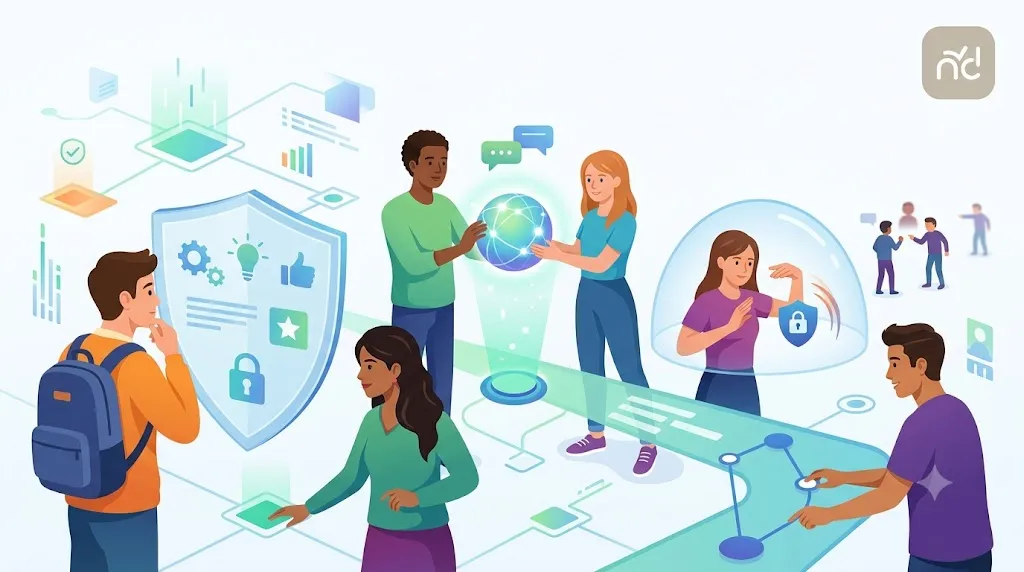
In the online world, protecting your personal information is as crucial as guarding a fortress. Your name, address, phone number, email ID, school name, photos, birthday, and even your location – all this is your personal information. If this information falls into the wrong hands, it can lead to serious consequences.
Important measures to protect personal information:
- The Power of Passwords: Always use strong and unique passwords. Your password should be at least 8-12 characters long, including lowercase letters, uppercase letters, numbers, and special characters (e.g., !, @, #). Do not use the same password for multiple accounts. Never share your password with anyone, not even your close friends. Change your passwords regularly.
- Privacy Settings: Check the privacy settings of your social media accounts and other apps. You can set who can see your posts, who can message you, and who can view your profile. Allow only your friends or family to view your information.
- Beware of Strangers: Be very cautious when talking to or befriending strangers online. Do not give your personal information to strangers you meet online, or agree to meet them in person. Often, such people create fake profiles to deceive children.
- Identify Phishing and Scams: You might receive messages or emails telling you that you've won a prize or a large sum of money, and asking for your bank details or other personal information. These are usually Phishing scams. Do not respond to such messages and delete them immediately. No bank, government agency, or reputable company will ask for your password or OTP (One-Time Password) via email or message.
- App Permissions: When downloading any new app, check what information it is asking permission for (e.g., camera, microphone, location, contacts) on your phone. Do not grant unnecessary permissions.
- Public Wi-Fi: Be careful when using free Wi-Fi available in public places. Your information may not be secure on these Wi-Fi networks. Avoid conducting important transactions or sharing personal information.
4. The Art of Respectful Online Communication
When communicating online, it's expected that we behave respectfully and responsibly, just as we would in person. This is also known as Netiquette, which refers to the etiquette of communicating on the internet. Ensure that your online speech and actions do not cause distress to others.
- Respectful Language: Always use respectful and polite language in online chats, comments, or emails. Avoid using abusive language, derogatory terms, or provoking others. Remember, the person on the other side has feelings too.
- Respect Others' Opinions: Every person has the right to express their own opinion. Do not criticize or troll individuals who do not agree with your views. Engage in healthy discussions, but avoid arguments.
- Stay Away from Fake News and Rumors: Nowadays, fake news and rumors spread rapidly on social media. Before forwarding any information, verify its authenticity. Spreading misinformation can be very dangerous and have serious social consequences.
- How Would You Feel? Before posting or commenting anything, ask yourself, 'If this post were about me, how would I feel?' This thought will help you act more responsibly.
- Knowledge of Cyber Laws: India has cyber laws related to cybercrimes. Actions like cyberbullying, hacking, online fraud, and sexual harassment can lead to severe penalties. Therefore, having a basic understanding of cyber laws is important.
5. The Role of Parents and Educators: Your Guides
To stay safe in the digital world, not only students but also parents and educators play a crucial role. They are your guides and protectors.
- Open Communication: Talk openly with your parents or teachers about your online experiences. If you feel any problem, if someone is bothering you, or if something wrong is happening, tell them immediately. They will always help you.
- Screen Time Management: Set a fixed time for being online. Spending too much time in front of a screen can affect your studies, eyes, and sleep. Parents and educators should help you with this.
- Learning Together: Parents and educators should explore new apps, games, and websites with students. This will give them an idea of your online world and enable them to guide you better.
- Modeling Appropriate Behavior: Parents and educators should set an example for students by behaving responsibly online themselves.
Did You Know?
- The first email in the world was sent by Ray Tomlinson to himself in 1971. He used the '@' symbol to separate the username and hostname.
- Internet use in India was publicly launched on August 15, 1995, by VSNL (Videsh Sanchar Nigam Limited).
- Today, more than half of the world's population uses the internet. By 2023, 5.18 billion people globally were connected to the internet.
- The United Nations (UN) has declared internet access a human right, as it is crucial for freedom of information and expression.
- The 'www' or 'World Wide Web' was created by Tim Berners-Lee in 1989, making the internet more user-friendly.
Conclusion: Responsible Citizens of the Digital Age
Dear students, the digital world is a wonderful place, but it needs to be handled with equal responsibility. Digital citizenship is not just about staying safe online, but also about contributing positively to the online world, respecting others, and abiding by the law. Consider every online action, protect your footprints, confront cyberbullying, and keep your personal information safe. Under the guidance of your parents and teachers, you can become responsible and successful citizens of this digital age. 'Paripath' is always with you to provide the right guidance. Stay safe, keep learning, and shine in the digital world!