Introduction: The Morning Pulse of Education
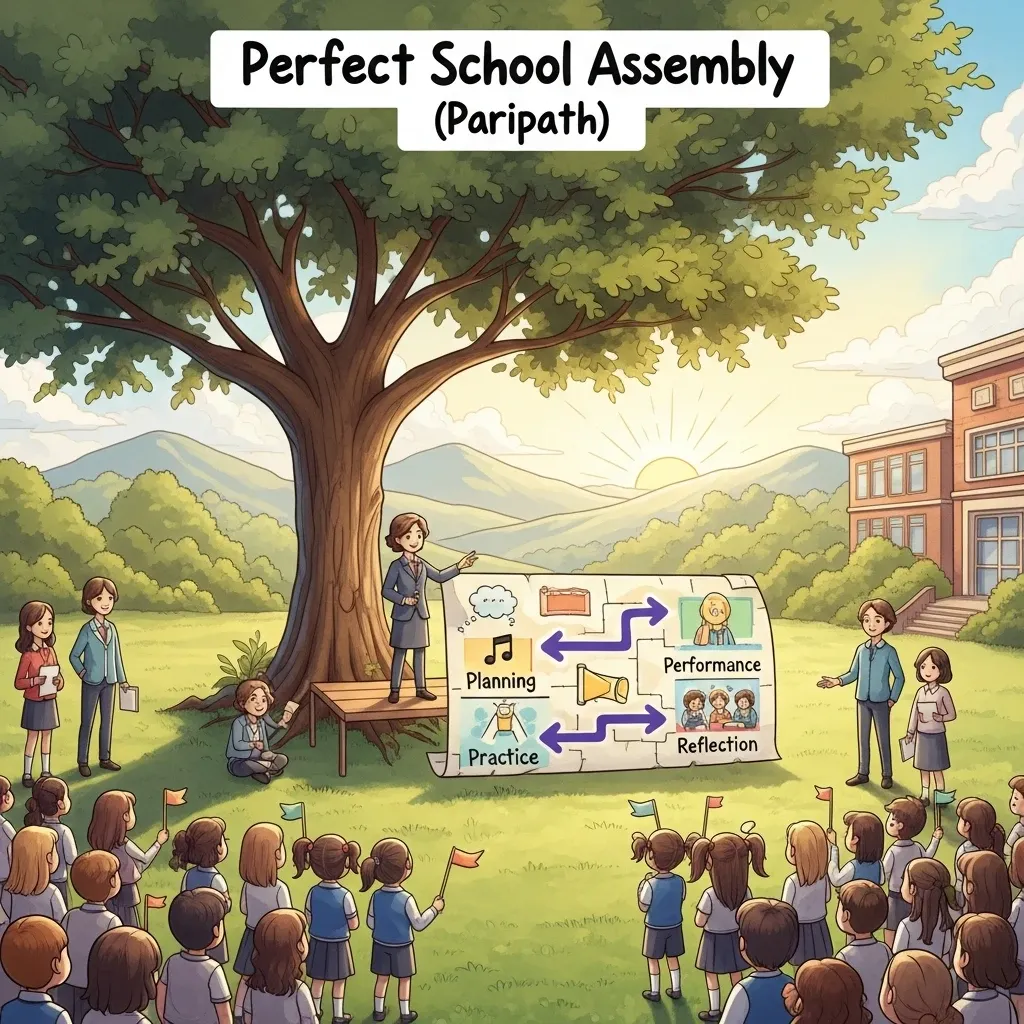
In the grand architecture of a school day, the School Assembly (often called Paripath in local Indian contexts) acts as the foundation stone. It is not merely a collection of students standing in lines; it is the collective breathing of an institution. For decades, the morning assembly has served as the spiritual and social starting point for students across the globe. But what exactly happens during those twenty minutes? Does it really change a student's life? In this exhaustive guide, we dive deep into the multifaceted benefits of school assembly and its profound impact on student psychology and skill development.
The Psychological Benefits of Starting the Day Together
Human beings are social animals, and the sense of belonging is a fundamental psychological need. When a student stands with five hundred others, reciting the same prayer or singing the national anthem, a powerful sense of social cohesion is born.
1. Mental Preparation and Transition
Moving from the chaos of travel or the comfort of home into a classroom requires a mental 'buffer'. The assembly provides this transition. It allows the mind to settle, focusing the attention on the school's collective identity.
2. Reduced Anxiety through Routine
Consistency is key to a child's mental health. Knowing that every day begins with a specific set of rituals—prayer, pledge, and news—provides a sense of security and predictability that reduces school-related anxiety.
| Psychological Factor | Impact of Assembly | Long-term Result |
|---|---|---|
| Belonging | Shared rituals and songs | Stronger school spirit and loyalty |
| Mindfulness | Silent prayer and meditation | Improved concentration in class |
| Discipline | Standing in queues and silence | Internalized self-regulation |
The Stage as a Classroom: Improvement in Public Speaking
One of the most visible benefits of Paripath is the development of communication skills. For many students, the school assembly is the first 'stage' they ever encounter.
"Public speaking is not just about words; it is about the courage to stand in front of a crowd and own your voice."
- Overcoming Glossophobia: Regular participation in news reading or thought sharing helps students conquer the fear of public speaking.
- Vocabulary Expansion: Preparing a 'Thought for the Day' (Suvichar) requires students to research, understand, and articulate complex ideas.
- Body Language: Standing straight, holding a microphone, and making eye contact are subtle skills honed on the assembly platform.
Moral and Ethical Development
In a world increasingly focused on digital screens, the Moral Education provided during assembly is invaluable. Through stories of great leaders and the explanation of 'Suvichar', schools instill values that textbooks alone cannot provide.
- National Integration
- The National Anthem and Pledge remind students of their duty towards the country, fostering a sense of patriotism from a young age.
- Ethical Awareness
- Discussions on global issues during news segments help students develop empathy and a sense of social justice.
- Inspiration
- Celebrating the birthdays of great personalities or students' achievements provides a roadmap for success.
The Role of Suvichar (Thought for the Day)
A single quote, explained well, can stay with a student for a lifetime. These thoughts act as moral compasses. For example, a discussion on 'Honesty is the best policy' during assembly has more weight because it is shared in a communal setting.
Detailed Analysis of Assembly Components
To understand the impact, we must look at the individual elements of a standard Indian school assembly:
- The Prayer: Cultivates humility and inner peace.
- The Pledge: Reinforces civic responsibility.
- The News: Connects the student to the outside world, promoting general knowledge.
- Special Performances: Group songs or short skits foster teamwork and creativity.
Frequently Asked Questions
Conclusion: More Than Just a Meeting
The school assembly is the heart of the educational ecosystem. It bridges the gap between individual learning and community living. By focusing on Paripath, schools are not just following a tradition; they are building the leaders, speakers, and empathetic citizens of tomorrow. It is an investment in the 'human' side of the student, ensuring that when they leave the school gates, they carry with them not just a certificate, but a character.