Introduction: The Universe in Our Constitution
As India prepares for the monumental year of 2026, a year slated to witness the peak of the Gaganyaan missions and the launch of sophisticated lunar and planetary probes, we must look beyond the titanium hulls of our rockets. We must look into the heart of our democratic foundation—the Constitution of India. While most constitutions focus solely on the rights of citizens, the Indian Constitution is unique. It includes a specific Fundamental Duty that acts as the fuel for our national progress: Article 51A(h).
"It shall be the duty of every citizen of India to develop the scientific temper, humanism and the spirit of inquiry and reform."
This isn't just a legal clause; it is a vision. In this deep dive, we explore how this constitutional mandate has evolved from a 1976 amendment into the driving force behind India's 2026 deep space aspirations and why you, as a student, are the primary custodian of this duty.
The Historical Genesis of Article 51A(h)
To understand why scientific temper is a duty, we must travel back to the mid-20th century. India’s first Prime Minister, Jawaharlal Nehru, was the foremost proponent of this concept. He believed that for a newly independent nation to break the chains of superstition and poverty, it needed a mindset shift—not just technological tools.
The 42nd Amendment Context
During the 1970s, the Swaran Singh Committee recommended the inclusion of Fundamental Duties. They argued that if citizens have rights, they must also have responsibilities toward the nation's growth. Article 51A(h) was revolutionary because it made the *process of thinking* a civic responsibility.
Deconstructing the Clause: Inquiry, Humanism, and Reform
Article 51A(h) is composed of four distinct yet interconnected pillars. Let’s break them down:
| Component | Constitutional Meaning | Application in Space Science |
|---|---|---|
| Scientific Temper | A way of life that uses the scientific method to observe, test, and conclude. | Developing indigenous cryogenic engines through rigorous testing. |
| Humanism | Placing human welfare and dignity at the center of all progress. | Using satellite data (Bhuvan) to help farmers and manage disasters. |
| Spirit of Inquiry | The courage to ask 'Why?' and 'How?' without fear. | Asking if life exists on Mars or in the clouds of Venus. |
| Reform | The willingness to change outdated beliefs when presented with new evidence. | Transitioning from traditional fuels to green propulsion for rockets. |
India's 2026 Space Odyssey: A Manifestation of Duty
By 2026, India's space program will no longer be just about 'reaching' space; it will be about 'living' and 'utilizing' space. This leap is the direct result of millions of Indian citizens—engineers, scientists, and taxpayers—fulfilling their duty under 51A(h).
Why 2026 Matters?
2026 represents the dawn of the Vikasit Bharat era in space. With the Indian Space Policy 2023 now in full effect, private startups like Skyroot and Agnikul are joining ISRO. This democratization of space is the ultimate form of 'Scientific Temper'—moving science from government labs to the hands of the youth.
The Student's Role: How to be a Scientist-Citizen
You don't need a PhD to fulfill Article 51A(h). Being a scientist-citizen starts in the classroom and the community.
- Question Superstitions: Use logic to evaluate traditional practices. If it lacks evidence and causes harm, have the courage to reform.
- Fact-Check Information: In the age of social media, the 'Spirit of Inquiry' means not forwarding 'fake news' without verification.
- Promote Rationality: Encourage your peers to look for data-driven solutions to local problems, like waste management or energy saving.
Frequently Asked Questions
Conclusion: The Launchpad is in Your Mind
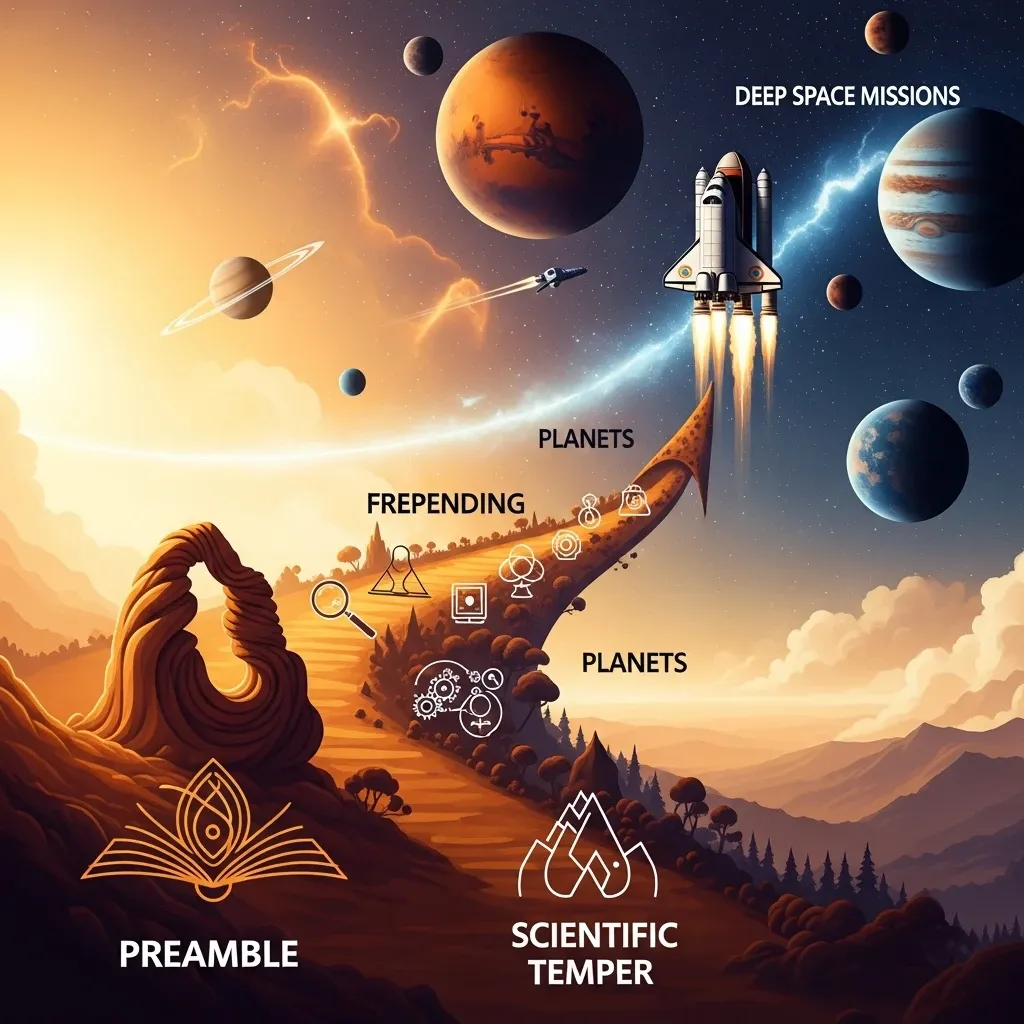
As the rockets of 2026 ignite their engines, they carry more than just satellites; they carry the Constitutional values of 1.4 billion people. Article 51A(h) is the invisible thread connecting the village student using a telescope to the mission director at Sriharikota. By developing a scientific temper, you aren't just following a law—you are becoming the engine of India’s future. The journey from the Preamble to the Planets begins with a single question. Are you ready to ask it?